

As Lagos activates airport screening measures against a fresh Ebola threat, the city is drawing on a playbook written in blood twelve years ago.
When Ebola arrived in Lagos in July 2014, it came quietly through an airport, carried by a Liberian-American diplomat who had boarded a flight from Monrovia to Lagos. Within weeks, a city populated with over 20 million people were at risk of contacting a disease with a fatality rate that could exceed 50 percent and no vaccine.
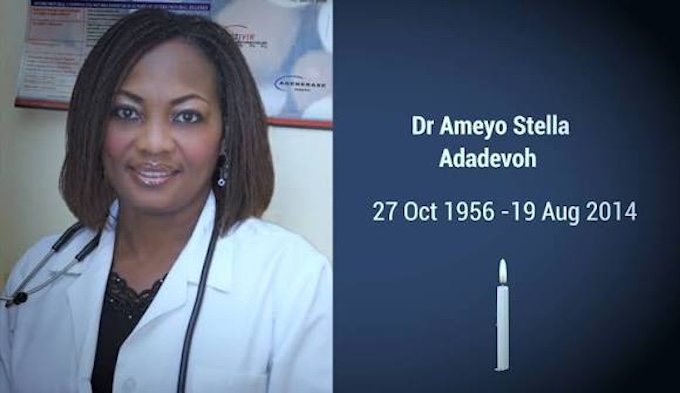
What happened next became a case study taught in public health classrooms around the world. At First Consultants Medical Centre in Obalende, a physician named Dr Ameyo Adadevoh made a decision that would cost her her life.
She refused to discharge the patient despite intense political pressure, insisted on his isolation, and triggered a contact-tracing chain that kept the outbreak from spreading into the general population.
Her efforts paid off.
Nigeria was declared Ebola-free 42 days later. However Eight people died, including Dr Adadevoh herself.
Twelve years after Ebola hit Lagos, the city is on edge again.
A new outbreak of the Bundibugyo strain is spreading through the Democratic Republic of Congo and Uganda. WHO says there were 900+ suspected cases and over 200 deaths as of late May 2026. The virus is already crossing borders. A U.S. healthcare worker who treated patients in DRC has tested positive and is now being treated in Germany.
On Sunday, Lagos Health Commissioner Prof. Akin Abayomi visited Murtala Muhammed International Airport. It handles about 70% of Nigeria’s international arrivals, so it’s ground zero for screening.
Of course the visit wasn’t for show. Officials checked disease surveillance systems, reviewed emergency plans, and talked about setting up special arrival lanes for passengers from high-risk countries. The idea is to isolate them before any exposure spreads.
Abayomi also paid tribute to Dr. Stella Adadevoh, the doctor who stopped Ebola in 2014. “Our goal is to create a bottleneck for the virus, not for passengers,” he said.
The quiet question in health circles: Is Lagos still as prepared as it was in 2014, or has that infrastructure weakened over time? Airport officials say their Public Health Emergency Plan was updated in March 2026 and the emergency response team is already active. They’re rolling out touchless temperature scanners and digital health forms. Talks on dedicated arrival corridors are happening, but no final call yet.