

The previous week we reported about Kano’s ambitious new 10-year education strategy, launched with UNICEF and EU support, and asked the question every Nigerian education plan eventually faces: what happens when it hits the ground?
On Sunday, a high-level delegation of European Union ambassadors visited a Quranic centre in Kano and found got one answer at a Quranic centre in Kano.
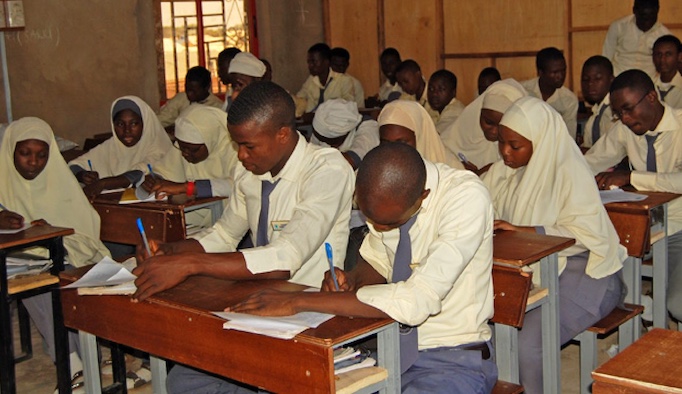
Maahad Gwari Dan Birni Tsangaya Quranic Centre had 47 students in 2018. It now has 351, made up of 182 boys and 169 girls. They are learning the Quran but are also learning mathematics and English. They are learning shoemaking, tailoring and knitting and are receiving uniforms, modern learning materials and structured tutorials funded by the EU and facilitated by UNICEF. Seven years ago this centre was barely functioning and now it is educating more than 350 children in a framework that bridges religious tradition and practical, income-earning skills.
The delegation that made the visit was not small. EU Ambassador to Nigeria and ECOWAS Gautier Mignot led a group that included heads of mission and deputies from EU member states, alongside representatives from UNICEF, GIZ on behalf of the German government, Plan International Nigeria and UN Habitat. Their presence in Kano for a multiple day engagement feels more than just symbolic diplomacy. Northern Nigeria has always been hard for international partners to reach at the community level. Seeing that level of European representation sitting with Quranic school leaders and watching kids learn shoemaking shows how development partnerships in the north are shifting.
The approach to this strategy is worthy of note. Millions of children in northern Nigeria attend Quranic schools and tsangaya centres. These places are trusted parts of community life in a way conventional schools, even well-funded ones, often are not. Efforts in the past to tackle the out-of-school crisis often treated religious education as the problem. UNICEF and the EU are treating it as the foundation.
Add math and English to a centre parents already place their trust in. Add vocational skills so graduates can earn. Provide uniforms so cost doesn’t keep kids home. The result?
In Kano at least, is a centre that has grown from 47 to 351 students in seven years with gender parity that many conventional schools in the region are yet to achieve.
Kano’s 10-year education strategy needs this kind of evidence. Plans work best when they can point to something already working.
The question now is whether the strategy has the will and the resources to scale it.