

Aviation Round Table (ART) also known as Aviation Safety Round Table Initiative (ASRTI), a think-tank body in the aviation industry made up of experienced industry experts, has waded into the over N20 billion debts owed by airlines.
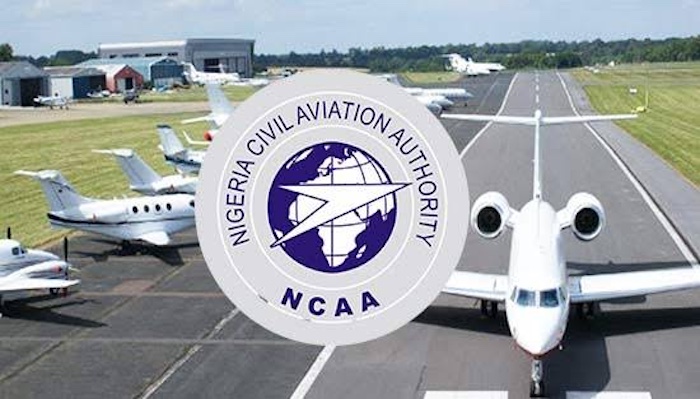
The debts, according to an insider source, accrued from 5 per cent Ticket Sales Charge (TSC) and Cargo Sales Charge (CSC), owed the Nigeria Civil Aviation Authority (NCAA) by domestic airlines.
The 5 per cent Ticket Sales Charge and Cargo Sales Charge are statutory levies originating from the Civil Aviation Act. Airlines collect these fees on behalf of the Nigeria Civil Aviation Authority (NCAA). The funds are subsequently shared among five key aviation agencies.
THISDAY learnt that the revenue suddenly accrued without its being liquidated when the prices of aviation fuel spiked due to the Middle East crisis; that a litre of jet fuel rose from N900 per litre to as high as N3, 500 per litre. The Iran-US war started on the last day of February and immediately cost of aviation fuel more than doubled.
The airlines said that the sudden increase in the cost of aviation fuel almost liquidated them and in other to continue to operate, they literally ran to the bank for loans at outrageous interest rate of 30 per cent. So, the cost of operation made it impossible for them to continue to remit money to NCAA to liquidate the debts from the five per cent TSC and CSC.
But ART has waded into the matter and it is suggesting that NCAA should introduce fixed rate on each ticket purchased instead of the current five per cent charged on the ticket. In its advisory note 6A/26 titled, ‘Integrated Framework for Regulatory Fee Basis and Automated Collection’ the body said the ongoing impasse between the civil aviation authority and domestic carriers under the Airline Operators of Nigeria (AON), exposed deep structural flaws in the administration of the five per cent Ticket Sales Charge (TSC).
In the advisory, which was signed by ART President, Commodore Ademola Onitiju (rtd), the body observed that the industry participants argue that the current ad valorem percentage model (the system of collecting a percentage of their ticket sales) transformed airlines into unpaid tax collectors, forcing them to absorb commercial merchant processing fees (historically 1.5% to 2.5%) on funds that do not belong to them.
“This ART Advisory notes that these regulatory funds are commingled with operational revenues at the moment of booking, airlines face intense liquidity temptation. In an environment characterised by low single-digit margins and strict cash-before-service demands for Jet A1, aviation fuel and immediate maintenance deadlines, commingled cash is frequently absorbed into daily survival costs.
“This creates a retrospective accounting nightmare, leading to multi-billion-naira debt backlogs, endless reconciliation disputes, and disruptive “no-pay, no-service” regulatory standoffs. Furthermore, the core complaint around the collection process itself centres on the administrative friction of manual filing and delayed billing, which pits the regulator against carriers during routine audits,” the experts noted.
In order to enforce the collection of the debts, NCAA had introduced no-pay, no-service strategy, which it quickly withdrew, maybe in order not to strain relationship with the airlines which are under its oversight and regulation.
However, ART said that from a policy perspective, operators frequently cite International Civil Aviation Organisation (ICAO) Doc. 9082 to challenge the fee’s legitimacy. It stated that they rightly point out that charging a percentage violates the core ICAO principle of cost-relation: a business-class passenger and an economy passenger on the same flight consume the exact same safety infrastructure and air navigation services, yet they are assessed vastly different fees based on their fare tier.
The body said it converts a justifiable cost-recovery charge into an illegal turnover tax on gross earnings—“a systemic failure this ART Advisory Note is designed to correct”
ART explained that under the legacy five percent ad valorem system, the regulator’s revenue is fundamentally compromised by the structural malleability of modern airline ticketing. According to ART, the statutory five percent levy is calculated strictly against the ‘base fare’, adding that airlines have perfected the art of unbundling ticket prices to minimise their regulatory exposure.
“When macroeconomic pressures—such as aviation fuel (Jet A1) volatility or foreign exchange scarcity—force ticket prices upward, airlines do not increase the base fare. Instead, they freeze the base fare at a nominal rate and layer on massive, fluctuating ‘Fuel Surcharges,’ ‘Currency Adjustment Charges,’ or ‘Ancillary Service Fees’ (extending to baggage, seat selection, and check-in fees). Because these surcharges are legally classified as cost-recovery mechanisms rather than base passenger revenue, they are excluded from the five percent TSC calculation.
“The regulator is left collecting five percent of a deflated nominal base fare instead of five percent of the true economic cost paid by the passenger. This deliberate unbundling creates an artificial revenue drain for the regulator, while making retrospective auditing an administrative battlefield of definitions, disputes, and delayed filings,” ART stated.
It suggested that to permanently decouple airlines from the tax custody loop while maximizing regulatory revenue, “this ART Advisory Note establishes a two-pronged structural pivot: migrating to a uniform flat-rate passenger charge and hardwiring automated split-payment architecture into the point of sale.’
In other words, the body is suggesting that NCAA should introduce a flat rate amount it will add to each ticket instead of collecting five per cent of TSC and CSC. This, it stated, would be easier to manage and will be more transparent.
“First, under the suggestions proffered in this ART Advisory Note, the statutory basis of the fee must shift from a variable 5% to a fixed naira amount per domestic segment and a dollar-equivalent for international flights. This flat-rate basis establishes safety regulation as a quantifiable, constant utility fee, immediately satisfying ICAO’s non-discrimination and cost-relation mandates.
“Second, as a core technical solution proffered by this ART Advisory Note, the fee becomes a predictable constant which can be seamlessly embedded into financial switching networks via split-payment Application Programming Interfaces (APIs). Under this framework, the moment a passenger completes a digital purchase on an airline’s website, mobile app, or a Global Distribution System (GDS), the payment gateway executes a real-time financial split at the exact millisecond of transaction authorisation.
“The split-payment engine automatically sweeps the fixed regulatory fee directly into the central bank’s Treasury Single Account (TSA), while routing the pure base fare to the carrier’s operational account,” ART further explained.
To maintain system integrity across cash channels, ART said there would be need to have independent travel agents to operate via pre-funded digital wallets where the flat fee is instantly deducted upon booking.
“For physical terminal walk-ins, ART maintained that cash-accepting smart kiosks or dedicated bank desks will process the flat regulatory charge independently, issuing a digital token that the airline counter must scan to authorise the final boarding pass.
“Unifying a flat-rate statutory basis with an automated split-settlement infrastructure delivers immediate operational efficiency and capital optimization across the entire aviation value chain, fully realising the strategic objectives of this ART Advisory Note,” ART said in its advisory.
According to ART, for the regulator, this model completely eradicates collection leakage, dynamic fare undervaluing, and the massive administrative cost of chasing historical carrier debts.
“A flat-rate fee is completely immune to ticket restructuring or unbundling. Whether an airline sells a ticket with an artificially low base fare and heavy surcharges, or compresses its margins during a seasonal promotional fare war, the regulatory unit cost per seat remains completely unchanged. By pegging revenue exclusively to passenger volume rather than fluctuating airline turnover, the regulator’s cash flow stabilises.
“The civil aviation authority can forecast its annual capital expenditure and safety oversight budgets with mathematical precision based on projected industry passenger numbers, completely insulated from the financial manoeuvres, pricing games, or accounting vulnerabilities of individual commercial airlines,” it further stated.
For the airlines, ART noted that adopting flat rate of the charges would improve the operators’ cash flow and reduced friction.
“Carriers are entirely relieved of the administrative and transaction fee burdens associated with collecting regulatory monies, and they no longer risk severe regulatory penalties or operational groundings due to accumulated debt,” ART added.
Thisdaylive.com