

The Federal Government has declared that no nation can finance its development by relying solely on external sources, stressing the need to build sovereign capacity to generate, manage, and deploy public resources effectively.
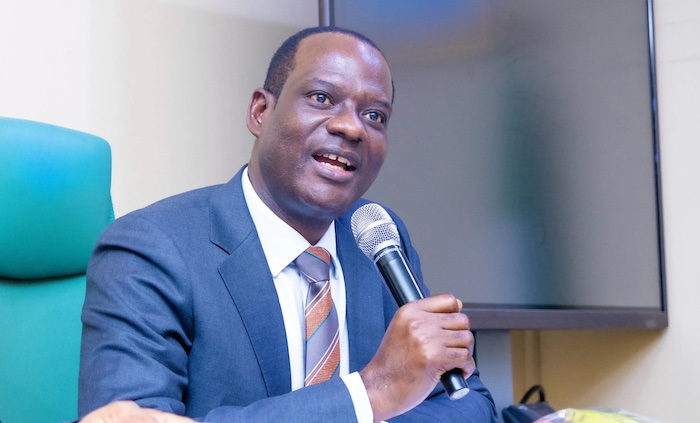
Finance Minister and Coordinating Minister of the Economy Taiwo Oyedele made the statement at a high-level capacity-building session in Abuja, held on the occasion of an experience-exchange visit by the Government of Ethiopia to review Nigeria’s Integrated National Financing Framework (INFF) for the Sustainable Development Goals (SDGs). The session also brought together chairpersons of state revenue services and the joint revenue board.
Oyedele acknowledged that Africa faces a significant financing gap in meeting the SDGs and the aspirations of Agenda 2063, with traditional concessional finance becoming increasingly constrained amid climate pressures and post-pandemic fiscal strain across the continent. He argued, however, that this reality presented an opportunity to rethink development financing rather than a cause for despair.
“Aid and foreign investment are important complements, but they cannot substitute for the sovereign capacity to generate, manage and deploy public resources effectively,” he said. He described the INFF as a fundamentally different way of thinking about how nations mobilise, align, and deploy financing for sustainable development, dismissing any notion that it was mere bureaucratic terminology.
“The future of development financing will not be determined solely by the resources available to us, but by how effectively we mobilise, align and deploy those resources in support of national priorities,” Oyedele added, noting that Nigeria was keen to share its experiences while also learning from its Ethiopian counterparts.
Senior Special Assistant to the President on SDGs, Princess Adejoke Orelope-Adefulire, said the session came at a critical moment in Nigeria’s development journey. She emphasised that achieving sustainable development outcomes depends substantially on the fiscal and institutional capacity of sub-national governments, noting that states bear constitutional responsibility for primary healthcare, basic education, water and sanitation, agriculture, infrastructure, and local economic development.
She described the INFF as a strategic framework for aligning public, private, domestic, and international financing behind national development priorities, stressing that strengthening fiscal capacity at the state level was not merely a technical exercise but a strategic imperative. “States must be empowered to expand their revenue bases, improve tax administration, strengthen budgeting systems, enhance transparency and accountability, and create enabling environments that attract sustainable investments,” she said.
Orelope-Adefulire cited increasing expenditure pressures, limited internally generated revenue, growing infrastructure deficits, and climate-related vulnerabilities as key challenges confronting sub-national governments, calling for innovative thinking, bold reforms, and stronger collaboration among stakeholders.
UNDP Nigeria Resident Representative Elsie Attafuah reinforced that point, arguing that development financing could no longer be viewed solely through a national lens. “The SDGs are ultimately delivered in states, provinces, cities and communities. Schools are built at the sub-national level. Healthcare services are delivered at the sub-national level,” she said.
Attafuah described stronger sub-national fiscal systems as fundamental to development outcomes, not merely a revenue question. “When states strengthen their fiscal systems, they strengthen their ability to invest in people. When they improve revenue administration, they expand the fiscal space needed to support growth, resilience and inclusion. When they build stronger institutions, they increase their ability to translate policy ambition into measurable outcomes,” she said.