


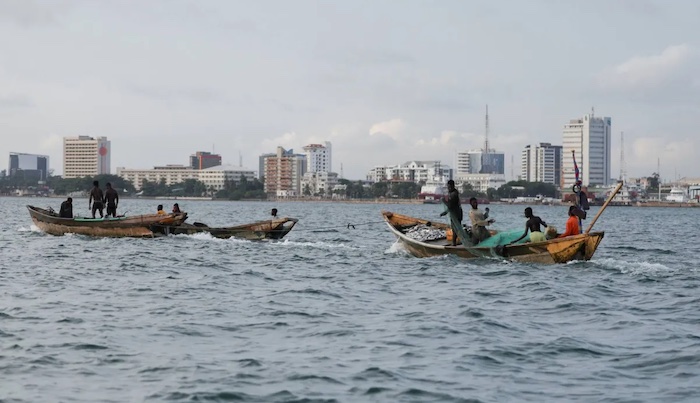
The rainy season has reached a point where the Joint Task Force overseeing inland waterways in Nigeria’s north-central region felt it necessary to issue a formal safety advisory. Operation Whirl Stroke’s Maritime Component did exactly that on Tuesday, warning boat operators, mariners, and riverine communities that swelling water levels are creating conditions dangerous enough to cost lives if ignored.
The advisory, issued on the directive of Force Commander Major General Moses Gara and delivered by Maritime Component Commander Lieutenant Commander Dusse Zakari, identified stronger currents and increased turbulence as the primary hazards accompanying the current rise in water volumes. The risk, as Zakari put it, is not hypothetical and conditions of this kind directly raise the likelihood of boat mishaps resulting in the loss of lives and property.
Every passenger and mariner now must wear a life jacket for the duration of any journey. Every vessel must carry at least one life buoy. Boat operators must not exceed approved passenger limits, and each boat must be equipped with functional torchlights, spare spark plugs, and tarpaulins as standard emergency items. Waterway pollution using non-biodegradable materials was also prohibited.
The restriction that carries the most operational weight is the ban on night travel. Marine operations are permitted only between 6:30am and 6:00pm daily. That window is not new, it exists for security reasons tied to OPWS’s broader mandate in the region, but the advisory makes clear that the Maritime Component expects mariners’ unions to enforce it strictly during the current season rather than treat it as a guideline.
Boat operators were also reminded to register with their unions and carry valid identification while on the water. Riverine community residents were encouraged to report suspicious movements and criminal activity to security agencies.
The advisory covers a region where waterways are not a leisure amenity but a primary means of transportation, commerce, and daily movement for millions of people. When the rivers swell, that dependence does not decrease. It simply becomes more dangerous. Operation Whirl Stroke’s message this week is that the margin for carelessness on the water has narrowed considerably, and the institutions responsible for enforcement are expected to act accordingly.