

The Federal Government has acknowledged a pricing asymmetry in Nigeria’s downstream petroleum sector that consumers have long complained about
Finance Minister Taiwo Oyedele, speaking to State House correspondents after Monday’s Federal Executive Council meeting, said the government is actively engaging petroleum marketers and industry regulators to address the imbalance.
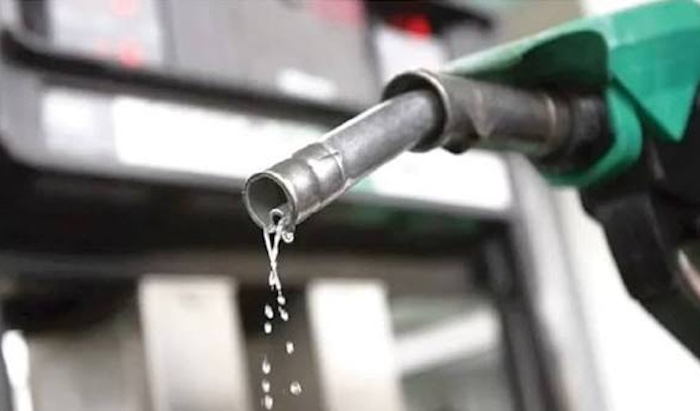
Oyedele described the mechanics of the problem with unusual candour for a government official. Marketers justify rapid price increases by citing replacement costs, the logic being that selling existing stock at old prices while sourcing new stock at higher costs is commercially unsustainable. When prices fall, the same operators cite unsold inventory purchased at higher prices as justification for holding pump prices steady. The minister acknowledged that both arguments have some commercial logic, but said the pattern as a whole requires active regulatory oversight to ensure it does not become a vehicle for exploitation.
The Federal Competition and Consumer Protection Commission and the Nigerian Midstream and Downstream Petroleum Regulatory Authority are both engaged on the issue, Oyedele said, with the NMDPRA holding a specific mandate under the Petroleum Industry Act to ensure that market-reflective pricing does not take advantage of consumers. The FCCPC has also issued public notices on fuel prices in recent weeks.
The minister pushed back on the assertion that government interventions have produced no tangible relief for Nigerians. He pointed to the Tinubu administration’s suspension of VAT, excise duty, and the surcharge on petroleum products as the primary reason pump prices in Nigeria remain between 20 and 50 percent lower than in several neighbouring countries. The comparison is contested in some quarters, given Nigeria’s income levels and the scale of the subsidy removal shock, but Oyedele’s framing was that conditions would have been considerably worse without those fiscal measures.
His sharpest remarks were directed at transport operators benefiting from the Presidential CNG Initiative. The government has invested in subsidised vehicle conversion kits to help operators switch from petrol to compressed natural gas, a significantly cheaper fuel. Oyedele said some operators are charging passengers petrol-based fares despite running on CNG, pocketing the difference rather than passing savings to commuters. He described this as people taking advantage of the situation and called on citizens to act in the national interest.
The minister’s overall message was one of work in progress rather than resolved problem. Consultations are ongoing, regulators have their mandates, and the government’s fiscal interventions have provided a cushion. Whether that cushion is large enough to be felt by the average Nigerian paying transport fares and buying fuel is a question the pricing data over the next few months will answer more honestly than any press briefing.