


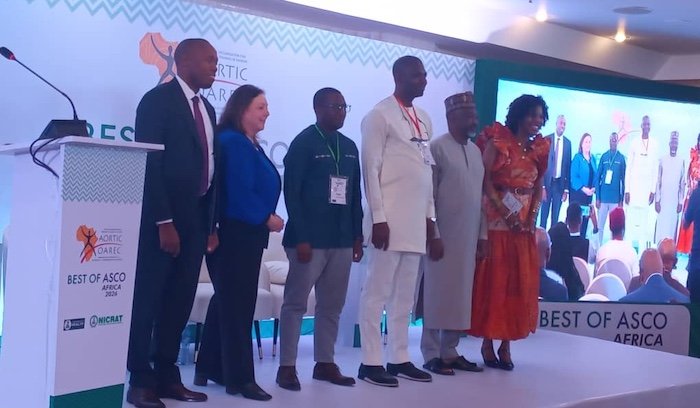
The Federal Government has expanded financial support for cancer patients through dedicated health funds, insurance initiatives and investments in local research aimed at improving access to affordable treatment.
The Director-General of the National Institute for Cancer Research and Treatment (NICRAT), Prof. Usman Malami, disclosed this during the Best of American Society of Clinical Oncology (ASCO) Africa 2026 Conference held in Abuja.
Speaking at the conference themed, “From Global Discovery to Local Delivery: Driving Africa to the Cutting Edge of Cancer Care,” Malami said the government had introduced several interventions to reduce the financial burden associated with cancer treatment.
According to him, the Catastrophic Health Fund under the National Health Insurance Authority subsidises cancer prevention, diagnosis, chemotherapy and radiotherapy for eligible patients, while the National Cancer Health Fund provides financial assistance to indigent cancer patients.
Malami also revealed that the Presidential Initiative for Unlocking the Healthcare Value Chain would boost local production of cancer medicines, reducing dependence on imported drugs and improving affordability.
He noted that experts at the conference would examine global cancer research findings and explore ways of adapting them to African healthcare systems.
Also speaking, the Special Adviser on Research and Innovation to the Minister of State for Health, Dr Lolade Adewale, said ongoing reforms would expand insurance coverage and strengthen financial protection for cancer patients.
She disclosed that Nigeria had commenced three immunotherapy clinical studies for the first time, giving eligible patients access to advanced cancer medicines such as Nivolumab and Keytruda at no cost through clinical trials.
The Immediate Past President of the African Organisation for Research and Training in Cancer (AORTIC), Dr Miriam Mutebi, called on African governments to increase investment in research and development, noting that the continent contributes only eight per cent of global cancer research despite carrying a significant disease burden.
Similarly, ASCO Chief Medical Officer, Dr Julie Gralow, stressed the importance of locally generated evidence to ensure that breakthrough cancer therapies are effective and accessible for African populations.
Health experts at the conference also called for stronger continental collaboration to improve access to innovative cancer therapies and strengthen cancer care systems across Africa.
According to the World Health Organisation, Africa records more than one million new cancer cases and over 700,000 cancer-related deaths annually. In Nigeria, an estimated 127,000 new cases and nearly 80,000 deaths are recorded each year.