

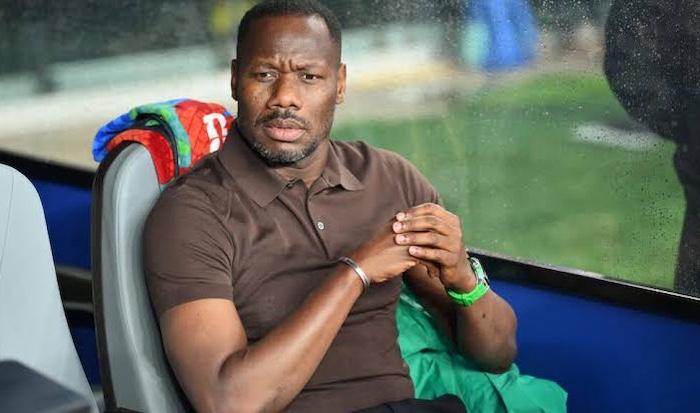
Senegal’s football federation has revealed that tensions over coach Pape Thiaw’s contract and salary demands created a toxic atmosphere around the national team during the 2026 FIFA World Cup.
Speaking at a press conference in Dakar on Monday, Senegalese Football Federation (FSF) president Abdoulaye Fall said relations between the federation and Thiaw had deteriorated long before the team’s elimination from the tournament.
“There was a breakdown in trust between Pape Thiaw and us,” Fall said, explaining that disagreements over the coach’s contract overshadowed Senegal’s World Cup campaign.
Thiaw, who took charge of the national team in 2024, was dismissed on Sunday after Senegal’s journey ended with a defeat to Belgium in the round of 32 on July 1.
According to Fall, the dispute began before the tournament when the former Senegal international sought a substantial increase in his monthly salary. The 45-year-old reportedly requested that his pay be raised from 20 million CFA francs (about $35,000) to 50 million CFA francs (roughly $87,000).
Although both sides eventually reached a compromise, agreeing on revised terms and settling disagreements over bonuses, federation officials said the negotiations strained their relationship with the coach.
Fall disclosed that Thiaw had threatened to boycott the trip to the United States unless his demands were met. He added that Senegalese President Bassirou Diomaye Faye intervened on the day the squad was scheduled to depart, persuading the coach to travel with the team.
The federation president further revealed that the contract dispute remained unresolved even after Senegal’s opening matches at the tournament. According to him, the agreement was only signed on the eve of the team’s second group-stage game against Norway after Thiaw insisted he would not take his place on the bench until the matter had been settled.
Fall claimed that the coach viewed federation officials as adversaries, a situation he said negatively affected the team’s preparations and overall operations throughout the competition.
“Thiaw believed the federation officials were his enemies, and this impacted the national team’s operations,” he said.
Senegal endured a mixed campaign at the World Cup, suffering defeats to France and Norway in the group stage before a commanding 5–0 victory over Iraq secured qualification for the knockout rounds.
Despite his difficult exit, Thiaw enjoyed notable success during his tenure. Under his leadership, Senegal lifted the Africa Cup of Nations trophy in January, although the title was later stripped from the team after players walked off the pitch during a chaotic final against Morocco.
The federation’s revelations have shed new light on the internal struggles that accompanied Senegal’s World Cup campaign, raising questions about the extent to which off-field disputes affected the team’s performances on the pitch.