

The Federal Government’s latest defence of Nigeria’s growing debt burden highlights a broader debate about how public borrowing is measured and communicated. While critics argue that the Tinubu administration has accumulated nearly ₦80 trillion in fresh debt since assuming office, officials insist that such claims overlook the economic and accounting factors behind the country’s rising debt stock.
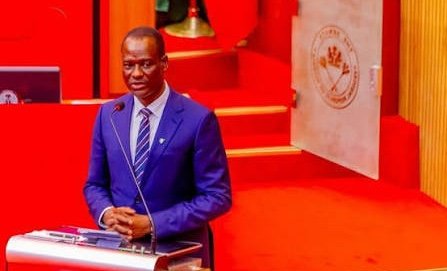
Speaking before the Senate Committee on Finance on Monday, the Minister of Finance and Coordinating Minister of the Economy, Taiwo Oyedele, challenged the narrative that the current administration had embarked on reckless borrowing. According to him, the sharp increase in Nigeria’s public debt cannot be understood simply by comparing the ₦75 trillion debt inherited in 2023 with the present figure.
At the centre of the government’s argument is the impact of currency depreciation. Since a significant portion of Nigeria’s debt is denominated in foreign currencies but reported in naira, the steep decline in the value of the local currency has dramatically inflated the country’s debt profile. Oyedele disclosed that this revaluation exercise alone added more than ₦40 trillion to the official debt stock, even though no new loans were contracted.
Another major factor is the securitisation of the Ways and Means advances accumulated under the previous administration. Approved by the National Assembly, the conversion of these obligations into formal public debt added approximately ₦33 trillion to the government’s books. From the administration’s perspective, this represented an accounting adjustment rather than fresh borrowing, as the liabilities already existed before being formally incorporated into the national debt profile.
The minister also argued that public discourse often fails to distinguish between new borrowing and debt refinancing. A substantial portion of domestic borrowing, he said, has been used to replace maturing obligations rather than finance new government spending. Such refinancing operations are common fiscal tools, although they contribute to the perception of an ever-expanding debt burden.
Beyond explaining the numbers, Oyedele sought to reassure lawmakers that the administration’s borrowing strategy remains disciplined. He maintained that recent loans have been directed largely towards infrastructure and other capital projects instead of recurrent expenditure. In his view, debt should function as a catalyst for economic growth, provided that borrowed funds generate returns that outweigh their costs.
However, the Senate hearing demonstrated that concerns about debt sustainability extend beyond accounting explanations. Some lawmakers, including Senate Chief Whip Mohammed Monguno, shifted attention to the implementation of the capital component of the 2026 budget, questioning whether the government’s borrowing has translated into tangible development outcomes.
The intervention of Senate Finance Committee Chairman Sani Musa underscored the administration’s broader challenge: convincing both lawmakers and the public that rising debt levels are matched by improved fiscal management and economic performance. Discussions around performance-based budgeting and reforms to the current spending framework suggest that the debate is no longer solely about how much Nigeria owes, but whether the country is obtaining sufficient value from its obligations.