

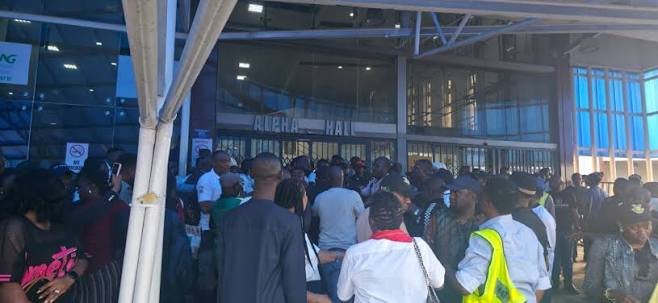
Operations of Nigeria’s largest airline, Air Peace, were severely disrupted on Tuesday after aviation unions picketed the carrier’s facilities in Lagos and Abuja, forcing the cancellation of more than 70 flights.
The industrial action was carried out by the National Union of Air Transport Employees (NUATE) and the Air Transport Service Senior Staff Association of Nigeria (ATSSSAN) at the Murtala Muhammed International Airport in Lagos and the Nnamdi Azikiwe International Airport in Abuja.
The unions cited concerns over the payment of the five per cent Ticket Sales Charge owed to the Nigeria Civil Aviation Authority (NCAA) and alleged restrictions on workers seeking to join aviation unions.
However, the NCAA had previously stated that an agreement had already been reached with airlines to offset the outstanding debt through an approved payment plan following the sharp rise in aviation fuel costs experienced during the recent global energy crisis.
The protest resulted in the blockade of key terminals used by Air Peace, preventing passengers and staff from accessing facilities and disrupting scheduled departures across the airline’s network.
In a statement, Air Peace described the action as a major disruption to its operations, noting that thousands of passengers were affected.
The airline said entrances to its terminals in Lagos and Abuja were barricaded by protesters, making it impossible for flights to depart as scheduled.
The action also prompted United Nigeria Airlines to suspend operations in solidarity with Air Peace, further affecting air travel across the country.
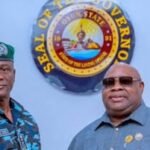
Reacting to the situation, the Director-General of the NCAA, Captain Chris Najomo, appealed to the unions to suspend the protest pending the return of the Minister of Aviation and Aerospace Development, Festus Keyamo.
Meanwhile, the Airlines Operators of Nigeria maintained that carriers had complied with NCAA directives regarding debt repayment and insisted that there was no dispute between operators and the regulator.
Industry stakeholders have also pointed out that Nigerian labour laws make union membership voluntary, meaning employees cannot be compelled to join any labour organisation.
The disruption has renewed concerns about industrial relations within the aviation sector and the broader implications for passenger confidence and airline operations.