
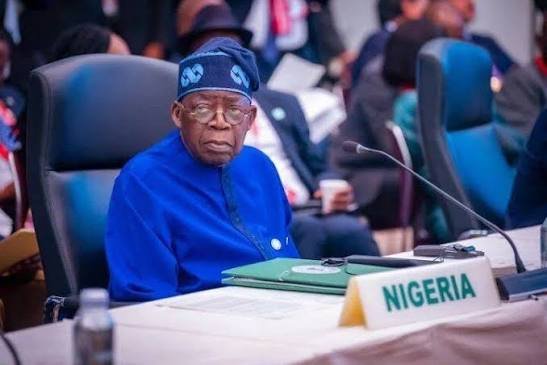
Nigeria has once again fallen short of the United States’ minimum fiscal transparency standards, marking the second consecutive year the country has failed to demonstrate meaningful progress in managing and disclosing public finances, according to the US Department of State’s 2026 Fiscal Transparency Report released Tuesday.
The report assessed 139 governments plus the Palestinian Authority, finding that only 73 met minimum standards. Of the 67 that didn’t, 14 showed significant progress during the review period, while 53, Nigeria included, were classified as having made no progress at all. Based on information gathered by the US Embassy in Abuja alongside other federal agencies, international organisations, and civil society groups throughout 2025, the assessment lands at a particularly awkward moment, with Nigerians already voicing frustration over budget implementation as the government simultaneously runs three overlapping budgets, 2024, 2025, and 2026.
The report’s core criticism centers on a fundamental lack of clarity in how Nigeria’s national budget is presented. According to the State Department, budget documents failed to give a complete picture of government revenue and spending, and did not adequately break down expenditures supporting executive offices. “Budget documents did not provide a substantially complete picture of the government’s revenues and expenditures, or break down expenditures to support executive offices in the budget,” the report stated, noting that a properly complete budget should detail income and spending by ministry, break down revenue by source, including oil and non-oil streams, and disclose allocations to state-owned enterprises and special accounts, none of which Nigeria’s documents adequately achieved.
Perhaps more striking is how sharply this represents a decline from the previous year, when the US had found Nigeria’s budget documents “provided a substantially complete picture of the government’s planned expenditures and revenue and were generally reliable.” This year’s report also flagged a credibility gap between what was budgeted and what was actually spent, noting that “actual revenues and expenditures did not reasonably correspond to those in the enacted budget.” While Nigeria did publish its enacted budget and end-of-year report online, the government fell short on timing for its executive budget proposal, which under US criteria should be made public at least a month before the fiscal year begins to allow for genuine public debate before legislative approval.
Nigeria’s oversight infrastructure came under similarly pointed criticism. The Office of the Auditor-General of the Federation, the report found, lacks the independence required by international standards and has failed to publish substantive audit reports despite having access to the full executed budget. “The supreme audit institution should meet international standards of independence, audit the executed budget, and verify the annual financial statements. The results of such audits… should be published within a reasonable period,” the report said, warning that without genuine independence and published findings, citizens and lawmakers are left without a critical accountability tool.
Procurement transparency fared no better in the assessment. The report found that Nigeria does not make public procurement contract information accessible, and while the country has specified legal criteria for awarding natural resource contracts and licenses and generally followed those procedures, basic details like the geographic scope, resource type, contract duration, and awarded company are not disclosed once decisions are made. The 2026 report also introduced a new, tougher requirement around sovereign loan transparency, demanding that governments publish the terms and conditions of sovereign borrowing, including liabilities and collateralised assets. Nigeria did make information on debt obligations, including major state-owned enterprise debt, publicly available, though the department did not specifically assess whether the country’s loan terms met this new standard.
The State Department was careful to frame fiscal transparency as more than a bureaucratic checkbox, describing it as central to effective public financial management. “Transparency provides citizens a window into government budgets and those citizens, in turn, hold governments accountable. It underpins market confidence and growth,” the report said, while clarifying that failing the assessment doesn’t necessarily indicate significant corruption, though a lack of transparency can create conditions that enable it.
Not everything in the report was critical. The State Department acknowledged that Nigeria’s enacted budget and end-of-year report are both widely and easily accessible online, satisfying US requirements on those two fronts specifically. It also credited Nigeria with making debt obligation information, including major state-owned enterprise debt, publicly available, and noted that the country’s sovereign wealth fund operates under a sound legal framework with disclosed funding sources and withdrawal policies. Still, the report was clear that these positives weren’t enough to lift Nigeria above the minimum threshold.
Washington laid out six specific recommendations for Nigeria going forward: publishing the executive budget proposal online with adequate lead time, providing detailed revenue and expenditure breakdowns by ministry and source, clearly itemizing executive office spending, ensuring actual spending aligns with the approved budget with explanations for major deviations, strengthening the Auditor-General’s independence and publishing audit findings, and making public procurement contract details readily accessible.
Globally, Nigeria found itself grouped among major economies that also failed the assessment, including China, Egypt, Saudi Arabia, Pakistan, and Ukraine. Among the 67 countries that fell short, only 14 showed meaningful progress, including Bangladesh, Cameroon, Chad, Ethiopia, Liberia, and Senegal. Nigeria instead landed among the 53 nations making no discernible progress, a group that includes Algeria, Angola, Uganda, Tanzania, and Mali, among others.
The timing of the US verdict coincides with ongoing domestic debate over specific line items in Nigeria’s 2026 budget, including allocations for religious infrastructure like mosque and church construction, billions earmarked for constituency projects spread across ministries without direct relevant mandates, duplicated infrastructure projects appearing across multiple agencies, and vague lump-sum allocations such as “special presidential interventions” running into hundreds of billions of naira without itemized breakdowns.
Responding to the report, Special Adviser to the President on Media and Public Communication Sunday Dare pushed back against interpreting the findings as a comprehensive verdict on Nigeria’s fiscal governance. “The report by the U.S. Department of State on fiscal transparency is noted. Fiscal transparency, accountability and effective public financial management remain important priorities of the federal government, and Nigeria continues to implement reforms aimed at strengthening the management, reporting and disclosure of public resources,” he said, pointing to the Open Treasury initiative and ongoing procurement digitisation as evidence of genuine reform efforts. “The appropriate response, therefore, is neither to dismiss the findings nor portray them as a complete characterisation of Nigeria’s fiscal governance. Rather, the report provides an external benchmark against which existing reforms can be further strengthened.”
Civil society voices offered a less measured assessment. BudgIT Country Director Vahyala Kwaga largely agreed with the US findings, arguing that Nigeria’s budget documents themselves are reasonably clear on paper, but that actual implementation reporting has been consistently opaque. “The Nigerian federal budget has been consistently clear in terms of its revenue and expenditure composition. What hasn’t been clear for nearly one fiscal year is the report on budget implementation,” he said, noting the added irony that Nigeria is supposed to have adopted International Public Sector Accounting Standards. Kwaga also confirmed the report’s criticism of the Auditor-General’s office, pointing out that the President has left an audit reform bill unsigned for months, and flagged that certain capital expenditure components have been folded into a vague “capital supplementation” category, with 2024 and 2025 repeal-and-re-enactment laws effectively bypassing standard legislative scrutiny for some projects. He added that procurement processes remain opaque in practice despite existing legal requirements, with tender announcements often unaccompanied by bid opening details or evidence of competitive bidding, and noted that debt sustainability analyses haven’t been published since 2023 despite debt figures themselves being available.
In a related development, the House of Representatives Ad hoc Committee investigating the controversial Presidential Foreign Investment Promotion Council failed to hold its scheduled sitting Wednesday, despite having previously adjourned to that date for what was expected to be the probe’s concluding public hearing phase. Neither the committee nor its chairman, Yusuf Gagdi, offered an explanation for the postponement by press time.
The PFIPC controversy centers on an organisation that allegedly functioned as a federal agency despite lacking any legal basis, established through neither law, executive order, nor valid government instrument, yet somehow secured a N1.3 billion allocation in the 2026 Appropriation Act. The 12-member committee’s investigation has since expanded to examine allegedly forged government documents, unauthorized office space acquisition, misuse of government vehicle plates, and attempts to gain recognition across multiple government agencies. Accountant-General of the Federation Shamseldeen Ogunjimi told the committee his office had acted on a letter purportedly from the State House that turned out not to have originated there at all, and investigators have since identified roughly 29 allegedly forged documents linked to institutions including the State House, the Office of the Head of Civil Service, and the Federal Ministry of Finance. Head of Civil Service Didi Esther Walson-Jack acknowledged insufficient due diligence in how documents tied to the organisation were handled, and Gagdi confirmed that the purported appointment letter of the council’s self-styled Director-General, Adeniyi Adeyemi, was determined to be fake. Adeyemi’s testimony remains a central unresolved issue in the probe; while the committee had ordered police to produce him within 48 hours, authorities say he remains held under a court order and cannot be released to appear before lawmakers without proper judicial authorisation.