


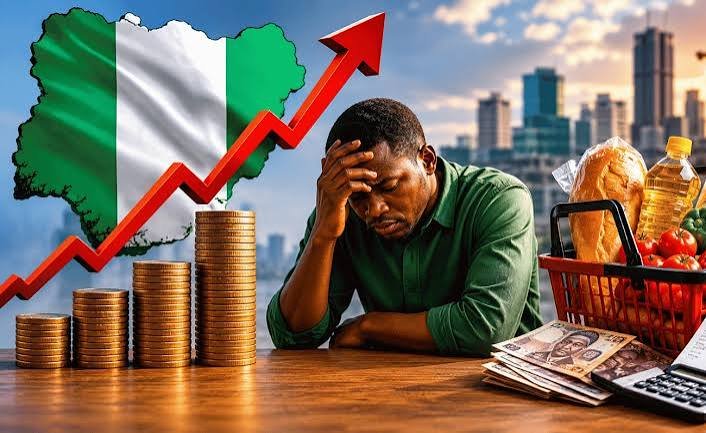
Who would have believed that there was once a time when the Nigerian naira was stronger than the United States dollar?
Following the introduction of the naira in 1973 and during the oil boom years of the 1970s, the currency became one of Africa’s strongest. Imported goods were relatively affordable, inflation was lower than current levels, and many Nigerians experienced greater purchasing power than is common today.
Fast forward several decades and the story has changed dramatically.
Today, a single dollar exchanges for well over a thousand naira. The price of food has soared. Rent has become increasingly difficult for many households. Transportation costs have risen sharply. Electricity tariffs have increased. Small businesses are struggling with higher operating expenses, while millions of families are constantly adjusting their budgets just to make ends meet.
Across markets in Lagos, Kano, Port Harcourt and Enugu, a common complaint echoes among traders, workers and consumers alike:
“Everything has become expensive.”
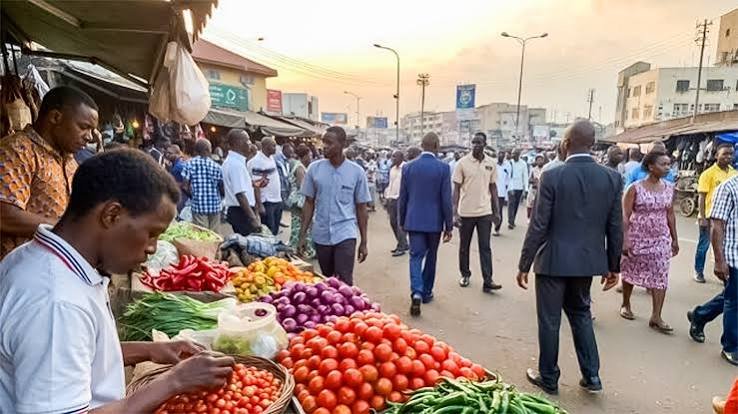
For many Nigerians, the cost-of-living crisis is no longer an economic concept discussed in policy circles. It is a daily reality reflected in the cost of food, transportation, housing, healthcare and education.
Yet amid these challenges, the Federal Government maintains that the economic reforms introduced by President Bola Ahmed Tinubu’s administration are necessary measures aimed at stabilising the economy and laying the foundation for long-term growth.
The question many Nigerians continue to ask is simple:
Are they beginning to feel the benefits?
The Reforms That Changed the Economic Landscape
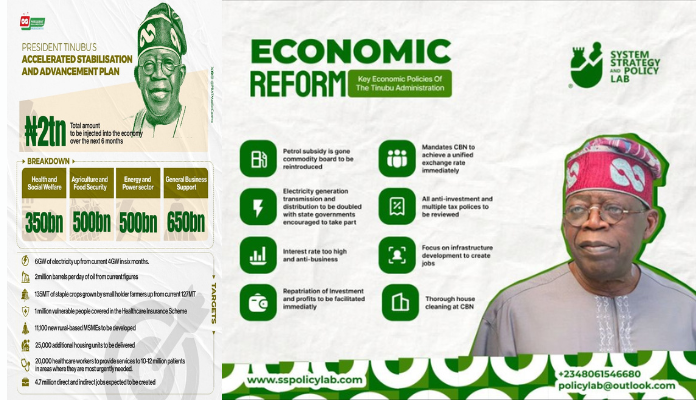
On May 29, 2023, during his inaugural address, President Tinubu announced the removal of fuel subsidy, declaring that “fuel subsidy is gone.”
The announcement marked a major turning point in Nigeria’s economic policy direction.
For years, government officials and economic experts had argued that the subsidy regime was consuming significant public resources while creating distortions within the economy.
Around the same period, the government also moved towards a more market-driven foreign exchange system, reducing the multiple exchange-rate windows that had existed previously.
Many economists and international financial institutions welcomed both decisions, arguing that they could improve fiscal sustainability, attract investment and strengthen economic management over time.
However, while the reforms were widely viewed as necessary by many policy experts, their immediate effects were felt by ordinary Nigerians.
The Immediate Impact
Fuel prices increased significantly.
Transportation costs rose.
Businesses dependent on fuel and imported inputs faced higher operating expenses.
Food prices climbed as rising transportation and production costs filtered through supply chains.
Within months, many households found that incomes that previously covered essential needs were no longer sufficient.
Families adjusted spending patterns. Some reduced non-essential expenses, while others faced difficult choices regarding healthcare, education and household consumption.
The result was a growing cost-of-living challenge that affected citizens across different income groups.
Signs of Economic Recovery?
Nearly three years after the reforms began, debate continues over whether the policies are producing the intended results.
Government officials argue that increased state revenues, improved foreign reserves and renewed investor confidence indicate that the reforms are beginning to yield results.
Recent economic indicators, including improvements in foreign reserves, stronger government revenues and increased investor interest, suggest that some macroeconomic gains may be emerging.
President Tinubu has repeatedly maintained that the reforms are difficult but necessary, arguing that they are intended to create a more stable and resilient economy over the long term.
According to the administration, reversing the reforms could undermine efforts to address longstanding structural challenges within the economy.
But What Are Nigerians Experiencing?
While macroeconomic indicators provide one measure of economic performance, many citizens evaluate economic conditions differently.
For most Nigerians, economic improvement is measured through everyday realities.
Can families afford food without reducing portions?
Can workers commute without spending a large share of their income on transportation?
Can parents comfortably pay school fees?
Can small businesses remain profitable?
These are the questions that shape public perception of the economy.
Although some economic indicators may be improving, many households continue to face high prices and reduced purchasing power.
As a result, a gap remains between encouraging macroeconomic signals and the daily experiences of many citizens.
In response to the hardship associated with the reforms, the Federal Government has introduced a range of intervention programmes.
These include the Nigerian Education Loan Fund (NELFUND), support initiatives for small businesses, efforts to expand agricultural production and measures aimed at improving social protection.
Government officials argue that these interventions are designed to cushion the effects of the reforms while broader economic benefits gradually take shape.
First Lady Senator Oluremi Tinubu has also urged Nigerians to remain hopeful and resilient as the administration continues its economic reform agenda.
Economic reforms are often judged not only by their long-term objectives but also by how quickly citizens begin to experience tangible improvements in their quality of life.
This remains the central challenge facing the current administration.
While policymakers focus on long-term economic stability, many citizens remain concerned about immediate realities.
For a trader facing rising costs, a worker struggling with transportation expenses or a family dealing with higher food prices, economic recovery is meaningful only when it translates into visible improvements in daily living.
Nigeria’s economic history has been marked by cycles of prosperity, adjustment and resilience.
The reforms introduced since 2023 represent one of the most significant attempts in recent years to reshape the country’s economic direction.
Whether they ultimately deliver the promised benefits remains a question that will be answered over time.
For now, many Nigerians continue to assess the economy using a simple measure:
Is life becoming more affordable?
Until more citizens can confidently answer “yes,” the debate over the impact of Nigeria’s economic reforms is likely to remain at the centre of national conversations.