

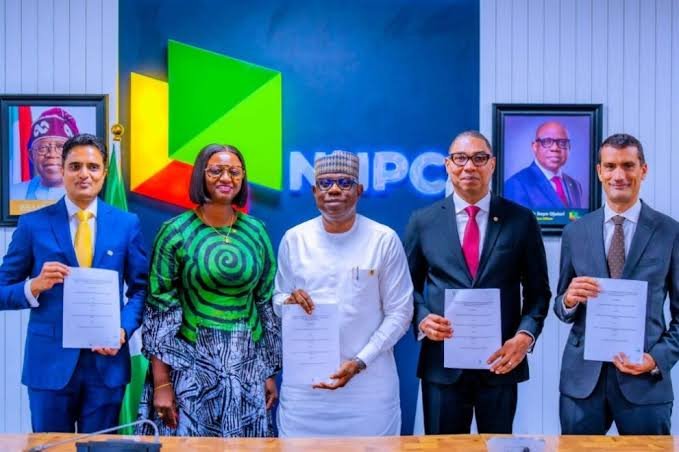
Nigeria’s quest to attract major investments into the oil and gas sector received a boost on Monday as the Nigerian National Petroleum Company Limited (NNPCL) and its international partners signed key agreements expected to accelerate the development of the Bonga South-West Aparo deepwater project.
The agreements include an addendum to the Oil Mining Lease 118 Production Sharing Contract (PSC) and an addendum to the Dispute Settlement Agreement (DSA), executed by NNPCL alongside Shell Nigeria Exploration and Production Company Limited (SNEPCo), Esso Exploration and Production Nigeria (Deepwater) Limited and Nigerian Agip Exploration Limited.
According to NNPCL, the milestone clears a major hurdle toward reaching the project’s Final Investment Decision (FID) and demonstrates growing investor confidence in Nigeria’s deepwater oil sector.
The company stated that the agreements implement fiscal and commercial terms recently approved by the Federal Government to support the project and create a more attractive investment climate for large-scale offshore developments.
The Bonga South-West Aparo project is expected to become one of Nigeria’s largest deepwater oil developments, with projected investments ranging between $15 billion and $21 billion over its lifespan.
Industry estimates indicate that the project could achieve peak production of approximately 175,000 barrels of crude oil per day and 140 million standard cubic feet of gas daily, contributing significantly to Nigeria’s energy security and foreign exchange earnings.
NNPCL Group Chief Executive Officer, Bayo Ojulari, described the signing as evidence that ongoing reforms in the energy sector are beginning to attract concrete investments.
He said the project demonstrates that Nigeria now offers a more competitive fiscal framework capable of attracting global energy investors while supporting sustainable development within the sector.
The milestone follows the approval of the Deep Offshore Oil and Gas Projects Incentives (Tax Remission) Order 2026 by President Bola Tinubu, a policy aimed at encouraging investment in offshore oil exploration and production.
The contractor parties also announced the successful completion of the project’s Pre-Front End Engineering Design (Pre-FEED) phase, another critical step toward full project execution.
Analysts believe the development could create jobs, increase government revenue and strengthen Nigeria’s position as a leading energy producer in Africa.