

In every democracy, elections are more than campaign posters, political rallies and party slogans.
They are moments when citizens decide who will lead their nation and shape its future.
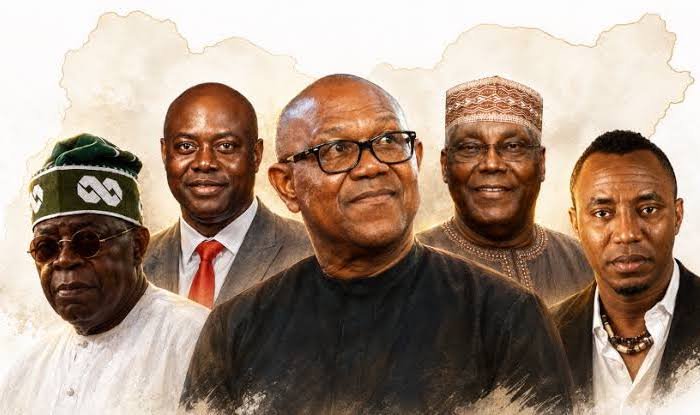
As Nigeria gradually moves towards the 2027 presidential election, political activities are beginning to intensify across the country. Political parties are positioning themselves, alliances are being discussed, and familiar faces are once again emerging on the national stage.
For many Nigerians, especially first-time voters, understanding who the major contenders are and what they represent is becoming increasingly important.
The journey to the next presidential election may still have some distance to cover, but the race for Nigeria’s highest office has already begun.
Understanding the Presidential Race
Nigeria operates a presidential system of government in which citizens elect a President every four years.
The President serves as both Head of State and Head of Government and is responsible for directing national policies on security, the economy, foreign affairs and governance.
The 2027 election is expected to be one of the most closely watched contests since Nigeria’s return to democratic rule in 1999.
This is because the election comes at a time when many Nigerians are concerned about economic hardship, inflation, unemployment and insecurity, issues that are likely to dominate campaign conversations.
Bola Ahmed Tinubu and the APC
President Bola Ahmed Tinubu remains the most prominent figure in the race.
The All Progressives Congress (APC) leader won the 2023 presidential election and is seeking another term in office. His supporters argue that difficult economic reforms undertaken since 2023 were necessary to stabilise the economy and create a foundation for long-term growth.
Among the reforms frequently cited by the administration are the removal of fuel subsidy, exchange-rate reforms and efforts to increase government revenue.
However, critics argue that many Nigerians are yet to feel the benefits of those reforms due to rising living costs and continued economic pressure.
For Tinubu, the central campaign question may be straightforward:
Can he convince Nigerians that the sacrifices of today will produce a better tomorrow?
Atiku Abubakar’s Return
Former Vice President Atiku Abubakar remains one of the most recognisable figures in Nigerian politics.
Having contested multiple presidential elections, Atiku continues to present himself as an experienced leader capable of addressing Nigeria’s economic and governance challenges.
Recent political developments indicate that he remains active within opposition politics and is positioning himself as one of the major challengers to the incumbent administration.
His supporters point to his experience in business and public administration, while critics question whether Nigerians are ready for another Atiku presidential bid.
Regardless of differing opinions, his influence within national politics remains significant.
Peter Obi and the Youth Factor
Few politicians transformed Nigeria’s political landscape in 2023 as dramatically as Peter Obi.
The former Anambra State governor attracted significant support from young voters and urban populations, helping to reshape conversations about citizen participation and political engagement.
Obi has continued to maintain a visible national presence and remains one of the leading opposition figures ahead of the 2027 election. Reports indicate that he is participating in broader opposition political movements while remaining a major force among his supporters.
For many observers, one of the biggest questions heading into 2027 is whether Obi can expand his support beyond the coalition of voters that backed him in 2023.
The Opposition Challenge
Perhaps the biggest story of the 2027 election is not simply who is contesting.
It is whether the opposition can unite.
Political analysts and recent reports have repeatedly pointed to opposition fragmentation as one of the factors strengthening the position of the ruling APC. Multiple opposition figures continue to operate separately rather than under a single platform.
Nigeria’s electoral history suggests that when major opposition candidates divide votes among themselves, incumbents often benefit.
This reality has fuelled ongoing conversations about possible alliances and coalitions among opposition parties.
Whether such cooperation materialises remains uncertain.
What Should Nigerians Be Looking At?
As campaign activities increase, voters may eventually be confronted with familiar promises.
Jobs.
Security.
Infrastructure.
Education.
Healthcare.
Economic growth.
However, elections are often decided not only by promises but by public confidence.
Nigerians are likely to evaluate candidates based on:
Their previous public records.
Their plans for addressing insecurity.
Their economic policies.
Their ability to unite diverse regions and interests.
Their vision for the country’s future.
Beyond the Candidates
The 2027 election is ultimately about more than personalities.
It is about the direction Nigeria chooses for the next four years.
The coming months are expected to bring more declarations, party primaries, political debates and policy proposals.
For citizens, the challenge will be separating campaign rhetoric from practical solutions.
For politicians, the challenge will be convincing Nigerians that they possess the ideas, competence and leadership required to address the country’s pressing challenges.
And for democracy itself, the challenge remains the same as it has always been:
Ensuring that every eligible voter has the opportunity to make an informed choice.
As the road to 2027 unfolds, Nigerians will once again be called upon to perform perhaps the most important duty in a democracy, not merely to listen, but to decide.