


A missing manhole cover on a major highway.
A vandalised transmission tower plunging communities into darkness.
Stolen cables from a bridge surveillance system.
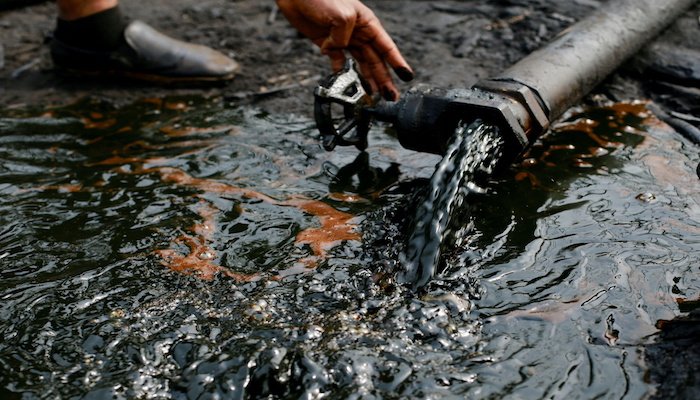
Damaged pipelines leaking crude oil into the environment.
Across Nigeria, attacks on public infrastructure have become an increasingly visible challenge, raising concerns among government officials, lawmakers, security agencies and industry stakeholders.
What may appear to be isolated acts of theft are increasingly being viewed as a broader threat to public safety, economic growth and national development.
In recent months, authorities have intensified efforts to tackle vandalism affecting roads, bridges, power installations, oil facilities and other public assets, while lawmakers and stakeholders continue to push for stronger legal measures against offenders.
A Growing Concern
One of the most striking examples emerged in Lagos in August 2026 when the Lagos State Police Command paraded 39 suspects arrested for offences including vandalism and robbery.
According to police findings, vandals had removed approximately 1,800 manhole covers, about 1,000 metres of wire-mesh fencing and 75 directional signs from sections of the Lagos-Calabar Coastal Highway between January and August 2026.
Police also identified a suspect, Chidiebere Ochiri, who was accused of stealing CCTV cables and copper wires from the Third Mainland Bridge. Investigators alleged that the stolen copper wires were sold to scrap dealers for about ₦12,000 per kilogramme.
The incidents highlighted growing concerns about attacks on critical public infrastructure.
Beyond the immediate financial losses, authorities warn that such activities can compromise public safety and damage facilities built with public funds.
Why Government Is Concerned
Successive administrations have invested heavily in roads, bridges, power infrastructure and other development projects intended to improve economic activity and the quality of life for citizens.
When those facilities are vandalised, government officials say the consequences extend beyond the damaged structures themselves.
Speaking during the inauguration of the 33.5-kilometre Elele–Egbeda–Omoku dual carriageway in Rivers State in August 2026, Vice President Kashim Shettima urged Nigerians, particularly young people, to protect public infrastructure.
Shettima described roads as “the most democratic instruments of development” and warned that vandalism undermines economic growth and national progress.
His remarks reflect growing concern among policymakers that public assets are increasingly becoming targets for criminal activity.
The Power Sector Challenge
The electricity sector has also repeatedly raised concerns over vandalism.
Stakeholders in the power industry have called for stronger protection of electricity infrastructure, arguing that attacks on power assets contribute to disruptions in electricity supply and increase operational costs.
During a roundtable organised by the House of Representatives Ad-hoc Committee on Electricity Theft in June 2026, participants advocated special courts to handle cases involving electricity theft and vandalism.
The stakeholders also recommended stronger legal protections for power infrastructure and greater collaboration between communities, security agencies and operators.
Their argument was straightforward: infrastructure that serves millions of Nigerians requires stronger protection.
Oil Theft and Economic Sabotage
Concerns about vandalism are not limited to roads and electricity facilities.
The House of Representatives Special Committee on Crude Oil Theft has also warned about the continued threat posed by oil theft and pipeline vandalism.
Speaking in July 2026, the Chairman of the Committee, Alhassan Ado Doguwa, argued that outdated laws and weak penalties were undermining efforts to combat crude oil theft.
The committee called for a review of existing laws and proposed the establishment of special courts to handle oil theft cases more efficiently.
According to lawmakers, stronger legal frameworks could improve deterrence and support efforts to protect one of Nigeria’s most important economic assets.
Calls for Stronger Laws
A recurring theme across discussions on vandalism is the demand for tougher enforcement and quicker prosecution.
Whether the issue involves oil facilities, power installations, road infrastructure or public utilities, many stakeholders believe existing legal frameworks are not sufficiently effective in addressing the problem.
Both lawmakers and industry stakeholders have proposed specialised courts or designated judicial processes that would allow infrastructure-related offences to be handled more quickly.
Supporters argue that faster prosecution could strengthen accountability and discourage future offences.
Beyond Government Action
While security agencies continue to make arrests and lawmakers debate legal reforms, many officials believe that protecting public infrastructure requires broader public participation.
Authorities have repeatedly stressed that roads, bridges, electricity facilities and other public assets belong to all Nigerians and should be protected accordingly.
For government, the challenge is not only constructing infrastructure but also ensuring that those investments remain functional and accessible to the people they are intended to serve.
Looking Ahead
As Nigeria continues to invest in roads, power projects, transportation networks and other public facilities, the issue of vandalism is likely to remain a major concern.
Recent arrests, legislative proposals and public warnings suggest that authorities are taking the issue seriously.
However, the persistence of attacks on public assets indicates that the challenge is far from over.
The debate now centres on how best to protect critical infrastructure, strengthen accountability and ensure that public investments continue to serve the purpose for which they were built.
For many stakeholders, one thing is clear: protecting public infrastructure is not only a government responsibility. It is a national responsibility.