

The Federal Ministry of Marine and Blue Economy has announced plans to revive Nigeria’s national shipping carrier through a Public-Private Partnership (PPP) arrangement following significant growth in revenue generated by the maritime sector.
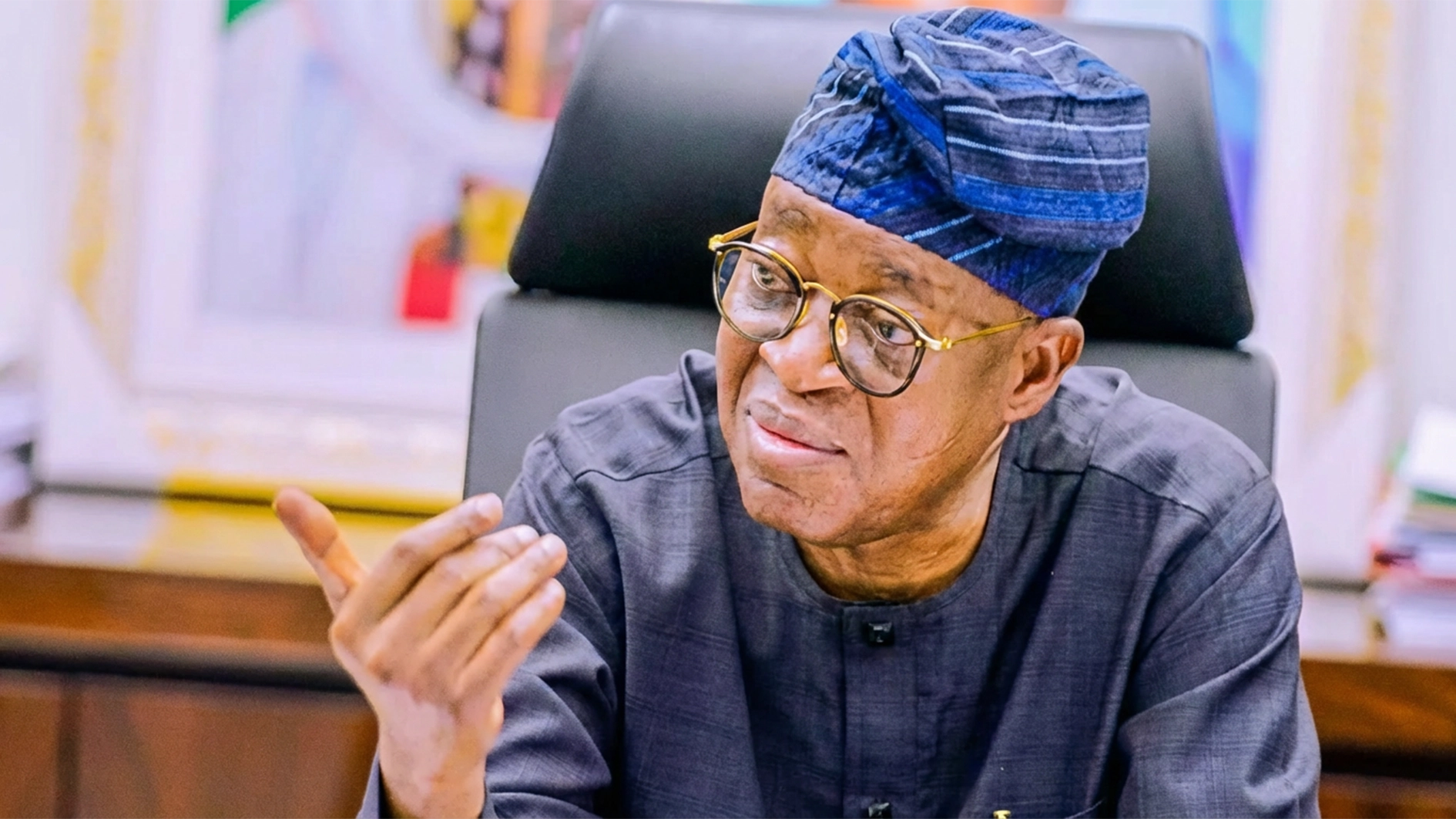
Minister of Marine and Blue Economy, Dr. Adegboyega Oyetola, disclosed that the sector generated ₦1.83 trillion in revenue in 2025, representing a 160 per cent increase compared to the ₦700.79 billion recorded in 2023.
According to the minister, the growth reflects the impact of reforms introduced since the establishment of the ministry by President Bola Tinubu three years ago.
Oyetola attributed the improvement to enhanced revenue assurance mechanisms, regulatory reforms, digitalisation initiatives and efforts to eliminate financial leakages within the maritime industry.
“At the heart of our mandate is a simple but powerful objective: to turn Nigeria’s vast marine resources into sustainable economic value for Nigerians,” he said.
A major component of the ministry’s strategy is the revival of indigenous shipping capacity through the creation of a national carrier and the disbursement of the long-awaited Cabotage Vessel Financing Fund (CVFF), which is expected to enable Nigerian shipowners acquire modern vessels.
“We cannot build a truly blue economy if Nigerians remain spectators in their own maritime industry,” the minister stated.
Beyond shipping, Oyetola highlighted several achievements recorded under the ministry, including the approval of Nigeria’s first National Policy on Marine and Blue Economy in 2025. The policy provides a comprehensive framework covering shipping, fisheries, offshore energy, marine biotechnology and other sectors within the blue economy.
The ministry has also embarked on major upgrades of seaports across the country, including Apapa, Tin Can Island, Onne, Rivers, Calabar and Warri ports.
These upgrades involve channel dredging, expansion of cargo-handling infrastructure and the deployment of digital technologies aimed at improving efficiency and reducing congestion.
According to the minister, Nigeria’s maritime security profile has also improved significantly. The country has maintained zero piracy incidents in its territorial waters for four consecutive years, supported by assets acquired under the Deep Blue Project.
Additional achievements include Nigeria’s return to the International Maritime Organization (IMO) Category C Council after a 14-year absence and the lifting of long-standing United States Coast Guard restrictions on vessels departing Nigerian ports.
The ministry said ongoing investments in deep seaports and inland dry ports are expected to further strengthen Nigeria’s position as a leading maritime hub in Africa.