


The death of the Emir of Gumel, Alhaji Ahmed Muhammad-Sani II, has drawn condolences from the Federal Government, with Vice President Kashim Shettima describing the monarch’s passing as a significant loss to Jigawa State and Nigeria.
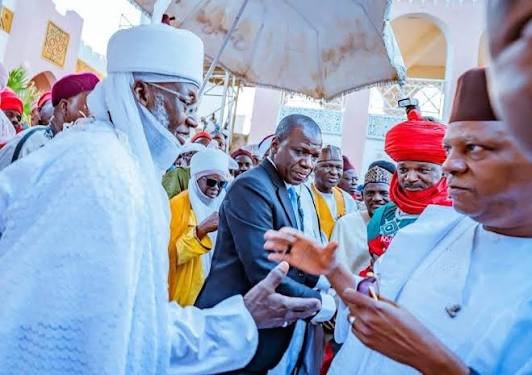
Shettima conveyed the condolences of President Bola Tinubu and the Federal Government during a visit to the royal family following the death of the traditional ruler.
The 16th Emir of Gumel died in Cairo, Egypt, on September 3, 2026, after spending almost 46 years on the throne. He ascended the throne on December 16, 1980.
In his tribute, the Vice President described the late emir as a traditional ruler whose influence extended beyond the administration of the Gumel Emirate.
According to Shettima, the monarch played important roles in peacebuilding, education, community development and efforts aimed at strengthening national cohesion during his long reign.
“His Royal Highness was more than a traditional ruler. He was a father, a bridge-builder and a stabilising voice whose wisdom served his people and the nation for almost half a century,” Shettima said.
The Vice President said the late monarch belonged to a generation of traditional rulers whose contributions went beyond their traditional responsibilities to matters affecting the wider society.
Shettima also prayed for the repose of the late emir’s soul, asking Almighty Allah to forgive his shortcomings and accept his good deeds.
He further prayed that Allah grant the deceased Aljannah Firdaus and give members of the royal family, the Gumel Emirate and the people of Jigawa State the strength to cope with the loss.
The death marks the end of a reign that lasted nearly five decades, during which the late monarch remained the traditional head of the Gumel Emirate.
The condolence visit by the Vice President underscored the significance attached to the late emir’s death by the Federal Government and the people of Jigawa State.
The royal family and the wider Gumel community are expected to continue mourning the traditional ruler, whose reign spanned several decades of social and political changes in the country.