


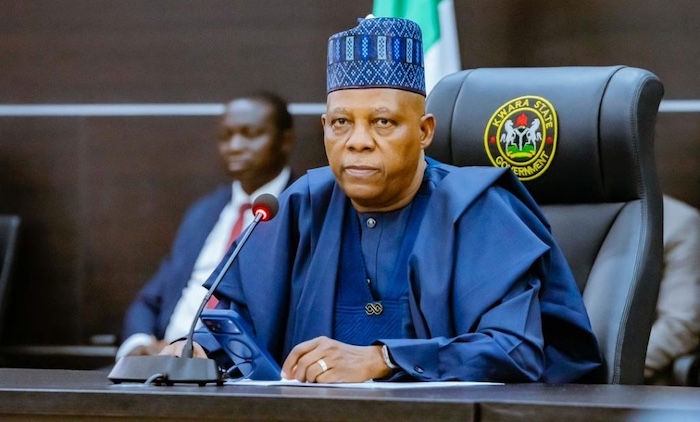
Vice President Kashim Shettima has warned that Nigeria’s worsening nutrition situation could undermine human capital development, as new figures show that 41.1 per cent of children under five are stunted nationwide.
The situation is more severe in the North-West, where stunting affects 58.2 per cent of children, according to figures presented on Tuesday in Lagos at the 56th Annual Scientific Conference and Annual General Meeting of the Nutrition Society of Nigeria (NSN).
Shettima, represented by his Senior Special Assistant on Public Health and Focal Person on Nutrition, Mrs Uju Rochas-Anwukah, also disclosed that only six per cent of pregnant women completed at least 180 days of iron-containing supplementation in 2024, far below the national target of 70 per cent by 2035.
He further said only 30 per cent of women of reproductive age currently meet the minimum dietary diversity requirement, compared with a target of 60 per cent by 2035.
Speaking on the theme, “Delivering Better Nutrition for All: Connecting the Dots Across Life Cycle, Systems and Sectors,” the Vice President said the figures demanded coordinated action involving government, businesses, researchers and communities.
He said Nigeria’s nutrition policies should be assessed by their impact on households rather than the number of policy documents produced.
According to him, the National Nutrition Dashboard should function as an accountability mechanism for evidence-based governance, while food fortification should be measured by its effect on micronutrient deficiencies.
Shettima said the Federal Government was pursuing a multisectoral response through the National Policy on Food and Nutrition 2026–2035 and the Nutrition 774 Initiative, designed to extend nutrition interventions to all 774 local government areas.
He also urged researchers and nutrition professionals to identify implementation gaps and provide evidence that could influence government budgets and programmes.
“Good intentions do not feed a child. Budgets must be released on time, expenditures tracked, and every naira judged by measurable community impact,” he said.
Chairman of the NSN Board of Trustees, Muhammadu Sanusi II, said the latest figures should make nutrition a central development concern. He disclosed that 19.2 per cent of Nigerian children under five are severely stunted, linking nutrition with productivity, cognitive development, maternal survival and national resilience.
Sanusi called for protected nutrition funding, dedicated budget lines, stronger expenditure monitoring and improved food fortification compliance. He also urged the speedy passage of the Nutritionists Registration Council of Nigeria Bill.
NSN President, Prof. Salisu Maiwada Abubakar, described the country’s nutrition profile as “both a warning and a call to action,” stressing the need to connect interventions across food, health, education, social protection, water and sanitation systems.
The Permanent Secretary, Lagos State Ministry of Health, Dr Dayo Lajide, also highlighted Nigeria’s “triple burden” of malnutrition, while NAFDAC Director-General, Prof. Mojisola Adeyeye, called for closer cooperation among regulators, academics, industry and policymakers to improve access to safe and nutritious food.