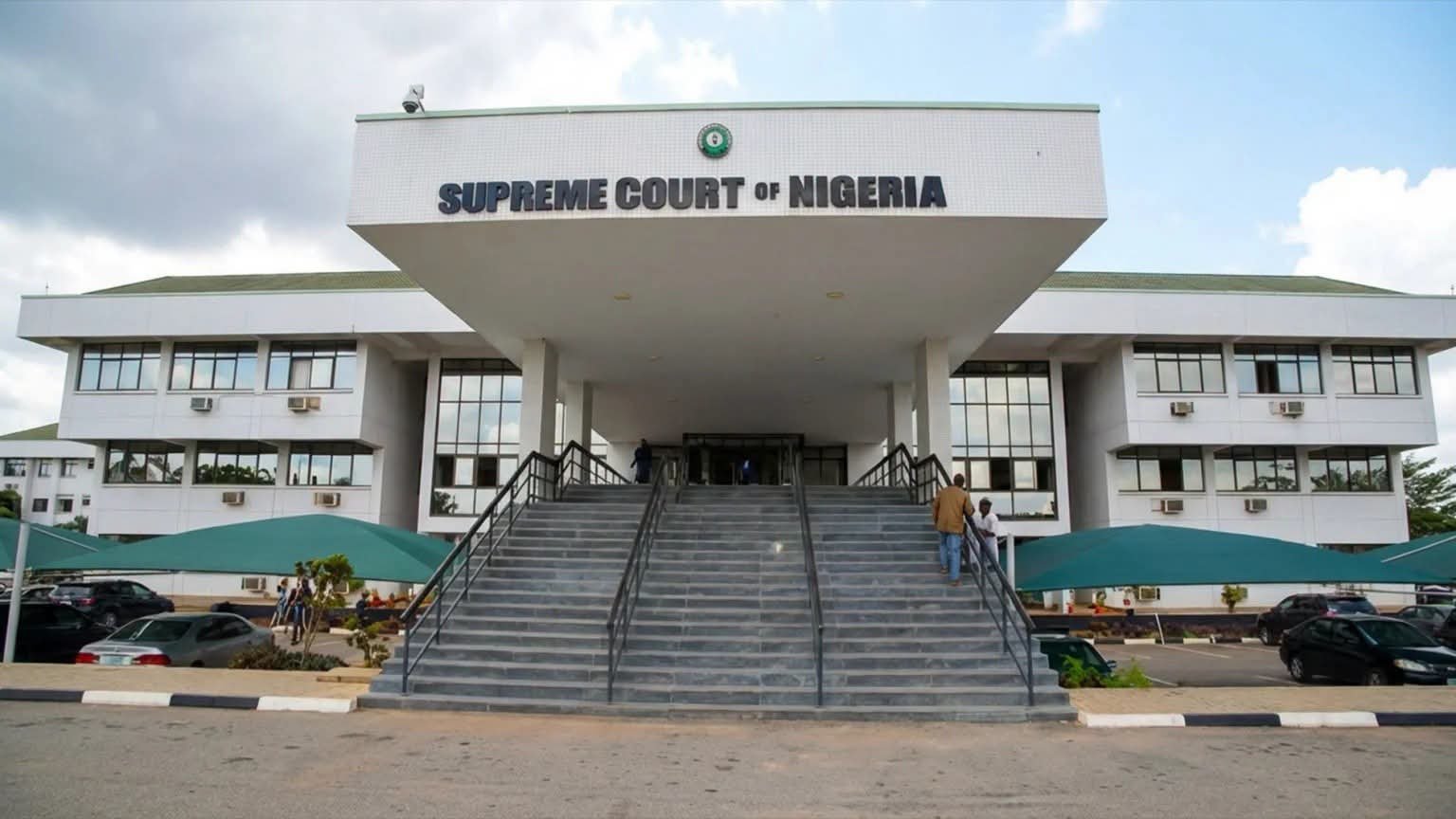
The Supreme Court has reserved judgment in a legal dispute between the Independent National Electoral Commission (INEC) and the Zenith Labour Party (ZLP) over provisions of the Electoral Act 2026 dealing with political party primaries and membership registers.
The appeal, marked SC/CR/495/2026, followed a decision of the Court of Appeal which voided the disputed provisions after the Zenith Labour Party challenged their validity.
A seven-member panel of the Supreme Court, presided over by Justice Adamu Jauro, reserved judgment after hearing arguments from the parties involved in the case. The court said the date for delivering its decision would be communicated to the parties.
“This matter is now reserved for judgment, at a date to be communicated to the parties,” Justice Jauro said.
INEC is the appellant in the case, while the Zenith Labour Party is the respondent.
The dispute originated from a suit filed by the Zenith Labour Party at the Federal High Court in Abuja. The party had challenged provisions of the Electoral Act which it argued were inconsistent with the 1999 Constitution.
The Federal High Court initially dismissed the action brought by the party. Dissatisfied with the decision, the ZLP proceeded to the Court of Appeal, where the appellate court subsequently voided the provisions at the centre of the dispute.
The decision prompted INEC to approach the Supreme Court in an effort to challenge the Court of Appeal’s judgment.
The legal dispute comes as Nigeria’s political parties and electoral authorities prepare for the 2027 general elections. Questions surrounding party membership, internal party processes and the conduct of primaries remain important components of the electoral framework, particularly as political parties prepare to select candidates for various elective positions.
The provisions being challenged concern the regulatory framework governing political parties, including matters relating to party primaries and membership registers. The outcome of the Supreme Court case could therefore have implications for how the relevant provisions of the Electoral Act 2026 are interpreted and applied.
However, until the Supreme Court delivers its judgment, the legal questions raised in the appeal remain unresolved.
The case also highlights the continuing role of the courts in interpreting electoral legislation and determining whether provisions of electoral laws comply with constitutional requirements.
The judiciary has previously handled several disputes involving the interpretation and application of Nigeria’s electoral laws, with political parties and electoral bodies frequently turning to the courts when disagreements arise over statutory provisions and electoral procedures.
For INEC, the dispute is significant because the commission is responsible for regulating and administering federal elections and implementing relevant electoral laws. For political parties, the interpretation of statutory requirements can affect internal processes, including the organisation of primaries and maintenance of membership records.
The Supreme Court’s eventual decision is expected to provide clarity on the disputed provisions and determine the legal position following the earlier decisions of the lower courts.
Until the judgment is delivered, both INEC and the Zenith Labour Party remain bound by the existing legal framework and any applicable orders of the courts.
The apex court did not announce a specific date for judgment, stating only that the parties would be informed when the date had been fixed.
The case therefore remains pending before Nigeria’s highest court, with stakeholders awaiting the final interpretation of the disputed provisions of the Electoral Act 2026.