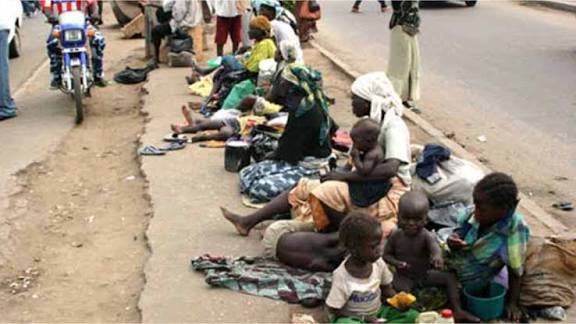
As deliberations continue on a proposed law aimed at tackling street begging and related social challenges in Lagos State, the Nigerian Bar Association (NBA), Lagos Branch, has called for stronger legal safeguards to ensure that vulnerable persons are protected and not unfairly criminalised.
The association made the appeal during a public hearing on the proposed Street Begging and Street Urchins (Prohibition, Prevention and Rehabilitation) Bill 2026 held at the Lagos State House of Assembly in Ikeja.
Presenting the NBA’s memorandum, Chairman of the Lagos Branch, Uchenna Ogunedo Akingbade, stressed that while government efforts to improve public order and security are important, such measures must be implemented in a manner that respects human rights, dignity and due process.
Akingbade noted that the proposed legislation should focus on addressing the root causes of street begging while protecting those who may be victims of exploitation, particularly children. According to him, children found begging on the streets should be regarded as children in need of care and protection under existing Child Rights laws rather than being treated as offenders.
The NBA also advocated stronger sanctions against individuals or groups that exploit minors for street begging, arguing that those who profit from such activities should bear greater legal responsibility.
Beyond child protection, the association urged lawmakers to include clear safeguards governing arrest, detention and rehabilitation procedures. It recommended that any enforcement framework under the proposed law should incorporate due process guarantees, judicial oversight and clearly defined time limits for rehabilitation programmes.
The legal body further called for transparency and accountability in the administration of the proposed law. It recommended adequate funding for the agency that would oversee implementation, clearly defined institutional responsibilities and mechanisms to ensure financial accountability.
The NBA also raised concerns about privacy rights, urging lawmakers to include provisions protecting personal data collected during enforcement and rehabilitation processes.
Reports from the hearing indicated that repeat offenders could face penalties of up to N200,000 in fines or imprisonment for up to two years if the bill is eventually passed into law.
The proposal generated varied reactions among stakeholders. While some participants argued that stricter regulations are necessary to address security concerns, environmental challenges and the increasing presence of street beggars in public spaces, others warned against creating laws that may effectively criminalise poverty.
The NBA maintained that both concerns can be addressed through a balanced legal framework that promotes public safety without undermining fundamental rights.
The association insisted that any final legislation should prioritise rehabilitation, social support and protection for vulnerable groups while ensuring that enforcement measures remain consistent with constitutional and human rights standards.
As lawmakers continue consultations on the bill, stakeholders are expected to scrutinise how the proposed legislation balances security objectives with the welfare and dignity of those most affected by its provisions.