Ghana has called on member states of the Economic Community of West African States (ECOWAS) to move beyond policy declarations and commit greater financial resources and legislative support toward tackling the growing threat of climate change across the region.
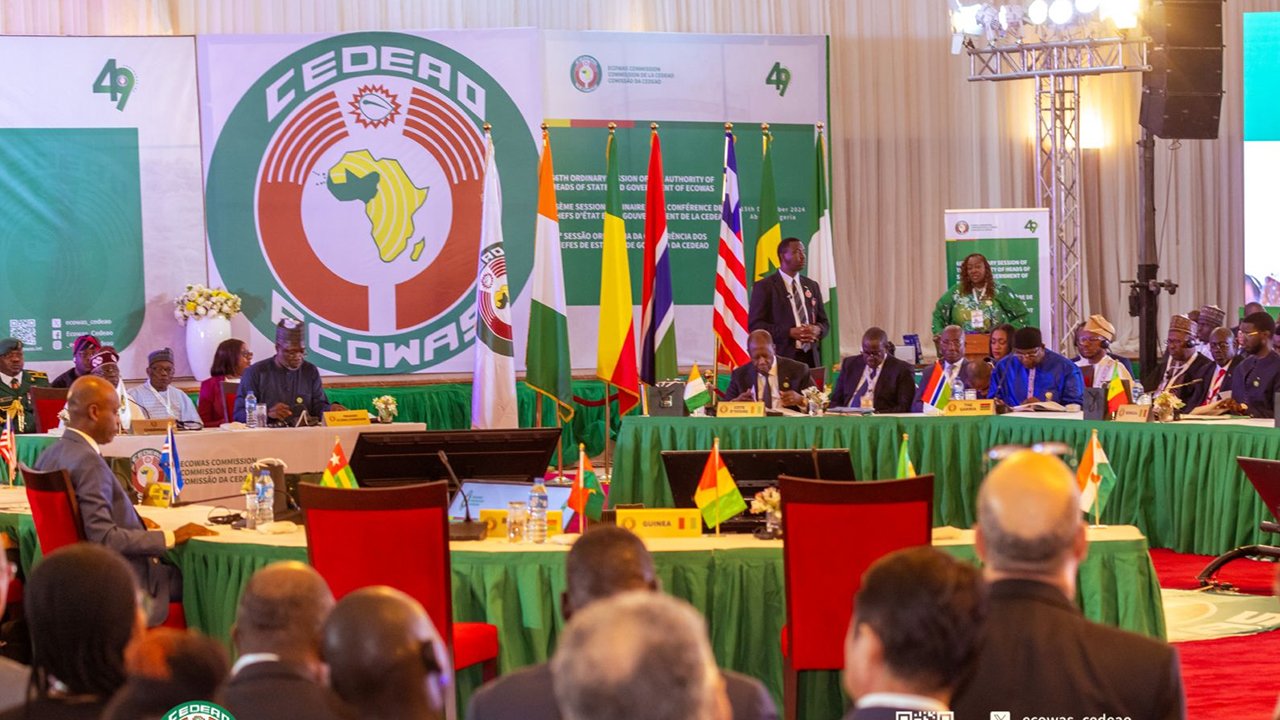
The appeal was made during the opening of the Second 2026 Parliamentary Seminar and Extraordinary Session of the ECOWAS Parliament in Accra, where regional leaders gathered to discuss climate resilience, development and regional cooperation.
Representing Ghanaian President John Mahama, Vice-President Professor Jane Naana Opoku-Agyemang said climate change has become a shared regional challenge whose consequences increasingly transcend national borders.
She warned that environmental degradation, insecurity, displacement and declining livelihoods in one country often create pressures for neighbouring states, making isolated national responses insufficient to address the scale of the problem.
According to her, West African governments must strengthen cooperation and adopt practical measures capable of improving resilience in vulnerable communities.
She called for increased investment in early-warning systems, enhanced support for communities hosting displaced populations and stronger programmes aimed at protecting livelihoods affected by environmental changes.
The Vice-President also emphasised the need for improved access to climate finance, noting that sectors such as agriculture, water management, coastal protection and clean energy require substantial funding if countries are to effectively adapt to climate-related challenges.
She further urged governments to deepen cross-border collaboration, arguing that environmental threats, migration pressures and security concerns are increasingly interconnected across the region.
Echoing similar concerns, Speaker of the ECOWAS Parliament Hadja Mémounatou Ibrahima stressed that climate commitments should not remain limited to speeches and declarations.
She argued that governments and lawmakers must translate their pledges into enforceable legislation, budgetary allocations and practical programmes capable of delivering measurable results.
According to Ibrahima, climate change is no longer solely an environmental issue but one that directly affects economic stability, humanitarian conditions, migration patterns and regional security.
The seminar comes at a time when many West African countries are grappling with the effects of flooding, desertification, coastal erosion and changing weather patterns that continue to impact food production and economic activities.
A key aspect of the ongoing session is the consideration of the ECOWAS Parliament’s proposed 2027 budget, a process expected to highlight the financial constraints facing regional efforts to address climate adaptation and resilience.
Observers say the discussions underscore growing recognition that climate action in West Africa will require not only political commitment but also sustained investment and coordinated regional strategies.