The Central Bank of Nigeria (CBN) has reduced its Monetary Policy Rate (MPR) by 350 basis points, from 26.5 per cent to 23 per cent, in a major adjustment to the country’s monetary policy framework.
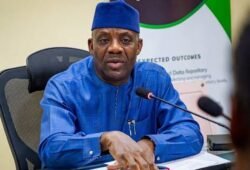
CBN Governor, Olayemi Cardoso, announced the decision on Tuesday following the 307th meeting of the Monetary Policy Committee (MPC) in Abuja. The 3.5 percentage-point reduction brings the benchmark rate to its lowest level since the recent tightening cycle began.
Cardoso explained that the decision was not intended to signal a shift in the underlying monetary policy stance but rather to realign the policy framework with prevailing financial market conditions.
Alongside the new MPR, the committee approved a recalibration of the standing facilities corridor to +50/-300 basis points around the policy rate. The Cash Reserve Requirement was retained at 45 per cent for Deposit Money Banks, 16 per cent for Merchant Banks and 75 per cent for non-Treasury Single Account public sector deposits.
According to Cardoso, the adjustment was aimed at improving monetary policy transmission and restoring the MPR as the primary signal of the CBN’s policy direction.
He said the divergence between the MPR and prevailing market rates had weakened the effectiveness of monetary policy transmission, making an operational reset necessary.
The governor also pointed to improvements in the foreign exchange market and moderating inflation as factors that created room for the adjustment. He said previous monetary tightening measures had strengthened the economy’s resilience, while exchange rate stability had helped improve investor confidence and support capital market growth.
“We are in a position of stability. The tightening we have done in the past has worked. FX pressure has receded. Capital market growth is because of the FX market stability,” Cardoso said, describing the latest decision as a “reset and recalibration.”
The governor disclosed that Nigeria’s gross external reserves stood at $55.25 billion as of September 18, 2026, representing the highest level in 18 years and enough to cover approximately 11.3 months of imports of goods and services.
Cardoso, who marked three years as CBN governor on Tuesday, also highlighted reforms undertaken during his tenure, including foreign exchange market reforms, bank recapitalisation, rebuilding of external reserves and increased diaspora remittances.
He maintained that the reforms were necessary to address structural weaknesses in the economy, arguing that previous foreign exchange and fuel subsidy arrangements had placed significant pressure on government finances.
The CBN’s latest decision comes as the bank continues its transition towards an inflation-targeting framework, with the MPC saying the prevailing macroeconomic environment provides room for the operational recalibration without undermining the disinflation process.