Nigeria has urged the international community to move beyond emergency humanitarian responses and establish sustainable support systems for victims and survivors of terrorism and violent extremism.
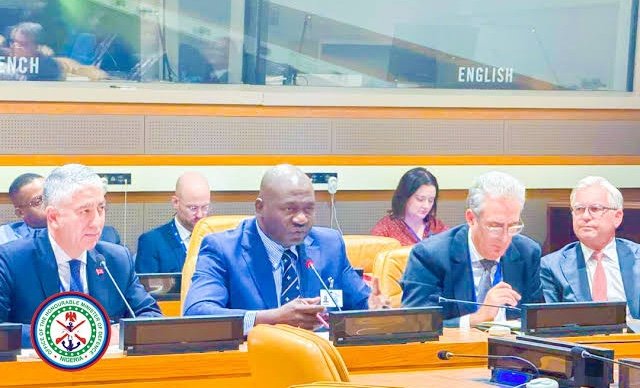
The appeal was made by the Minister of Defence, General Christopher Gwabin Musa (retd.), during the Ministerial Meeting of the Group of Friends of Victims of Terrorism held at the United Nations Headquarters in New York on the sidelines of the ongoing United Nations General Assembly.
The meeting, jointly convened by Spain and Iraq, brought together government representatives and international stakeholders to discuss strategies for supporting communities affected by terrorism.
Speaking during the session, Musa highlighted the devastating human cost of extremist violence, noting that sub-Saharan Africa accounted for approximately 60 per cent of global terrorism-related deaths in 2025.
He stressed that behind the statistics are families displaced from their homes, livelihoods destroyed and communities left struggling to recover from the effects of conflict and insecurity.
According to the minister, Nigeria has continued to strengthen its counter-terrorism efforts, securing 865 terrorism-related convictions in 2026 alone while prioritising the rescue of captives and the rehabilitation of survivors.
He explained that government interventions now extend beyond military operations to include medical care, psychosocial support, economic assistance and programmes designed to help affected individuals reintegrate into society.
To improve international cooperation, Musa proposed a three-point framework focused on stronger peer learning among countries, deeper collaboration with civil society organisations and victims’ groups, and increased technical and financial support from the United Nations for nations facing severe terrorism challenges.
He argued that long-term recovery requires sustained investment in affected communities rather than short-term responses that end once immediate emergencies subside.
Nigeria’s intervention comes amid continuing global concerns over terrorism, insurgency and violent extremism, particularly in parts of Africa, the Middle East and Asia.
As discussions continue at the United Nations, officials hope greater international cooperation will strengthen support systems for victims while addressing the broader conditions that fuel insecurity and violent extremism.