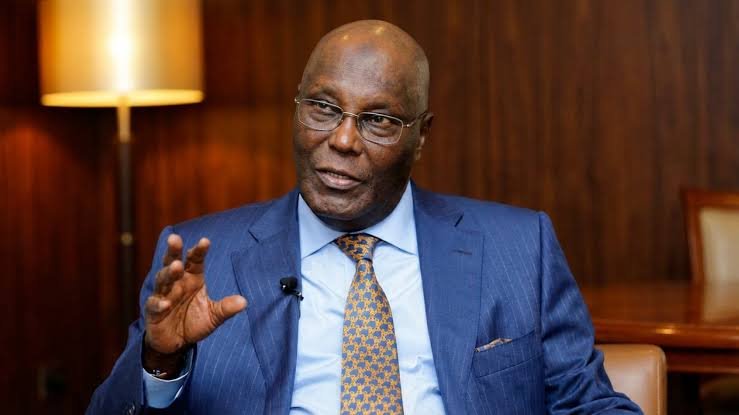
Former Vice President and African Democratic Congress (ADC) presidential candidate, Atiku Abubakar, has backed organised labour’s call for an upward review of the national minimum wage, arguing that rising living costs have significantly eroded workers’ purchasing power.
In a statement issued by the Director of Strategic Communications of the ADC Presidential Campaign Council, Phrank Shaibu, Atiku criticised the economic impact of recent reforms, particularly the removal of petrol subsidy, which he said contributed to sharp increases in transportation, food and housing costs.
According to him, the current ₦70,000 minimum wage has not translated into improved living standards for many Nigerians despite being more than double the previous ₦30,000 benchmark.
Atiku cited fuel price movements to illustrate the decline in purchasing power, noting that while ₦30,000 could purchase approximately 118 litres of petrol at the average pump price recorded in April 2023, the current minimum wage buys significantly less due to higher fuel costs.
He also referenced wage levels in several African countries, arguing that Nigeria’s minimum wage compares unfavourably when measured against prevailing exchange rates and living costs.
The former vice president called for a fresh wage structure that reflects the realities of food prices, transportation expenses, housing costs and electricity tariffs.
Beyond wage increases, Atiku advocated policies aimed at reducing the overall cost of living. He proposed a targeted production support framework for petroleum products refined and sold within Nigeria, insisting that any intervention should be transparent, independently audited and subject to clear spending limits.
He maintained that economic reforms should ultimately improve the welfare of ordinary citizens and urged the Federal Government to provide clarity on its position regarding future wage negotiations with organised labour.
The debate over minimum wage adjustments comes amid ongoing discussions between labour unions and government authorities over the impact of inflation and rising living expenses on Nigerian workers.