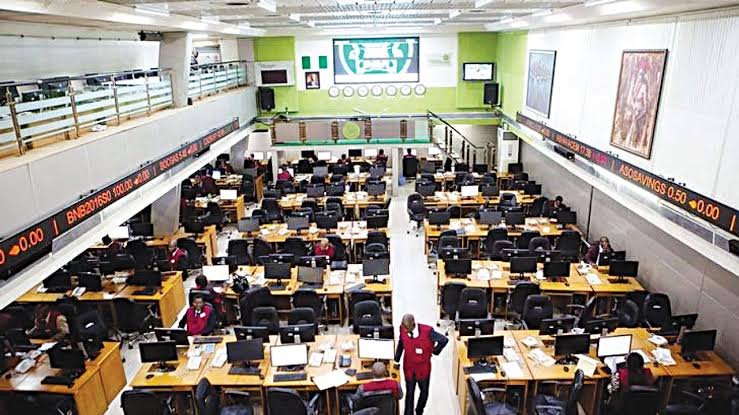
Companies listed on the Nigerian Exchange Limited (NGX) are showing widely different levels of financial flexibility, with some holding substantial cash reserves relative to their debts while others have borrowings several times greater than their available cash.
The disparity, based on second-quarter 2026 figures covering 40 listed companies, highlights the varying levels of liquidity and financial risk across the market. Collectively, the companies had total debt of about N3.9 trillion, while 18 maintained cash/debt ratios of at least one time.
The cash/debt ratio compares a company’s cash holdings with its total debt. A ratio above one indicates that available cash exceeds outstanding debt, although the measure alone does not determine whether a business is financially healthy or capable of servicing its obligations.
HBM Nigeria recorded the highest ratio at 319.07 times, with N393.68 billion in cash against debt of N1.23 billion. UPDC Real Estate Investment Trust followed with 283.73 times, based on N7.15 billion in cash and N25.2 million in debt, while eTranzact International posted 214.89 times, with N23.69 billion in cash compared with N110.24 million in debt.
CWG also recorded substantial cash cover at 211.1 times, holding N7.4 billion in cash against N35.06 million in debt.
Other companies with cash significantly above their debt included Unilever Nigeria at 44.8 times, Berger Paints at 18.4 times, Industrial & Medical Gases at 13.56 times and NASCON Allied Industries at 12.72 times.
Several other major companies also had more cash than debt, including Vitafoam Nigeria at 5.88 times, UPDC at 5.47 times, International Breweries at 3.34 times, Sterling Financial Holdings at 3.08 times and May & Baker Nigeria at 2.83 times.
At the opposite end, 22 companies had cash/debt ratios below one. Aradel Holdings stood at 0.96 times, while Ellah Lakes, John Holt, Academy Press and Eterna recorded 0.81, 0.77, 0.72 and 0.69 times respectively.
The weakest ratios were recorded by Caverton Offshore Support Group at 0.03 times, Chellarams at 0.05 times, C & I Leasing at 0.07 times, FTN Cocoa Processors at 0.08 times and Geregu Power at 0.09 times.
For Caverton, N2.46 billion in cash compared with N87.15 billion in debt illustrates the extent of the gap. Chellarams had N235.16 million in cash against N5.12 billion in debt.
However, analysts caution that the figures should not be interpreted as a simple ranking of financially strong and weak companies. Businesses generate operating cash flows, maintain credit facilities and have different debt repayment schedules. Similarly, a large cash balance may include restricted funds or money earmarked for capital expenditure, acquisitions, inventories or other commitments.
Ambrose Omordion, Chief Operating Officer of InvestData Consulting Limited, said investors should consider earnings, operating cash flow, interest coverage and the maturity profile of borrowings alongside debt levels.
Clifford Egbomeade, an economic and communications expert, also stressed that investors should examine how available cash is being used rather than focusing only on its size.
The distinction is particularly important in Nigeria, where borrowing costs can significantly affect corporate profitability. Companies with strong liquidity may have greater room to repay debt, finance expansion internally and withstand temporary disruptions in revenue.
Conversely, businesses with substantial leverage could face greater refinancing and interest-rate pressures if operating cash flows weaken. Yet debt itself is not necessarily negative when borrowed funds are deployed into profitable projects capable of generating sufficient returns.
For the wider economy, the financial position of listed companies matters because corporate liquidity influences investment, production, employment, tax payments and capital-market activity.
The second-quarter figures therefore reveal more than differences in balance sheets. They underline the importance of how Nigerian companies balance cash preservation, borrowing, investment and capital allocation in an environment where access to affordable finance remains a major business consideration.