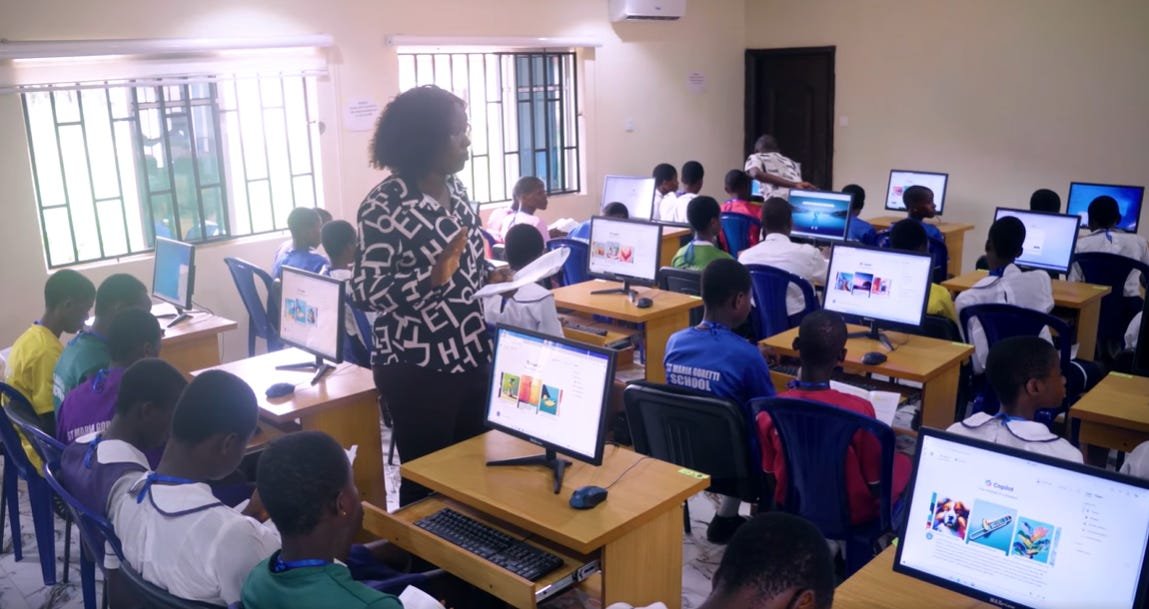
Artificial intelligence is beginning to reshape Nigerian classrooms, but educators say the success of the technology will depend on whether teachers themselves receive the training, welfare and professional support needed to use it effectively.
As Nigeria marks the 2026 World Teachers’ Day on October 5, the debate is shifting beyond the adoption of digital tools to a more fundamental question: can technology transform education when the people expected to operate it are still struggling with basic professional concerns?
The 2026 celebration coincides with the 60th anniversary of the 1966 ILO/UNESCO Recommendation concerning the Status of Teachers, which established principles for protecting and advancing the teaching profession.
The Federal Ministry of Education has identified innovation, mobility, artificial intelligence, inclusion and professional excellence as key themes for this year’s observance.
Minister of State for Education, Prof. Suwaiba Ahmad, said AI could support personalised learning, improve data-driven decisions and reduce teachers’ administrative workload when deployed ethically and inclusively.
She said the government was also using technology to modernise its own processes, including the digital selection of 14 recipients for the 2026 World Teachers’ Day awards.
According to Ahmad, the three best teachers will receive cars, while the best Federal Unity College will receive a bus, with laptops also presented to award recipients.
Beyond awards, she said government was investing in teacher development through the Accelerated Teacher Professional Development Programme, implemented by the National Teachers’ Institute and Teachers Registration Council of Nigeria. The programme targets 250,000 unqualified teachers through professional diploma and postgraduate diploma pathways.
But education stakeholders argue that technology and awards alone cannot resolve the challenges confronting the profession.
Nigeria Union of Teachers President, Mr Audu Amba, said AI should strengthen rather than diminish the teacher’s role, stressing the importance of investment in training, welfare and professional development.
“The future of education must therefore be a future in which teachers are empowered to adapt, innovate and continue to exercise their professional judgment,” he said.
Other stakeholders similarly called for better remuneration, working environments, career progression and greater involvement of teachers in education policy decisions.
Senior Staff Association of Nigeria, Federal Ministry of Education Chapter Chairman, Mr Sam Ngadi, said improved welfare was essential to raising teachers’ morale and productivity.
For teacher Mrs Naomi Tile, recognition also matters. She said appreciation through incentives, awards and public commendation could encourage educators to embrace innovative teaching methods.
The concerns highlight an important limitation of the AI conversation: technology can provide tools, but it cannot replace mentorship, emotional support, professional judgment and human connection.
As Nigeria modernises its classrooms, therefore, the challenge is not simply teaching educators how to use AI. It is creating a profession where teachers have the skills, resources, dignity and conditions to use new technology effectively.
Ultimately, Nigeria’s educational transformation will depend not only on how advanced its classrooms become, but on how seriously it invests in the people standing at the front of them.