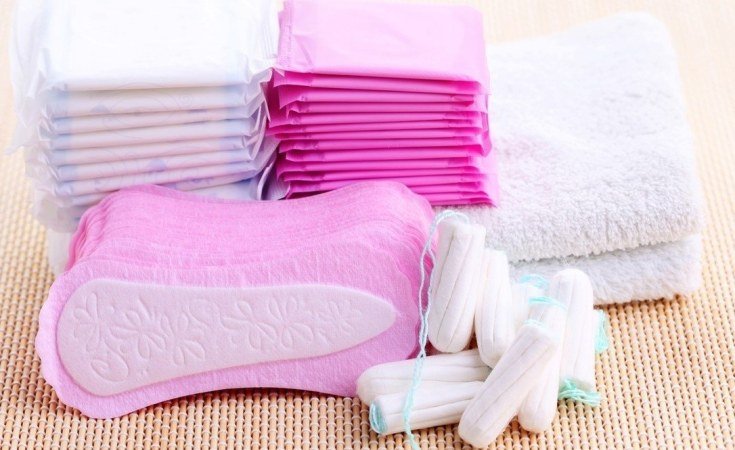
For some Nigerian women struggling with the rising cost of menstrual products, baby diapers have become an unlikely substitute for sanitary pads, with financial pressure driving the shift despite concerns over potential health risks.
Women who spoke to Economy&Lifestyle said the price of sanitary products has become increasingly difficult to manage, particularly for those who experience heavy menstrual flow and require frequent changes.
Mrs Nefisat Amadu, a healthcare worker, said she often struggled to afford enough pads to manage her period comfortably.
“I used to spend a significant chunk of my salary just managing my heavy flow every month,” she said. “A single pad barely lasts three hours for me. But with a single size-2 baby diaper cut down the middle, I can get through an entire workday without a single stain or leak.”
For Amadu, the decision is largely economic, despite the discomfort associated with using a product designed for infants.
The growing practice has also been fuelled by concerns circulating online about the safety of some menstrual hygiene products. A widely shared report claimed that a domestic study detected volatile organic compounds and heavy metals, including lead and arsenic, in samples of several sanitary pad brands.
Those reports have added to existing concerns among women who say they have experienced irritation or other reactions while using particular products.
Mrs Jadesola Akinmorin, a lecturer, said a negative experience with a sanitary pad forced her to look for alternatives.
“I just tore one of my Ankara wrappers in pieces. That is what I am currently using during my menstrual cycle, because the pad I was using almost made me run mad,” she said.
But medical professionals have warned that replacing sanitary pads with baby diapers could create additional health concerns.
Gynaecologist Dr Marvel Abubakar explained that baby diapers are designed primarily to absorb urine and may not be suitable for menstrual discharge, which contains blood clots and cellular tissue.
He also warned that the combination of heat, sweat and moisture trapped by the bulky, plastic-based material could create conditions favourable to bacterial and fungal growth, potentially increasing the risk of infections.
Abubakar said women should not be forced to choose between unaffordable menstrual products and potentially unsafe alternatives. He called for stronger investigation of concerns surrounding chemicals in menstrual hygiene products and government measures to reduce the cost of basic menstrual care.
For women already struggling with household expenses, the growing use of baby diapers and improvised materials highlights a broader problem: menstrual hygiene is becoming increasingly difficult to afford for those most affected by the economic downturn.