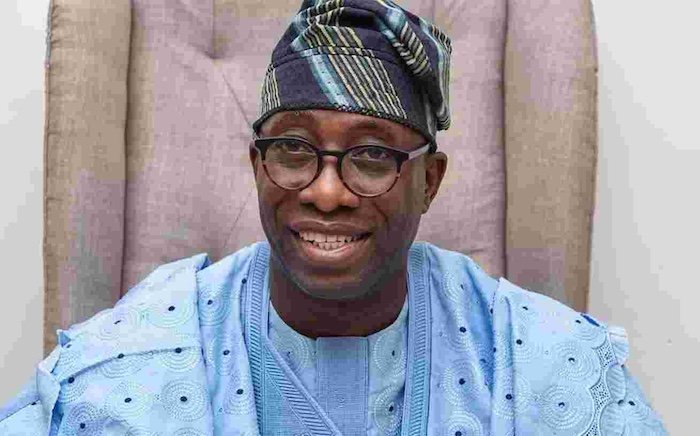
Segun Showunmi, a member of the Presidential Campaign’s Media and Communications Community, has blamed the North-Central region’s failure to produce an elected Nigerian president on internal divisions and inadequate political coordination.
Speaking with journalists in Makurdi, Benue State, Showunmi argued that the region possessed considerable electoral strength but had failed to translate its voting population into meaningful influence in national politics.
The National Convener of the Alternative Movement maintained that unity, strategic alliances and effective voter mobilisation were essential to advancing the region’s presidential aspirations.
“What has always been the challenge is, one, lack of unity among the people of North-Central; two, their inability to read the political arithmetic of power,” he said.
Showunmi identified Benue State as a potentially influential political force, citing its approximately 3.05 million registered voters.
He argued that mobilising a substantial proportion of those voters could strengthen the state’s bargaining position during national political negotiations.
“If you have 3.05 million votes and you bring about three million or 2.5 million votes, what would then be the reason why they will sidestep you?” he asked.
He stressed that political influence in a democracy depended on electoral participation, negotiation and coalition-building rather than confrontation.
Showunmi consequently urged Benue residents to overcome internal disagreements and pursue common political and developmental objectives.
Addressing the state’s security situation, he acknowledged the impact of violence and humanitarian challenges on communities.
He noted that the situation had attracted international attention, which he said should encourage stronger cooperation and constructive engagement among political and community leaders.
“The most important thing that Benue needs now is that Benue must be careful not to be the one instigating itself against itself,” he stated.
On national security, Showunmi advocated sustained intelligence gathering, improved operational capacity and closer collaboration among security agencies.
He said the Tinubu administration had taken steps to expand military formations, increase recruitment and strengthen inter-agency cooperation.
The political figure also expressed support for the proposed establishment of state police, arguing that locally recruited personnel could respond more effectively to community-specific threats.
He, however, emphasised the importance of an appropriate legal framework and coordination with existing national security institutions.
Showunmi further cited Nigeria’s security partnerships with the United States, Britain, France, Turkey and Germany as part of efforts to strengthen national capabilities.
Turning to the economy, he defended President Bola Tinubu’s reforms, describing them as measures intended to address longstanding weaknesses in public finance.
Although he acknowledged the hardship experienced by Nigerians, Showunmi argued that increased government revenue could support economic activity and development.
He maintained that Benue and the wider North-Central region would be better positioned to pursue their political ambitions and address security challenges through unity, strategic engagement and sustained cooperation.
Ezeana Emmanuel