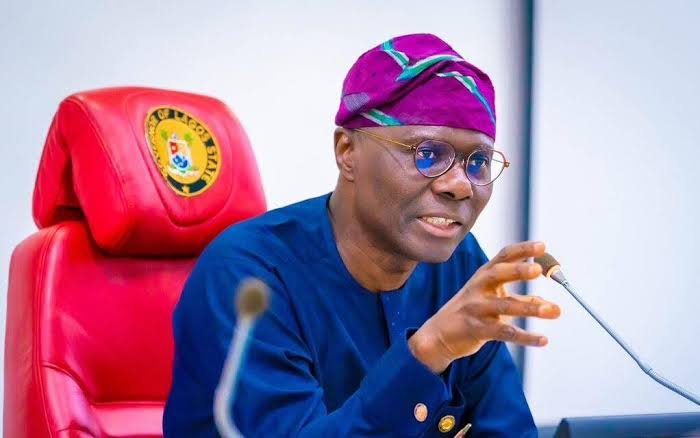
Lagos State Governor Babajide Sanwo-Olu has highlighted the rising cost of land in Ikeja, saying the average price is slightly above ₦3 million per square metre and makes home ownership in the area difficult for low-income earners.
The governor made the observation in an acceptance speech after being invested as an Honorary Fellow of the Nigerian Institute of Town Planners (NITP) during its 57th Annual Conference and Annual General Meeting in Ikeja.
Sanwo-Olu was represented at the event by the Commissioner for Physical Planning and Urban Development, Dr Oluyinka Olumide.
He said the high cost of land in central areas such as Ikeja had made it increasingly difficult for people on lower incomes to live close to their workplaces.
The governor linked the challenge to the need for an integrated approach to urban planning, housing and transportation, explaining that his administration had invested in rail infrastructure to support daily commuting from communities farther away from the city centre.
He specifically cited Agbado as an example of a location from which residents could travel by rail to central Lagos for work.
“The average cost of land in Ikeja is slightly above N3m per square metre. So, it will be difficult for low-income earners to live around that environment,” he said.
He added that investment in rail transportation was intended to make it possible for people to live outside the expensive central areas while maintaining access to employment and other opportunities.
Sanwo-Olu also said his administration was working towards building a state capable of serving future generations, stressing the importance of foresight, discipline and long-term planning.
He argued that decisions made in urban development might not always be convenient in the short term but could be necessary to meet the needs of a growing population.
The governor’s remarks came during a conference focused on the role of physical planning in regional development. The event brought together town planners and other stakeholders to discuss the future of urban growth and infrastructure.
His comments underline the relationship between land affordability, housing location and public transport in Lagos, where access to affordable accommodation remains a challenge for many residents.
Deborah Adeyefa