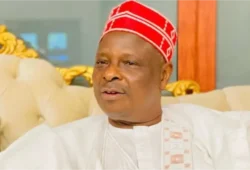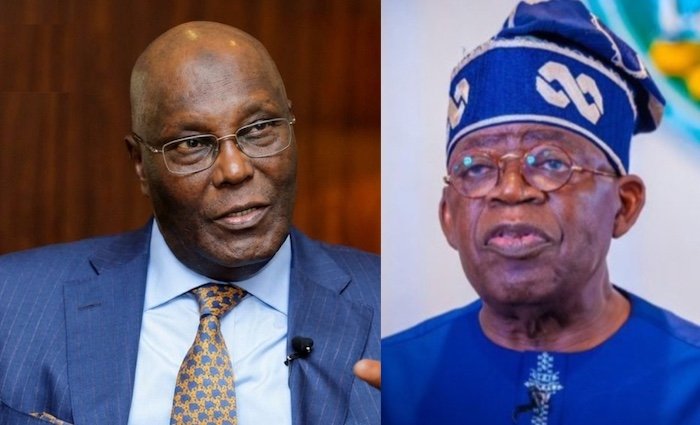
With 13 weeks and three days to the January 16, 2027 presidential election, candidate of the Africa Democratic Congress (ADC), Alhaji Atiku Abubakar, has intensified his policy exchanges with the administration of President Bola Tinubu, particularly on petrol pricing, fiscal accountability and the cost of living.
This gradually evolving debate, and the Presidency’s sometimes elaborate responses, have begun to change the character of the campaign conversation as the nation counts down to the election next January.
Curiously, however, the presidential standard beaer of the National Democratic Congress (NDC), Mr. Peter Obi, appears to be missing in the emerging debate, albeit not totally in the wider conversation.
According to the THISDAY politicial analysis, beyond the customary political intrigues, partisan recriminations, alliances and campaign rhetoric, an increasingly substantive argument about the direction of the country’s economy is beginning to take shape with the duo constantly sparring.
The recurring disagreement between APC’s Bola Ahmed Tinubu and ADC’s Atiku Abubakar, is neither new nor particularly surprising.
What is noteworthy, however, is the increasing specificity of the questions and policy alternatives being advanced by Atiku, and the detailed responses these have elicited from the Presidency.
And, coming from Tinubu, who is naturally not disposed to a debate as evident during the 2023 presidential election, Atiku might have subtly forced the president and his government into interesting policy debate, and inadvertently changing the tenor of campaigns, based on issues.
From the removal of petrol subsidy to the management of the exchange rate, public borrowing, taxation, government expenditure and the affordability of basic necessities, Atiku has repeatedly challenged the administration to explain not merely why its economic reforms were necessary, but how their benefits are reaching ordinary Nigerians.
In doing so, the former vice-president has sought to shift the political conversation from personalities and partisan loyalties to the actual consequences of public policy.
The government, on its part, has not allowed the arguments to go unanswered. Its statements, campaign interventions and direct responses have defended the logic of Tinubu’s reforms, challenged the financial sustainability of Atiku’s alternatives and questioned whether his proposals are compatible with existing legislation.
This exchange has produced an interesting feature of the emerging presidential contest: a government defending the economic decisions it has already taken and an opposition candidate being pressed to explain the practical implications of the decisions he proposes to take.
Yet, amid this increasingly sustained encounter, another major presidential candidate, Peter Obi of the NDC, has not occupied the same place in the particular exchange between Atiku and the Presidency.
Obi has certainly not been silent on national issues. He has articulated positions on economic production, petroleum subsidy, corruption, electricity and public accountability. Indeed, his party recently criticised the government’s petrol discount.
The distinction is that the recent sequence of proposals, presidential responses, counterproposals and fiscal arguments has developed principally around Atiku’s intervention.
That development offers a useful window into the changing character of the 2027 contest.
For much of Nigeria’s Fourth Republic, presidential campaigns have frequently been shaped by questions of ethnicity, religion, zoning, personalities and political alignments.
Although economic policy has never been entirely absent, the technical details of proposed reforms have not always received the sustained public interrogation that a country facing serious structural economic challenges requires.
The present circumstances make such an interrogation particularly relevant.
When President Tinubu assumed office on May 29, 2023, he announced the removal of petrol subsidy, setting in motion one of the most consequential economic decisions of his administration
Changes in the foreign exchange system followed, while the government subsequently introduced far-reaching tax and fiscal reforms.
The administration has maintained that these decisions were necessary to correct distortions, improve government finances, encourage investment and place Nigeria on a more sustainable economic footing.
Atiku’s central objection is solely about the implementation of those reforms, the social protection available to vulnerable citizens and the accountability mechanisms governing the resources released.
The argument became particularly pronounced in August 2026, when the ADC presidential candidate publicly pledged to restore petrol subsidy if elected.
His declaration attracted immediate criticism, partly because Atiku had previously supported subsidy removal and downstream petroleum deregulation.
But as the debate developed, his campaign clarified that the proposed arrangement would not simply revive the old system of subsidising imported petrol.
Instead, Atiku advocated a capped, budgeted production subsidy directed at petroleum products refined within Nigeria, including those produced by modular refineries.
According to his campaign, the proposed programme would be linked to verified domestic production, monitored independently and designed to ensure that the benefits reached consumers through lower pump prices.
Under the former arrangement, public resources were used extensively to compensate for differences between regulated domestic petrol prices and the cost of supply, much of which involved imported products.
Under Atiku’s proposal, government support would be tied principally to domestic refining, potentially through crude oil supplied to qualifying refineries at preferential prices.
The argument, therefore, concerns whether public intervention in the petroleum market should be eliminated, temporarily permitted or deliberately redesigned to support domestic production and consumer affordability.
It is a question with substantial consequences for government revenue, investment, industrial development and household expenditure.
However, the government’s responses have demonstrated how closely the issue has become associated with the presidential campaign.
On August 2, 2026, the Presidency published a detailed response to Atiku’s criticisms of the administration’s economic management.
The statement addressed his concerns about public borrowing, the 2024 budget, subsidy removal, tax reforms and the utilisation of oil revenue.
It argued that Atiku’s criticisms placed insufficient emphasis on the economy’s subsequent performance, pointing to improvements in macroeconomic conditions, government revenue and investment confidence.
The government also defended the removal of subsidy as a structural correction that had improved allocations to states and local governments.
The debate intensified the following month.
On September 20, the APC Presidential Campaign Council publicly challenged Atiku to explain the legal, financial and operational implications of his proposed production subsidy.
Among the questions raised were the subsidy rate, annual expenditure ceiling, eligible crude volumes, funding sources, pricing arrangements, safeguards against diversion and possible amendments to the Petroleum Industry Act.
The council estimated that the proposal could cost between 17 trillion and N21 trillion annually, depending on its design and implementation.
Importantly, those figures were APC’s projections, not an independently established cost of Atiku’s programme. The detailed assumptions necessary to reproduce the estimates have not been fully published.
Nevertheless, the questions themselves were substantial.
They required the opposition candidate to move beyond the broad promise of cheaper petrol and explain how the intended intervention would be financed, regulated and monitored.
Atiku’s campaign subsequently maintained that the proposal would be capped, budgeted and independently audited. It also indicated that amendments to existing petroleum legislation could be pursued if necessary.
However, the actual proposed discount rate, annual funding requirement and complete mechanism for passing savings to consumers remain outstanding.
This is precisely the kind of practical policy interrogation that should accompany presidential proposals involving potentially significant public resources.
The presidency’s engagement has not been confined to technical arguments. Some responses have included strong personal and political criticisms of Atiku.
Yet, underneath the political language, questions of subsidy design, market pricing, public expenditure and the legal authority of government intervention have remained central.
The exchange acquired additional significance during Nigeria’s 66th Independence anniversary.
In his October 1 national address, President Tinubu declared that the country was transitioning from economic stabilisation towards what he described as an era of shared prosperity.
The President defended the removal of subsidy and foreign exchange reforms, insisting that they had helped repair structural weaknesses inherited by his administration.
He cited improved economic growth, rising foreign reserves, stronger non-oil exports and moderating inflation.
According to Tinubu, the economy had expanded by more than four per cent during the year, while non-oil exports exceeded $6 billion in 2025.
He also outlined priorities involving agricultural mechanisation, industrial production, transportation infrastructure, power supply, employment and access to finance.
Significantly, the president criticised those advocating a return to subsidies, arguing that the country should not abandon reforms simply because their initial effects had been painful.
Although the statement did not expressly identify Atiku, the timing and substance placed the issue of subsidy at the centre of the president’s economic argument.
Atiku responded that same day with an extensive address disputing the administration’s assessment of national conditions.
His criticism revolved around the difference between improvements in macroeconomic indicators and the purchasing power of ordinary households.
He questioned whether economic growth, higher government revenue and reduced inflation could legitimately be described as prosperity when many citizens continued to struggle with food, transport, electricity, education and healthcare costs.
He also offered specific illustrations.
For instance, Atiku argued that the N30,000 minimum wage in April 2023 could purchase approximately 118 litres of petrol, whereas the current N70,000 minimum wage would purchase only about 50 litres at prevailing prices.
The comparison is instructive, though it depends on the petrol prices and locations used. It illustrates how a nominal increase in wages can coexist with a decline in purchasing power.
The statutory minimum wage has risen by approximately 133 per cent, from N30,000 to N70,000. But if petrol costs approximately N1,400 per litre, the newer wage purchases substantially less fuel than the older wage did at prices prevailing before subsidy removal.
Atiku also raised questions about the administration’s budgeting arrangements, public debt, social intervention programmes and the extent to which increased government resources had translated into tangible improvements in living standards. In effect, the exchange highlighted two different measurements of economic progress.
Tinubu’s emphasis was on macroeconomic stabilisation, structural reforms and the conditions necessary for future growth.
Atiku’s emphasis was on immediate affordability, household welfare and the distribution of the gains arising from those reforms.
These are not mutually exclusive economic objectives. Indeed, a sustainable recovery ultimately requires both.
The disagreement concerns the pace, sequencing and effectiveness of the policies intended to achieve them.
Perhaps the most revealing chapter of the argument emerged between October 8 and 11.
Against the backdrop of higher international oil prices, the federal government announced measures intended to moderate petrol costs.
The Nigerian National Petroleum Company Limited extended a N66-per-litre discount introduced on October 1 at its retail stations, with the arrangement scheduled to continue until October 31.
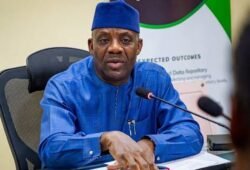
The Minister of Finance, Taiwo Oyedele, explained that NNPC Retail would forgo part of its profit margin and sell petrol at cost to provide temporary relief to consumers.
The government also outlined a proposed framework involving a negotiated ceiling of approximately N1,350 per litre on petrol supply costs, with provisions for smoothing temporary price increases.
The N1,350 figure was not a uniform nationwide pump price. It related to proposed supply-cost arrangements, with the eventual price paid by motorists still affected by distribution and retail costs.
NNPC subsequently insisted that the discount did not constitute a restoration of the former petroleum subsidy regime.
But Atiku disagreed with the political and economic presentation of the policy.
His campaign questioned why the administration, having consistently defended subsidy removal and criticised government intervention in petrol pricing, was now supporting a temporary discount.
At the October 9 inauguration of the ADC Presidential Campaign Council in Abuja, Atiku accused Tinubu of borrowing from his production-subsidy proposal without adopting its essential features.
The former vice-president, who constantly referred to the president as “Bola” in his speech, a disposition the presidency considers disrespectful, argued that a short-term retail discount could not substitute for a properly structured arrangement intended to lower the cost of domestically refined petroleum products.
He went on to challenge the government to explain what would happen when the discount expires.
On October 11, presidential adviser, Sunday Dare, issued a detailed rebuttal defending the discount as a temporary market intervention rather than an abandonment of deregulation.
The statement argued that Atiku’s production-subsidy proposal underestimated the commercial and contractual complexities of Nigeria’s petroleum industry.
It maintained that the government could not simply distribute crude oil at discounted prices without considering production-sharing contracts, joint ventures, contractual obligations and the revenue implications for the Federation.
The Presidency also pointed to compressed natural gas, domestic refining arrangements and alternative transportation initiatives as components of its broader response to the cost-of-living crisis.
This was a clear example of the debate moving beyond generic campaign accusations.
Atiku had questioned the adequacy, duration and financial transparency of the government’s relief arrangement.
The administration, on its part, challenged the legality, affordability and sustainability of Atiku’s proposed alternative.
Unfortunately, neither argument can be resolved by political rhetoric alone as they both require published figures, transparent implementation arrangements and evidence of benefits to consumers.