

Nigeria’s security agencies delivered a rare wave of good news this week, rescuing 315 people held captive by terrorists and kidnappers in separate operations spanning Kwara, Niger, and Ogun states within a single 24-hour period, bringing sudden relief to hundreds of families who had waited months, in some cases, for word of their loved ones.
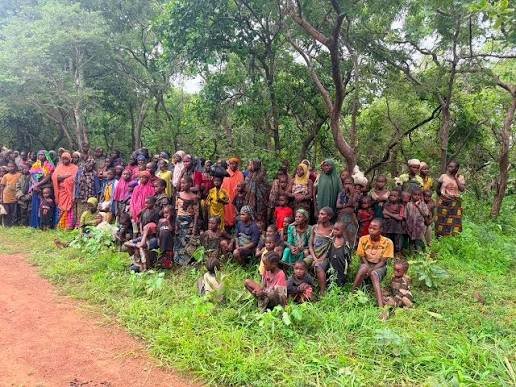
The bulk of the rescues, 308 victims in total, came out of a coordinated operation in the forests of Kainji Lake National Park, where 163 people from Kwara and 145 from Niger, many of them women and children, including one breastfeeding infant, had been held since attacks on Woro village in Kaiama Local Government Area and neighboring Niger communities back in early February. The rescued victims are now undergoing screening and medical treatment at Wawa Cantonment in Borgu Local Government Area, where the Commander of 22 Brigade is overseeing their feeding, care, and temporary housing ahead of their return home. Buses have already been positioned at Sobi Cantonment in Ilorin to transport the Kwara victims back to their communities, with state governments coordinating the logistics on both sides.
President Bola Tinubu welcomed the rescue, commending the security personnel involved and directing authorities to strengthen early-warning systems, improve community-level intelligence gathering, and build stronger rapid-response capacity to prevent similar mass abductions in the future.
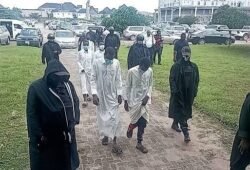
The remaining seven rescues came out of Ogun State, where Governor Dapo Abiodun announced the successful recovery of seven students from Gateway ICT Polytechnic, Saapade, abducted on July 29 in Remo North Local Government Area. Abiodun was emphatic that no ransom changed hands in securing their release, crediting instead a coordinated effort between security agencies, local hunters, and vigilantes. He described personally requesting aerial support from Inspector-General of Police Olatunji Disu once the abduction occurred. “I reached out to the Inspector-General of Police, IGP Olatunji Disu, to deploy aerial surveillance to complement the ongoing ground operations. I am pleased that he responded immediately by approving and deploying a police helicopter the same day,” he said. Five students were freed in the operation’s first phase, while the remaining two were rescued in a follow-up operation combining the police helicopter with ground forces; one victim sustained a gunshot wound during the ordeal but has since been evacuated and stabilized.
Two suspects have already been arrested in connection with the Ogun kidnapping, with security agencies continuing to pursue the rest of the gang. “As of this moment, two of the kidnappers have been arrested, while our security agencies remain on the trail of the remaining members of the criminal gang. The operation is still ongoing, and for operational reasons, some details cannot yet be disclosed,” Abiodun said, warning that Ogun State would offer no refuge to criminal networks. “Kidnappers, bandits, armed robbers, cultists and every violent criminal must understand that Ogun State is not, and will never become, a sanctuary for criminality.” He also credited federal government support under Tinubu for strengthening security agencies’ operational capacity in recent months.
Reaction to the rescues has been broadly positive, though tempered by calls for deeper structural reform. UK-based medical doctor and social affairs analyst Dr Chinwike Oke-Nwosu welcomed the outcome but questioned persistent gaps in Nigeria’s ability to track criminal communications, asking pointedly how kidnappers can still make phone calls within Nigeria without detection, and warned that ordinary citizens risk growing numb to the scale of the country’s insecurity crisis.
Retired Rear Admiral Dickson Olisemelogor offered a more optimistic reading, suggesting the scale of the rescue points to growing cooperation between affected communities and security forces. “It shows that members of the affected communities are getting tired of the activities of the terrorist and are willing to cooperate with security agencies,” he said, adding that government resistance to paying ransoms may be reducing the profitability of kidnapping as a criminal enterprise.
Okechukwu Nwagunma, Executive Director of the Rule of Law and Accountability Advocacy Centre, struck a similar balance between commendation and caution, praising the operation while stressing that rescues alone cannot substitute for genuine prevention. “Rescue operations are essential, but they should not become a substitute for effective prevention. Government must invest more in intelligence-led policing, inter-agency coordination, protection of vulnerable communities, and accountability for security lapses,” he said, adding that success should ultimately be measured not by rescue numbers but by a sustained decline in kidnappings overall and restored public confidence that citizens can move freely without fear.
Senior military personnel who spoke on condition of anonymity echoed that broader assessment, noting that the operations demonstrated the real value of sustained intelligence work, inter-agency coordination, and community cooperation in locating victims held in difficult terrain, even as they acknowledged that preventing abductions in the first place remains the ultimate goal.