

Nick Udenta
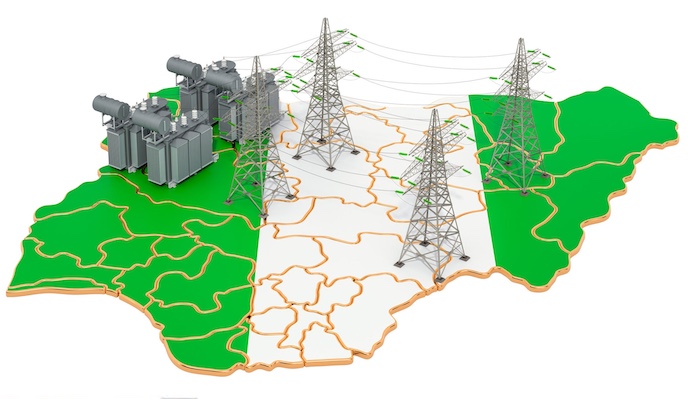
For decades Nigeria has faced intractable challenge of poor electricity supply. The country seemed to be sleeping when the population grew and overwhelmed its electricity capacity.
It was akin to the proverbial Nero playing harp while Rome burned. The government of Nigeria under General Yakubu Gowon in the 1970s said the country had so much money but didn’t know what to do with it.
At that time, Nigeria had faced epileptic supply of electricity in its major cities and towns. The only difference between then and now was that they usually announce outage before it happened and also when electricity would be restored.
Nigeria has every resource that can provide it electricity. It has water, coal, gas and solar; yet, it was unable to expand its electricity capacity over the years.
Many critics attribute it to lack of commitment by successive governments and the failure to have long-term programme on power development.
Today, Nigeria is a butt of joke by other Africans and the world; that the most populous nation suffered power hiccups and that has become a problem that has defied solutions.
Corruption
Analysts attribute the failure to have adequate supply of power to corruption. Corruption is described as a foundational driver of Nigeria’s poor electricity supply, manifesting through substandard infrastructure, diverted funds, and political interference. It has critically undermined the power sector across several key areas.
Investigations carried out by the Economic and Financial Crimes Commission (EFCC) disclosed that that contractors frequently divert funds to purchase cheap, inferior materials (such as using lower-gauge cables), which directly causes frequent tripping, equipment failure, and national grid collapses
In 2013 the federal government engaged in privatization process, which suffered from political corruption and cronyism, resulting in generating and distribution assets being handed to politically connected investors who lacked technical competence. This led to revenue shortfalls and lack of grid modernization. The then President Goodluck Jonathan seemed to use the privatisation exercise to placate his political enemies and induce potential opponents because his government failed to be firm in insisting that any organisation that would get the approval must have capacity and technical ability to transform the system. It was a failure.
The Socio-Economic Rights and Accountability Project (SERAP) estimated that Nigeria’s power sector lost trillions of naira to corruption and failed power projects since 1999, leaving the country with critically low generating and wheeling capacity.
Reports indicate that consumers and businesses frequently face petty corruption in the form of illegal connection rackets and demands for bribes by utility officials to restore power or repair faulty lines.
According to analysts, the structural damage inflicted by corrupt practices costs the Nigerian economy billions of dollars annually, forcing citizens and businesses to heavily rely on expensive, fossil-fuel-powered generators.
Current projects
The federal government has the ambition to reset the power sector and it is executing a comprehensive ₦4 trillion programme aimed at resolving legacy debts, improving grid stability, and expanding renewable energy access. The government aims to transform the sector into a bankable, market-driven industry.
President Bola Ahmed Tinubu approved a ₦3.3 trillion payment plan to restore reliable electricity, clear legacy debts owed to gas suppliers and Generation Companies (GenCos) to restore confidence in the sector.
Decentralisation
There was Electricity Act in 2023, which was enacted to break the monopoly of national power companies, allowing state governments to construct, generate, and regulate their own electricity markets.
There is also the Presidential Power Initiative, known as Siemens Project, which is an ongoing integrated infrastructure upgrade. Government has injected over $2.3 billion. The federal government has said that Nigeria requires over $100 billion in combined to revamp transmission capacity, adding over 700 megawatts to the national grid and significantly reducing the frequency of national grid collapses.
Power grid collapse
The National grid collapses occur frequently because industry insiders said that power supply and demand must always be perfectly matched in real time to keep frequency within safe limits. If there is a sudden drop in generation, a spike in demand, or an equipment fault, the system shuts down automatically to prevent widespread explosions or damage to the grid.
They attributed the frequent grid collapse to several key factors, which include the fact that many of the country’s grid components and transmission lines are decades old, making them prone to faults and breakdowns.
The majority of power plants in Nigeria rely on gas. A lack of gas supply—due to pipeline vandalism, debts owed to suppliers, or infrastructure issues—causes sudden drops in power generation.
Lack of advanced, real-time monitoring and control equipment makes it difficult to predict or manage frequency drops and localized disturbances before they trigger a system-wide collapse.
Faults on the transmission or distribution networks, is sometimes worsened by vandalism or electricity theft and this often causes sudden power surges or drops that force the system into an automatic shutdown.
State funded electricity
After signing the 2023 Electricity Act, some state governments embarked on providing electricity to their citizens. This is because Nigerian states are now legally permitted and constitutionally empowered to generate, transmit, and distribute their own electricity. The passage of constitutional amendments and the Electricity Act decentralized the power sector, ending the federal government’s monopoly and granting autonomy to all 36 states.
This means that electricity is no longer on the Exclusive Legislative List. States can now draft their own electricity laws and establish independent regulatory commissions to oversee intrastate power markets.
State governments have the authority to generate power, license private investors for mini-grids, and build independent power plants to service their regions.
Over a dozen states—including Lagos, Enugu, Ekiti, and Akwa Ibom—have already taken advantage of these reforms to establish their own electricity markets and attract independent energy investors.
The Nigerian Electricity Regulatory Commission (NERC) still retains regulatory authority over interstate electricity operations, while regulatory oversight for intrastate networks is being transferred to qualifying state governments
States engaging in power projects
At least 15 state governments in Nigeria have officially embarked on independent electricity projects and regulatory frameworks following the enactment of the Electricity Act 2023. These states have transitioned to regulating their own electricity markets and are actively setting up state-level power generation, mini-grids, and distribution infrastructure.
The active sub-national markets are structured as follows: Seven states have officially taken full control of their electricity regulations and are spearheading state-owned generation, transmission, and distribution mandates. These include: Enugu, Ekiti, Ondo, Imo, Edo, Oyo and Kogi states. Other states are also engaging in one way or another to provide their citizens uninterrupted electricity which has become so elusive in Nigeria.
The decentralisation of electricity supply may be the key to the dream of Nigerians ever enjoying uninterrupted electricity. With stable electricity investors within and outside the country can establish industries and create the highly sought after jobs.