

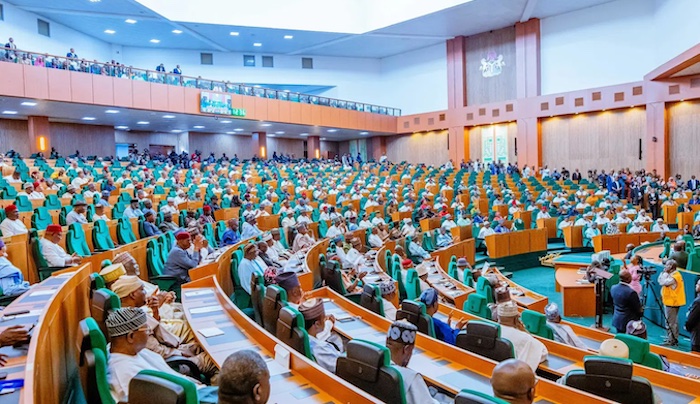
The House of Representatives has called on relevant government agencies to strengthen food safety regulations and enforcement mechanisms to curb the growing burden of foodborne diseases in Nigeria.
The resolution followed the adoption of a motion of urgent public importance sponsored by Edo lawmaker, Mr Billy Osawaru, during plenary.
Osawaru cited data from the World Health Organisation indicating that unsafe food causes millions of illnesses and deaths globally each year, with Africa bearing a significant share of the burden.
He acknowledged ongoing efforts by the Federal Government, the National Agency for Food and Drug Administration and Control (NAFDAC), the Standards Organisation of Nigeria (SON), and other agencies to improve food safety standards.
However, the lawmaker expressed concern that poor hygiene practices, contaminated water sources, weak regulatory enforcement and inadequate infrastructure in markets and abattoirs continue to expose millions of Nigerians to preventable illnesses.
According to him, Nigeria records an estimated 50 million cases of foodborne diseases annually, resulting in more than 53,000 deaths and significant economic losses through healthcare costs and reduced productivity.
Osawaru also linked recurring cholera outbreaks across the country to contaminated food and water, highlighting the urgent need for improved sanitation and food handling practices.
Following the motion’s adoption, the House urged the Federal Ministry of Health and Social Welfare, NAFDAC, SON and the Nigeria Centre for Disease Control and Prevention (NCDC) to strengthen surveillance, inspection and certification processes across the food production chain.
Lawmakers also called for increased investment in food testing equipment, continuous training and certification of food handlers, and public awareness campaigns on food safety and personal hygiene.
The House further urged the Federal Ministries of Health and Water Resources to expand access to clean water and sanitation infrastructure as part of broader efforts to reduce foodborne illnesses nationwide.