

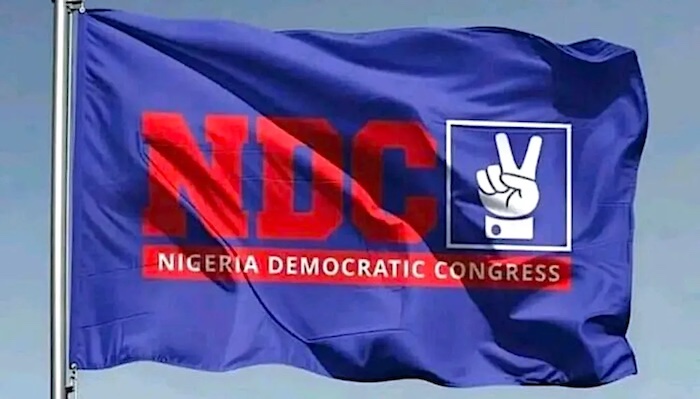
The Nigeria Democratic Congress (NDC) has distanced itself from lists of purported candidates for elections in Imo, Abia, and Anambra states currently circulating on social media, describing them as fake and unauthorised.
In a statement issued on Friday by its National Secretary, Ikenna Enekweizu, the party urged members and the general public to disregard the lists, insisting they did not originate from the party’s national headquarters. Enekweizu said the NDC had already submitted the authentic list of candidates to the Independent National Electoral Commission (INEC) through the channels prescribed by the Electoral Act. “The general public, especially members of the NDC in Imo, Abia, Anambra and other affected states, are hereby urged to disregard the lists of candidates widely circulating on social media as the authentic lists of our party’s candidates from the aforementioned states. The said lists are fake and did not emanate from the party headquarters,” the statement read.
He alleged that the documents were being circulated by “mischief makers” seeking to create confusion and distract the party. The NDC has commenced investigations to identify the source of the purported lists. The party reassured members of its commitment to internal cohesion and providing an alternative political platform for Nigerians. It warned that such fabrications would not derail its preparations for upcoming elections.
This development comes amid heightened political activities ahead of off-cycle and general elections, where fake lists often surface to sow discord within parties and undermine credible candidates. The circulation of such lists on social media platforms highlights the growing challenge of misinformation in Nigeria’s political landscape, where digital tools are increasingly used to manipulate public perception and create division. Political analysts note that such tactics are common during election periods and can erode trust in political parties if not promptly addressed.
The NDC’s swift disowning of the fake lists demonstrates proactive damage control, aimed at maintaining party discipline and public confidence. As Nigeria prepares for various electoral cycles, the incident underscores the need for stronger digital literacy among voters and stricter regulation of political information on social media. The party’s emphasis on authentic submission to INEC is expected to reinforce transparency in its nomination processes. Observers believe the move could strengthen the NDC’s image as a serious alternative political force, provided it sustains internal unity and delivers on its promises.
Stakeholders have called on all political parties to remain vigilant against such sabotage attempts, which distract from issue-based campaigns and genuine policy debates. The NDC’s investigations into the source of the fake lists may lead to further actions, including possible legal steps against those responsible. As the political temperature rises, clear communication from party leadership remains crucial to preventing confusion and ensuring smooth electoral preparations.