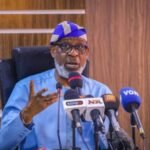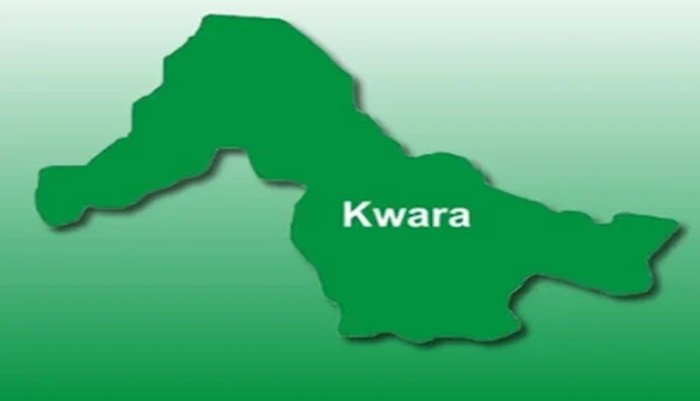
Governor Alhaji AbdulRahman AbdulRazaq of Kwara State on Monday launched the distribution of additional 49,337 agricultural inputs, productive assets and processing equipment for local farmers and vulnerable households in the state.
The gesture according to the governor would go a long way at boosting food security for the residents of the state.
Implemented under FADAMA CARES 2.0, the programme is powered by the World Bank-supported Nigeria Community Action for Resilience and Economic Stimulus (NG-CARES).
At least 186,230 people had earlier benefitted from the initiative. When added to the newly launched 49,337, that brings the total beneficiaries to
235,567.
The governor who stated this in Ilorin while performing the flag-off said farmers are facing some challenges, thereby needing regular support to lessen their losses and earn more.
His words: “I welcome you to this flag of the Kwara FADAMA programme. Our farmers face costly inputs, unpredictable weather, limited equipment, the difficulties of moving and processing produce. Our duty is to remove these barriers and obstacles so that their labor pays.”
AbdulRazaq stated that, “This programme has reached 186,230 beneficiaries. Of this, 54,332 received inputs and services, and 131,898 received productive and processing assets across 10 value chains.
“These figures represent farmers, processors, and families earning better livelihood.
“The phase of the flag-off today will support 49,337 beneficiaries, including true group assets. It provides rice, maize, soyabeans inputs. It also provides equipment ranging from sprayers, water pumps, and power tillers to rice mills.
“We also have cassava processors, fish smoking plants, and commercial boats. This programme will reach a total of 235,556 beneficiaries.
“Our goal is to help farmers produce more, lose less, process better, reach wider markets, and earn more with opportunities for women and young people.”
He congratulated prospective beneficiaries and enjoined them to see the inputs and assets as investment opportunities and not as handouts.
He also acknowledged the active roles played by different stakeholders to make the programme a huge success.
Commissioner for Livestock who is supervising the Ministry of Agriculture and Rural Development, Hon. Olohuntoyosi Thomas, said the government has deployed 48 tractors and two D&R caterpillar bulldozers to drive farming activities and expand agricultural mechanization across the 16 local governments.
Thomas said at least 2,016 state farmers were provided with 8,064 bags of NPK fertilizer through the Federal Government’s Renewed Hope Farm Input Support Programme.
She appreciated all key stakeholders whose contributions have developed the sector, including development partners, public-private investors, farmers’ associations, and traditional institutions.
Commissioner for Finance and Chairman State NG-CARES Steering Committee, Dr. Hauwa Nuru, said Kwara is one of the leading states in delivery and reimbursement, adding the initiative reflects the commitment of the administration to empowering farmers, improving their livelihoods, ensuring food security, and promoting sustainable economic growth.
State Project Coordinator, FADAMA NG-CARES, Dr Busari Toyin Isiaka, explained that FADAMA CARES 2.0 is the agricultural component of NG-CARES, supported by the World Bank through additional financing, adding that its purpose is to improve agricultural production, reduce losses, enhance food security and strengthen beneficiaries’ incomes.
Busari listed items for distribution as rice, maize and soybean inputs, relevant production inputs rather than seeds alone, productive and processing assets such as knapsack sprayers, water pumps, power tillers, grinding machines, rice mills, cassava processing equipment, fish smoking kilns and commercial boats.
State Chairman for the Federated FADAMA Community Association (FFCA), Alhaji Isiaka Yakub Falala, appreciated Governor AbdulRazaq for the administration’s commitment to turning around the agricultural sector and his various support for farmers in the state.
Global Environmental Initiative: Bayelsa to Host Governance Centre on Global River Deltas
Bayelsa State has approved the hosting of the governance secretariat of DeltasUNite, a global environmental initiative to protect the world’s deltas.
Governor Douye Diri disclosed this on Monday during the opening of a three-day 5th United Nations Ocean Decade Conference on Mega Deltas and the commencement of the China-Africa cooperation on river, coastal zone, and delta governace at the East China Normal University in Shanghai, China.
The conference attracted participants from about 23 countries, including UN officials, policy makers, researchers, scholars, pro-environment non-governmental organisations and representatives of impacted communities.
The Bayelsa governor declared support for the proposed United Nations Convention on the River Deltas (UNCRD) and stated the governance secretariat, when established, would serve as a platform to bring impacted communities, scientists, government and investors together, in order to advance practical responses and inclusive governance to the environmental challenges confronting global delta, their security and sustainability.
Senator Diri, who chaired the opening session, also advocated better China-Africa cooperation, saying there was need to give greater attention to sustainable development of river basins, coastal zones and the deltas.
He said: “I have approved the DeltasUNite Governance Secretariat in my state of Bayelsa. It will serve as our platform to bring communities, scientists, governments and indeed investors to identify priorities, share evidence, and shape practical, bankable responses.
“If solutions are to last, those who live with the consequences must help to design them, and those who invest must see clear returns for both people and ecosystems. Our responsibility to future generations has no expiry date.
“That conviction underpins my support for the proposed United Nations Convention on River Deltas. Advancing such a proposal will require sound science, broad consultations, engagement by national and sub-national governments, and the appropriate international processes.”
He noted the effort to institutionalise preservation of the deltas was in tandem with the UN’s Sustainable Development Goals (SDGs), particularly Goal Six on clean water and sanitation, Goal 13 on climate change and climate action as well as Goal 14 (life below water) and Goal 17 (partnership for the goals)
“It also supports progress on poverty, hunger, and gender equality. Our commitment to sustainable development must translate into tangible gains for our women and our girls. As environmental shocks threaten livelihoods, water supplies, and education, women and girls often face greater hardships.
“We must remember that decisions made upstream affect livelihoods downstream. My state of Bayelsa is ready to share what we are learning, to learn from other states and countries, to deepen cooperation through the DeltasUNite, and our international partnerships.
“Let us bring diplomatic resolve, scientific rigor, and meaningful community participation to the work ahead of us. Our rivers, coasts, and deltas are inheritance that we are also holding in trust. Our children deserve a chance to know their worth, carry forward their cultures, and build secure futures upon this.”
In his remarks, the Coordinator of the African Centre for Climate Actions and Rural Development (ACCARD), Mr. Freeman Oluowo, who is the international facilitator of the DeltasUNite initiative, commended the Bayelsa State government and Governor Diri’s courage, leadership and support for the campaign.
Oluowo also lauded the governor’s bottom-top leadership style, which he said creates opportunity for the indigenous and local people to have a voice in decision making.
He said the UN Convention on River Deltas would become a reality as the work had reached the White Paper report stage.
Oluowo explained that the report would soon be submitted to the global body, and that it was only a matter of time, working with all stakeholders in the deltas, for the pronouncement to be made.
“The DeltasUNite is diverse. It is an initiative that is UN recognised and approved. As you all may know, the United Nations does not give you everything completely. It wants to see your actions and work. And we have done our best navigating the site,” he said.
On the governor’s entourage were the Commissioner for Environment, Ebi Ololo, his Marine and Blue Economy counterpart, Mrs. Faith Zibs-Godwin, and the Technical Adviser on International Development and Liaison, Mrs. Funkazi Koroye-Crooks.