


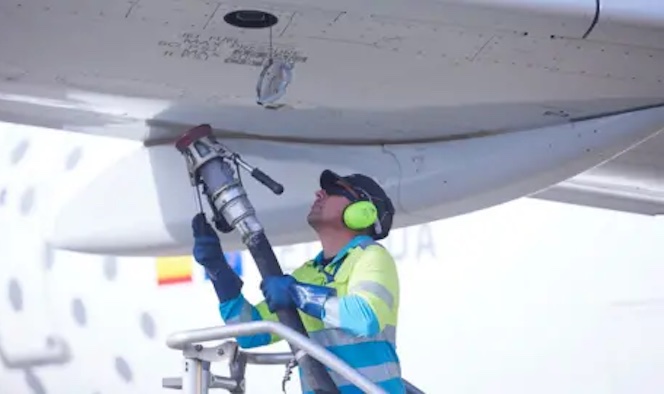
Following the back-to-back conclusion of the International Air Transport Association (IATA) Aviation Energy Forum in Paris and the African Airlines Association (AFRAA) Stakeholders Convention in Johannesburg, global aviation analysts are forecasting a permanent structural realignment in international energy logistics.
A compounding combination of post-pandemic recovery pressures, soaring maritime insurance premiums, and systemic supply chain instability has pushed legacy distribution networks to a point of unprecedented vulnerability.
Even with the recent signing of the June 2026 U.S.-Iran Memorandum of Understanding (MoU) designed to temporarily stabilize trade flows through the Strait of Hormuz, energy economists warn that the crisis has exposed a permanent sensitivity within Western supply lines.
Industry data indicates that relying on highly localized, single-source transit corridors is becoming an increasingly high-risk strategy for international enterprise operations.
Data presented at the summits reveals a sharp geographical shift, as Western economies systematically re-index procurement networks toward African refining infrastructure to guarantee operational continuity.
According to data tracked at the IATA Energy Forum, Europe’s domestic fuel distribution architecture is facing severe capacity constraints. Italy currently relies on imports for 30 percent of its total jet fuel consumption, while Germany’s Leipzig logistics hub—the critical node for international express freight networks like DHL is navigating a heavily stretched supply web where jet fuel security can no longer be taken for granted. With European pipeline networks operating at absolute capacity and lacking cross-border flexibility, aviation leaders in Paris explicitly called for immediate, aggressive diversification of global supply networks.
This Western infrastructure deficit directly coincided with a historic shift this past April, when Nigeria’s Dangote Refinery emerged as the world’s single largest exporter of jet fuel. Driven by a massive surge in regional production and accelerated by ongoing trade disruptions in the Middle East, the development signals a long-term rewrite of global energy flows.
Attending both international summits on the sidelines, Chartered Marketer and B2B energy strategy consultant Modupe Ladipo, a Fellow of the Chartered Institute of Marketing (FCIM), noted that temporary political settlements in the Gulf should not lull corporate boards into a false sense of security.
“The unit economics of contemporary aviation leave absolutely zero margin for operational waste or sentiment,” Ladipo stated.
“The U.S.-Iran agreement may provide temporary relief, but the fundamental fragility of the Western supply chain has been completely exposed. This crisis has provided a permanent lesson in supply chain sensitivity. Africa is no longer just catching up; it has proven it can serve as the operational backbone for global aviation supply during international shocks. The operators who scale over the next decade will be those who look past short-term diplomatic resolutions and build airtight, legally insulated B2B supply frameworks anchored in continental refining capacity.”
The operational landscape inside the African continent, however, presents a sharp paradox. While IATA leadership highlighted that Africa is projected to drastically outperform global aviation growth over the next two decades driven by a population representing 19 percent of the world’s total the continent currently commands a mere 2.9 percent of global flight traffic.
Furthermore, AFRAA data from Johannesburg revealed that regional airline profitability has been squeezed down to a razor-thin $1.30 net profit per passenger, with up to 10 percent of that yield directly eroded by escalating operational friction and post-pandemic disruptions.
According to industry data, a primary driver of these thin margins is hyper-fragmentation. Intra-African connectivity languishes at an abysmal 3 percent, exacerbated by severe visa barriers that restrict executive mobility and slow down physical integration. Compounding this, regional airport authorities frequently pass the financial burden of new terminal construction directly onto passengers through punitive taxation, further suppressing regional demand and forcing legacy giants like Emirates to heavily lean into cargo operations to sustain yield stability during global macro-shocks.
To counter this fragmentation, African transport ministers and International Civil Aviation Organization (ICAO) representatives at the AFRAA convention strongly advocated for a unified, pan-African alliance under a singular motto: “Build our own refining and supply capacity to remain completely unaffected by geopolitical tensions in the Gulf.” While the Single African Air Transport Market (SAATM)—a flagship initiative of the African Union’s Agenda 2063 designed to fully liberalize air services remains the legal cornerstone for progress, its implementation has faced ongoing bureaucratic delays.
The ultimate takeaway from both Paris and Johannesburg underscores a clear market division. While IATA showcased technical progress via biometrics proof-of-concepts and Sustainable Aviation Fuel (SAF) diversification projects, AFRAA leaders emphasized that immediate operational survival hinges on direct airline coordination and unhindered access to cash flows to stabilize corporate liquidity.
For international enterprise buyers and Western partners, the long-term integration of robust African energy corridors is no longer an optional regional strategy; it is a vital necessity for de-risking the global aviation ecosystem.