

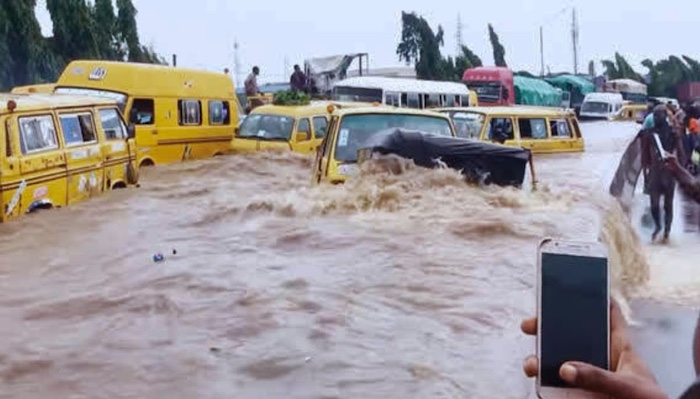
Severe flooding caused by heavy rainfall disrupted movement and commercial activities across several parts of Lagos on Sunday, raising fresh concerns over the state’s vulnerability to seasonal flooding.
Communities in Oshodi, Mushin, Surulere, Gbagada, Ipaja, and Akowonjo were among the worst affected as floodwaters submerged roads, stranded commuters, and damaged property.
Operations at parts of the international wing of the Murtala Muhammed International Airport were also temporarily affected after floodwater reportedly entered critical infrastructure areas.
The development comes amid forecasts by the Nigerian Meteorological Agency and the Nigeria Hydrological Services Agency warning of increased rainfall intensity between July and September.
State authorities said drainage clearing, flood mitigation projects, and enforcement actions against illegal structures built on waterways remain ongoing. Residents were advised to avoid flood-prone areas, clear blocked drains around their homes, and comply with environmental regulations.
Experts have repeatedly warned that rapid urbanisation, poor waste disposal practices, and inadequate drainage infrastructure continue to worsen flooding risks in Lagos. The latest flooding episode has renewed calls for more aggressive investment in drainage systems and better urban planning to mitigate future occurrences.
The Lagos State Emergency Management Agency and other relevant bodies have intensified monitoring and response efforts to minimise the impact of the rains. The flooding has once again exposed the vulnerability of many parts of the city, particularly low-lying areas and informal settlements. Stakeholders have urged the government to accelerate long-term solutions, including the construction of more drainage channels and the enforcement of building regulations.