

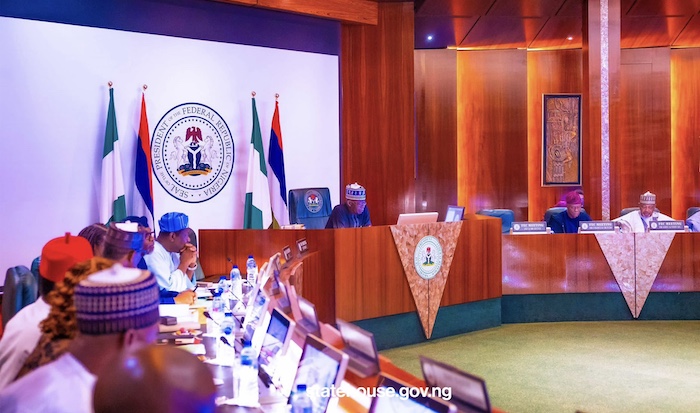
The Federal Executive Council approved a combined N3.94 trillion for road projects across ten states on Monday, alongside N286 billion for specialised maritime vessels, in the first FEC meeting in roughly three months. The session, presided over by President Bola Tinubu, marked the council’s return after a gap stretching back to March 4, when its last meeting saw the swearing-in of Inspector-General of Police Tunji Disu.
The most striking single decision was the rescoping and award of the 400.9-kilometre Mokwa-Tegina-Bida-Lambata access road in Niger State to the Dangote Group under the tax credit scheme, at a contract sum of N1.8325 trillion. Minister of Works Dave Umahi explained that the project had originally been awarded to CGC in 2022 but had become a site of repeated fatal accidents, including incidents where trucks overturned as people attempted to scoop spilled fuel. Lives were lost on the corridor before the federal government intervened to remove CGC and hand the project to Dangote, which already holds major investments along the same route.
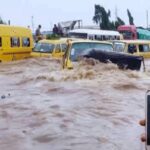
A second significant decision addressed deterioration on the completed Lagos-Ibadan Expressway, particularly the Ibadan axis section built by Julius Berger. Umahi described the road as rotting and folding, dangerous for vehicular movement in its current state. President Tinubu directed that the reconstruction proceed using reinforced concrete technology rather than the asphalt approach originally used, a more durable but costlier solution to a road that has become emblematic of Nigeria’s recurring infrastructure maintenance failures.
The council also ratified the full business case for operation and maintenance of the Lagos-Ibadan Expressway in favour of Aspect Concession Company Limited under a modified Switch Challenge approach, and confirmed completion of the first 118-kilometre lot of the Lagos-Abuja-Kaduna-Kano Road at a cost of N257 billion. The remaining 164 kilometres, being built in reinforced concrete pavement, is expected to be completed by November.
Beyond these headline projects, the council approved 23 additional road projects across Adamawa, Taraba, Ebonyi, Kwara, Cross River, Kogi, Lagos, Niger, Oyo, and Plateau states at a combined cost of N2.078 trillion. These ranged from the N276 billion Ilorin-Ogbomosho dual carriageway to smaller rural connector roads in Yobe and Niger states, reflecting a broad geographic spread rather than concentration in any single region.
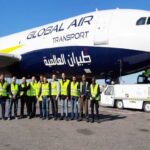
On the maritime side, the Ministry of Marine and Blue Economy secured approval for four vessel procurement packages totalling N286 billion. Two anti-pollution boats for Port Harcourt, costing N59.052 billion, will target plastic and industrial pollution affecting Nigeria’s waterways and shipping navigation. Six cataboats for pilot-transfer operations across the port system were approved at N80.029 billion, intended to pair pilots with ships safely, assist navigation through channels, and serve as a liaison between vessels and port authorities. Two firefighting boats costing approximately N34.059 billion will be deployed for fire patrol around jetties, oil terminals, and waterfront facilities handling flammable cargo.
The largest single maritime approval was a N112.85 billion contract for channelling and dredging works on the Escravos-Warri waterway, involving the Nigerian Ports Authority alongside China Harbour Engineering Company, Dudley Engineering, and Register Global Construction. The work covers hydraulic surveys, capital and maintenance dredging, and the removal of navigational obstructions in line with International Maritime Organisation standards.
Taken together, Monday’s approvals represent one of the largest single-day infrastructure commitments of the current administration, spanning road reconstruction prompted by years of neglect, a contractor replacement driven by fatalities, and a maritime investment aimed at modernising Nigeria’s port operations.