


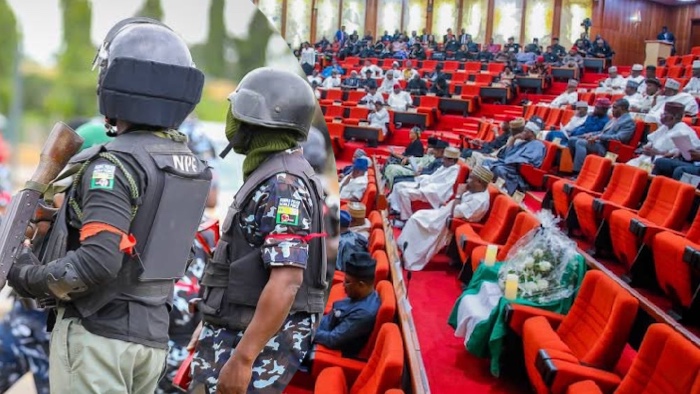
Growing insecurity across Nigeria has continued to strengthen calls for the establishment of state police, with advocates arguing that decentralised policing may provide a more effective response to the country’s security challenges.
In an opinion article, public affairs commentator Mobolaji Sanusi described the proposed state police system as one of the most significant reforms currently under consideration in Nigeria’s democratic journey.
According to him, effective governance cannot thrive in an atmosphere of insecurity, noting that peace and order remain essential foundations for national development.
Sanusi argued that Nigeria’s centrally controlled police structure has struggled to effectively police a country of more than 200 million people spread across 36 states and the Federal Capital Territory.
He maintained that governors, despite being regarded as chief security officers of their states, have limited authority over police operations within their jurisdictions, creating gaps in security coordination and response.
The columnist cited previous incidents involving state governors as evidence of the limitations of the current policing arrangement, stressing that local authorities often lack the powers required to respond swiftly to emerging security threats.
He noted that Nigeria currently falls below the United Nations recommended police-to-population ratio, a situation he said has further strained the capacity of security agencies to combat banditry, kidnapping, terrorism and other crimes.
Sanusi argued that state police would improve intelligence gathering by bringing security personnel closer to local communities, enabling officers to better understand their environment and respond more effectively to threats.
According to him, community-based policing would encourage residents to provide timely intelligence that could help prevent criminal activities before they occur.
Despite supporting the initiative, the writer acknowledged concerns that state police could be abused by politicians to intimidate opponents and suppress dissent.
He therefore called on lawmakers at both federal and state levels to establish strong legal safeguards capable of preventing abuse and ensuring accountability.
Sanusi also warned against the recruitment of criminal elements into state police formations, stressing that such actions could undermine the effectiveness and credibility of the proposed system.
He referenced comments by legal practitioner and former Nigerian Bar Association President, Olisa Agbakoba, who cautioned that decentralisation without accountability could simply transfer abuses from one level of government to another.
The article concluded that while challenges remain, state police represents an important step towards true federalism and could significantly improve Nigeria’s ability to address its growing security concerns if properly implemented.