

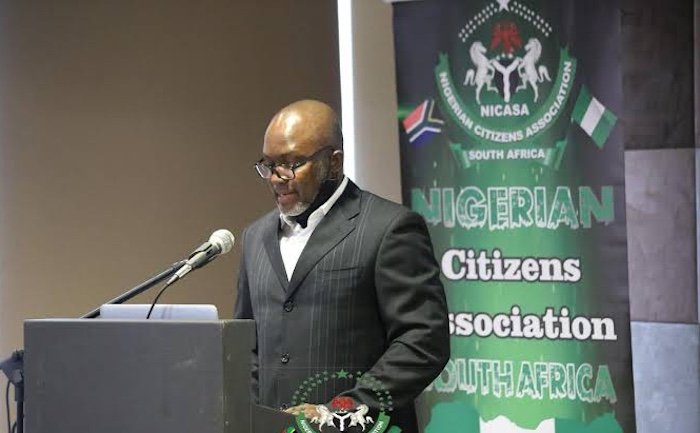
Frank Onyekwelu, National President of the Nigerian Citizens Association in South Africa, says the economic consequences of xenophobic attacks on foreign-owned businesses have begun boomeranging back onto the very South African communities that hosted the protests demanding foreigners leave. Speaking on Channels Television’s Sunrise Daily, he described a widening ripple effect as shuttered Nigerian-owned shops leave gaps that local economies are struggling to fill.
Onyekwelu explained that demanding foreigners leave is one thing, but living with the aftermath of that demand is proving far harder for many communities. He pointed to a growing pattern where South Africans themselves have started asking displaced business owners to return, simply because affordable goods that were once available nearby have disappeared, forcing residents to travel further or rely on larger supermarkets instead. Beyond retail, he described a broader economic slowdown touching cash circulation, public transport ridership and overall commercial activity in areas where businesses have closed and not been replaced.
Despite reduced intensity since a June 30 deadline passed, Onyekwelu said demonstrations calling for foreigners to leave continue on a regular basis, with marches still occurring most Thursdays and Saturdays in various areas. He noted that NICASA continues to receive daily complaints from Nigerians through its provincial leadership spread across all nine South African provinces, and that many protesters remain firmly committed to their demand that foreigners depart entirely, framing their actions as a fight for local jobs and welfare.
He was careful to distinguish between official government messaging and conditions on the ground, arguing that continued violence, looting, extortion and business attacks persist despite public statements suggesting otherwise. In his view, a lack of meaningful arrests or prosecutions targeting those organizing the attacks has only emboldened further violence, a dynamic he believes carries political undertones, with some politicians appearing to court public frustration for electoral gain at the expense of Nigerian residents.
The human toll has been severe, according to Onyekwelu, who said many Nigerians have lost homes, businesses and years of accumulated investment while fleeing for safety, with nearly 1,500 evacuated from South Africa altogether. He cited a July 5 attack on a Nigerian-owned mechanic workshop, where more than 25 vehicles were destroyed by fire, as a stark example of the scale of loss involved. Both the Nigerian Consulate in Johannesburg and the High Commission in Pretoria have asked affected Nigerians to formally register their losses, a step Onyekwelu said is meant to build an accurate record NICASA hopes will support diplomatic efforts toward compensation or rebuilding assistance.
He firmly rejected suggestions that compensation should be denied on the basis that some Nigerian-owned properties were allegedly tied to criminal proceeds, insisting that the wrongdoing of a few should not be used to paint an entire nationality with the same brush.
Onyekwelu also pushed back against the broader hostility directed at African migrants, highlighting the significant contributions Nigerians make across South African society as doctors, lawyers, nurses, midwives, students and entrepreneurs. He characterized the pattern of attacks as a form of Afrophobia, noting that migrants from Europe and other Western nations rarely face similar treatment. He urged South Africa’s Parliament and government to redirect their focus toward the country’s genuine challenges, including unemployment and poor service delivery, rather than scapegoating foreign nationals, while also suggesting that improved governance and infrastructure across African nations more broadly could help ease migration pressures over time.