

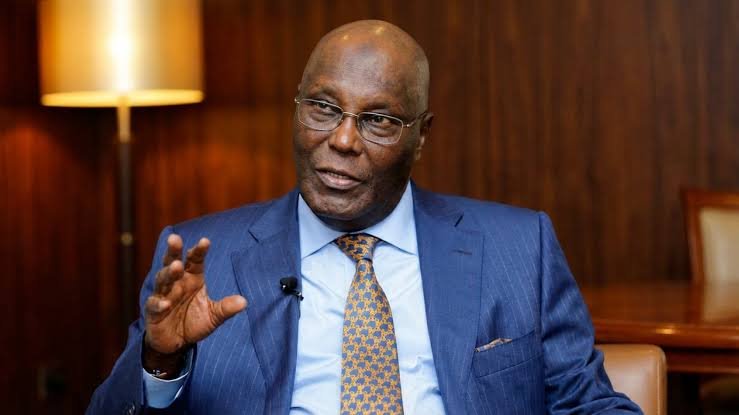
Former Vice President Atiku Abubakar has placed the blame for more than 17,000 Nigerian deaths squarely on what he describes as the Tinubu administration’s mishandling of appropriated security funds, drawing on a rare admission from within the ruling party’s own ranks to make his case.
In a statement issued through his senior special assistant on public communication, Phrank Shaibu, the ADC presidential candidate seized on recent remarks by Senator Mohammed Tahir Monguno, an APC chieftain, as validation of concerns the opposition has voiced for months. According to Atiku, independent conflict monitors estimate that more than 17,000 Nigerians have been killed in violent attacks since Tinubu took office, with thousands more abducted by terrorists, bandits, and other criminal groups. “These are not mere statistics. They are fathers, mothers, children, farmers, students and breadwinners whose lives have been cut short. Behind every number is a family condemned to a lifetime of grief,” he said.
What makes Monguno’s intervention significant, Atiku argued, is precisely where it came from. For months, he said, APC officials waved away opposition warnings about budget implementation and fiscal opacity as mere political posturing. “Today, one of its own ranking senators has asked the very questions Nigerians have been asking,” he said, pointing to Monguno’s reported questions about why enacted budgets are allegedly not being faithfully implemented, why trillions in Federation revenue are reportedly being withheld rather than distributed as the Constitution requires, and why security agencies have allegedly gone without capital releases even as the security crisis has worsened.
Atiku framed these as questions too serious to dismiss as opposition rhetoric, given their source. He argued that if security agencies are indeed being denied funds meant for equipment, intelligence, logistics, and operations, the government cannot distance itself from the human cost that follows.
The former vice president did not shy away from turning Tinubu’s own political history against him, noting the irony that a president who once built part of his reputation criticizing former President Goodluck Jonathan’s handling of insecurity now presides over what critics call a “Sidon look” administration, one Atiku suggested is more comfortable issuing condolences than preventing the next attack.
Drawing on his traditional title of Zege Mule U Tiv II, Atiku framed the current approach to security as fundamentally at odds with the responsibilities the title represents. “A Zege Mule does not watch from a distance while his people are under attack. He becomes their shield. He stands between them and danger. He provides refuge in moments of fear,” he said.
Looking ahead, Atiku outlined what an ADC government under his leadership would do differently, promising prompt and accountable release of security appropriations, a shift toward intelligence-led policing, modern surveillance deployment, strengthened border security, improved coordination between agencies, better-equipped personnel, and a community-based early warning system designed to prevent attacks before they occur. “Nigeria does not need a president who merely mourns the dead after every massacre. Nigeria needs a president who protects the living,” he said.