

A fragile pause in Middle East hostilities collapsed on Wednesday, as Iran launched missiles at US ally Jordan and President Donald Trump vowed swift retaliation, sending oil prices surging and reviving fears of a wider regional conflagration just as diplomatic talks had appeared within reach.
The renewed violence unfolded on multiple fronts simultaneously. Jordan’s army said it intercepted five Iranian missiles aimed at bases hosting American forces, a strike Iran’s Revolutionary Guards openly claimed responsibility for, framing it as part of an ongoing “resistance” that would continue “as long as the threats against the Islamic Republic of Iran continue.” Iranian state media later reported a retaliatory American strike near the Iraq border, with one outlet describing a missile hitting an unpopulated area without casualties.
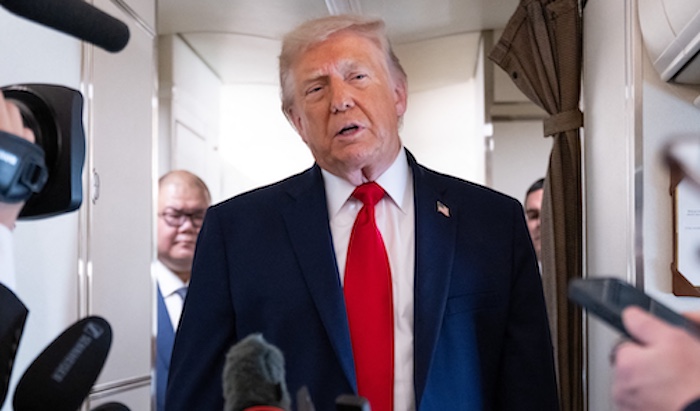
Trump’s response left little ambiguity about US intentions. “We’ll be hitting them hard,” he told Fox News. “We are going to beat the ‘effing s’ out of them.”
The escalation extended into Iraq as well, where a joint US-Saudi air operation targeted what Riyadh described as Iran-loyal militant groups, following two days of drone attacks on Saudi crude facilities that the kingdom blamed on Iraqi armed factions aligned with Tehran. The Hashed al-Shaabi alliance, an Iraqi paramilitary umbrella group with Iran-backed brigades, said the strikes killed at least 20 of its members, including, according to two officials, five Iranian advisors, a claim underscored by AFP correspondents who witnessed coffins draped in Iranian flags. The group condemned the operation as a “dangerous escalation” against a recognized security institution, and Iraq’s government similarly rejected the strikes, insisting it would resist “any violation of Iraq’s sovereignty.” Trump, however, maintained the operation had been “coordinated with the Iraqi government.”
Tensions also flared between Israel and Hezbollah, with Israeli forces accusing the Iran-backed group of deploying a drone against an Israeli vehicle in Lebanon overnight, calling it a clear ceasefire violation. Israel has fought alongside the US against Iran while separately confronting Hezbollah, though it has not yet joined the latest wave of strikes on Iranian targets.
The reignited conflict rattled global markets immediately. Oil prices jumped five percent on fears of supply disruption, US stocks closed sharply lower, and yields on 30-year Treasury bonds climbed to their highest point since 2007. Much of that anxiety centers on the Strait of Hormuz, which Iran’s Revolutionary Guards claim to now fully control after intercepting three tankers, alongside new plans to charge passage fees that Washington has firmly opposed, prompting fresh US sanctions on entities linked to the Guards. With Hormuz effectively contested, attention has increasingly shifted to the Red Sea as Saudi Arabia’s alternative export corridor.