


A presidential aide has moved to shut down growing claims that Nigeria’s mining sector is quietly being handed over to Chinese interests, framing the allegations as a coordinated misinformation campaign tied to a recent licence revocation rather than any genuine shift in government policy.
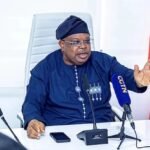
Kehinde Bamigbetan, Special Adviser on Media and Strategy to Solid Minerals Development Minister Dele Alake, issued the rebuttal over the weekend in response to a publication by Steve Kefas titled “How Nigeria’s Mineral Wealth is Being Handed Over to the Chinese.” According to Bamigbetan, the piece misrepresents the minister’s record and appears connected to backlash over the revocation of mining licences belonging to Basin Mining Limited, described as a Nigerian subsidiary of the British-Australian firm Jupiter.
The revocation itself, Bamigbetan explained, came down to unpaid statutory fees rather than any geopolitical motive. He said Basin Mining had failed to pay annual service fees totaling N1.223 billion, a debt that grew to N2.494 billion before the government ultimately pulled the licences. Jupiter has since taken the matter to international arbitration against the Federal Government, and Bamigbetan alleged the company has simultaneously pushed a pressure campaign aimed at forcing the ministry to reverse its decision, a campaign he suggested is now feeding into the broader narrative about Chinese favouritism.
On the substance of the China allegations, Bamigbetan pointed to Alake’s actual travel and engagement record as evidence against the claim. He noted the minister has visited China only twice since taking office, once as part of President Bola Tinubu’s state visit and again to attend China Mining Week 2025 at the Chinese government’s invitation, a frequency he contrasted with Alake’s broader international footprint, which has included repeated appearances at the London Mines and Money conference, Mining Indaba in Cape Town, and separate investment engagements in Australia.
Bamigbetan also pushed back against the idea that Chinese involvement in Nigerian mining is new or unusual, tracing foreign participation in the sector back to the liberalisation reforms of the 1990s and the establishment of the Nigerian Investment Promotion Commission, which opened the door to international investors across multiple sectors, mining included. He said Alake’s actual policy priority has centered on local value addition, pressuring mining operators, Chinese firms among them, to process minerals domestically rather than export them raw, an approach he said several Chinese companies have already responded to by building processing facilities in Nigeria.
Framing the broader relationship, Bamigbetan described Nigeria’s economic ties with China as decades-old, spanning trade, infrastructure, technology, and investment agreements, arrangements he said have deepened further under the Tinubu administration’s move to elevate the relationship to a strategic partnership. He argued that engaging China specifically within mining reflects global economic reality given the country’s dominant role in processing critical minerals worldwide, and stressed that Nigeria’s roughly 44 commercially viable minerals remain open to investors from any country willing to comply with domestic law.
He also cited ongoing technical collaboration between the Nigeria Geological Survey Agency and its Chinese counterpart on mapping and exploration projects, while insisting the government is pursuing Western investment just as actively, noting more than 300 companies from Europe, America, Canada, and Australia are currently active across different parts of Nigeria’s solid minerals sector.
Bamigbetan closed by pointing to what he described as concrete achievements under Alake’s tenure, including the establishment of the Nigeria Solid Minerals Company, the deployment of Mining Marshals, the commissioning of new processing facilities, and stronger enforcement of mining regulations, all of which he said reflect a broader effort to reposition the sector for growth while attracting responsible investment from partners regardless of nationality.