

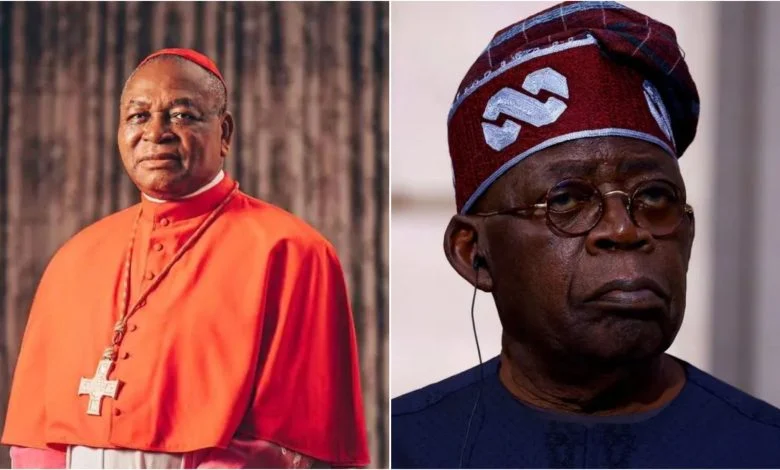
The Federal Government has moved to strengthen engagement with religious leaders following growing controversy surrounding comments made by Cardinal John Onaiyekan after a recent meeting between President Bola Tinubu and the Catholic Bishops’ Conference of Nigeria (CBCN).
The development comes amid renewed debate over the role of religious leaders in national discourse and increasing political activity ahead of the 2027 general elections.
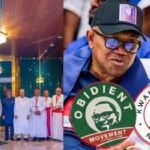
Former Labour Party presidential candidate, Peter Obi, criticised the government’s response to concerns raised by Catholic bishops, accusing the administration of attacking critics rather than addressing issues such as insecurity, inflation, unemployment and poverty.
In a statement titled When a Government Declares War on the Truth, Obi argued that religious institutions have historically served as the conscience of the nation by speaking out on matters affecting citizens.
He maintained that criticism from faith leaders should not be interpreted as partisan opposition, noting that organisations such as the Catholic Bishops’ Conference, CAN and the NSCIA routinely raise concerns about national issues.
Former Kano State Governor Rabiu Musa Kwankwaso also backed the bishops, describing their comments as patriotic and reflective of the realities facing many Nigerians.
Kwankwaso said worsening hardship, insecurity, unemployment and declining opportunities required sincere and people-focused responses from government.
However, Senator Orji Uzor Kalu defended President Tinubu, insisting that the President had not insulted the Catholic Church and therefore owed no apology.
Speaking on a television programme, Kalu said Catholic bishops have traditionally played the role of speaking truth to power and should be free to express their views.
Meanwhile, Secretary to the Government of the Federation, George Akume, stressed the importance of continued collaboration between government and faith communities.
He said the administration remained committed to consultations with religious organisations and acknowledged the Catholic Church’s contributions to national development through education, healthcare and humanitarian services.
Akume also reaffirmed the government’s commitment to democratic principles, insisting that the administration neither seeks nor supports a one-party state.
In a related development, the Sultan of Sokoto, Muhammad Sa’ad Abubakar III, called for a thorough investigation into the killing of Army officer Colonel Abdussalam Ude.
The Sultan condemned what he described as growing hostility against minority Igbo Muslims and urged authorities to uncover the circumstances surrounding the officer’s death.
He warned that failure to investigate such incidents could undermine national unity and public confidence in the justice system.
The latest exchanges underscore the increasingly prominent role of religious leaders and institutions in discussions surrounding governance, accountability and the future direction of the country ahead of the 2027 elections.