


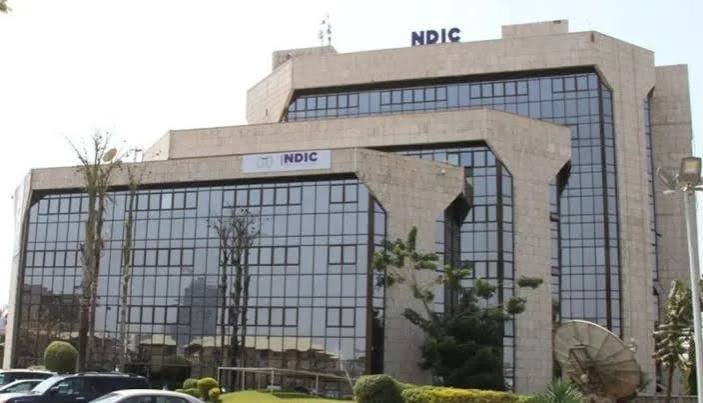
Depositors of the 46 microfinance banks whose licences were revoked by the Central Bank of Nigeria in July are now beginning to see their guaranteed sums reimbursed, according to the Nigeria Deposit Insurance Corporation, which confirmed it has already started disbursing payments as part of its role as provisional liquidator.
NDIC Managing Director and Chief Executive Officer Thompson Sunday disclosed the update during an interview with journalists at the 2026 stakeholders’ retreat for the House of Representatives Committee on Insurance and Actuarial Matters in Lagos, themed “Strengthening Financial Safety Nets in an Era of Banking Sector Recapitalisation and Fintech Innovation.” The affected banks were shut down after the CBN found they had failed to meet a range of regulatory requirements, including maintaining adequate assets against their liabilities, ceasing operations without approval, halting financial intermediation, failing to launch operations within a year of licensing, or falling short of the required minimum capital base.
With NDIC now appointed as provisional liquidator for the failed institutions, Sunday laid out the process the corporation is following. “The CBN revoked the licenses, and we became appointed as the provisional liquidator. We have started paying depositors of those banks, and gradually, we intend to cover all the insured depositors,” he said, describing a broader liquidation process that extends beyond simple payouts. “Our function as liquidator would involve payment of guaranteed sums. Thereafter, what we do is we go after those who are owing the institutions and have not paid. We also make sure that we sell the assets that are available and also realise their investment towards paying the uninsured portion of the deposit.”
One notable shift in NDIC’s approach involves how it locates depositors in the first place. Rather than relying on customers to come forward and file claims, the corporation is now working with the Nigeria Inter-Bank Settlement System to trace alternative accounts linked to depositors’ Bank Verification Numbers, allowing payments to be processed automatically once a match is found. “Hitherto, we used to depend on people to come file for payment, but now, in collaboration with the Nigeria Inter-Bank Settlement System, what we do is, for every account that has a BVN, we trace your alternative account in other institutions and make payments to you automatically. So, the more we discover those, the more we start payment,” Sunday explained.
That same BVN-based tracing system, according to Sunday, has already proven effective in a separate case: the liquidation of defunct Heritage Bank, where roughly 700,000 depositors have been reimbursed so far. He noted that insured deposits in that case were paid out within less than four days of the bank’s failure, with liquidation dividends subsequently declared for depositors whose balances exceeded the insured threshold.
Even with the automated tracing system in place, some Heritage Bank depositors remain untraceable through existing databases, and Sunday said those individuals still need to come forward directly with proof of account ownership and other supporting documentation. “For the guaranteed sum, we do not need you to come to be paid. Of course, there are challenges in the Nigerian system. There are depositors that we have not been able to trace, and this is an opportunity for them to also come forward,” he said.