


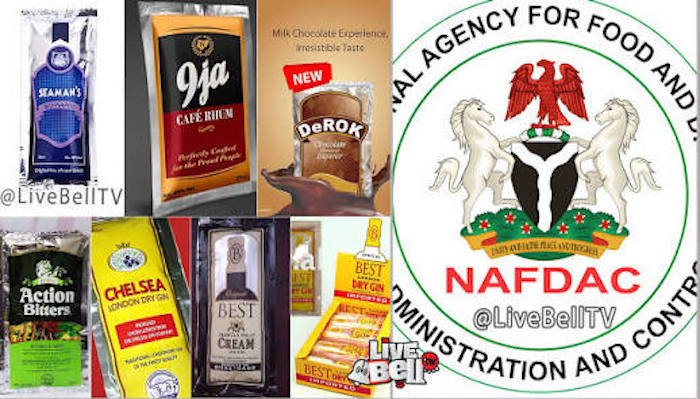
The Federal Government has unveiled a five-year national alcohol policy aimed at reducing alcohol-related harm, strengthening regulation and tackling the country’s expanding illicit alcohol market.
The Nigeria Alcohol Policy and Multisectoral Implementation Plan 2026–2030 was launched in Abuja on Thursday, bringing government agencies and other stakeholders under a common framework for addressing the health, social and economic consequences associated with alcohol consumption.
The policy will focus on public education, responsible alcohol marketing, age and access restrictions, screening, treatment and rehabilitation, as well as improving safety, product quality and traceability across the alcohol value chain.
Coordinating Minister of Health and Social Welfare, Prof. Muhammad Pate, represented at the event by the ministry’s Permanent Secretary, Daju Kachollom, said alcohol-related harm could no longer be viewed solely as a health-sector issue.
According to Pate, the consequences extend to road safety, economic development and governance, making coordinated action across government necessary.
“Nigeria cannot address alcohol-related harm through fragmented interventions. We need coordination across sectors, clear responsibilities and accountability for results,” he said.
The new framework is built around four key pillars: harm reduction and health promotion; industrial and economic development; multisectoral coordination and governance; and monitoring, evaluation and accountability.
Pate cited World Health Organisation data showing that Nigeria’s total alcohol consumption stood at 3.2 litres of pure alcohol per person aged 15 and above in 2024.
He also drew attention to the connection between alcohol consumption and road safety, noting that Federal Road Safety Corps records showed 9,570 road crashes and 5,421 deaths across the country in 2024.
Driving under the influence, he said, remains a recognised contributor to road crashes, highlighting the need for stronger prevention and enforcement.
The government also expressed concern about the size of the illicit alcohol market. Pate cited industry estimates based on a 2024 Euromonitor survey, which put illicit spirits and wines at about 40 per cent of the market.
The illicit trade, he said, could be costing government more than N428 billion in revenue annually, adding an economic incentive to efforts to strengthen regulation.
Director-General of the National Agency for Food and Drug Administration and Control, Prof. Mojisola Adeyeye, welcomed the policy and reaffirmed NAFDAC’s commitment to science-based regulation, surveillance and monitoring.
Adeyeye also restated the agency’s position on the restriction of small-volume alcohol products, saying NAFDAC remained committed to the ban on alcohol sold in sachets and containers below 200 millilitres.
The ministry called on traditional and religious leaders, civil society groups and the media to support implementation through advocacy, education and community engagement.
Representatives of several government institutions, including the ministries of Finance and Industry, Trade and Investment, Nigeria Customs Service, Federal Road Safety Corps and National Drug Law Enforcement Agency, attended the launch and pledged support for the plan.
The Federal Government said the policy aligns with the Renewed Hope Agenda, Nigeria Health Sector Renewal Investment Initiative, African Union Agenda 2063, Sustainable Development Goals and relevant WHO frameworks.
The Health Ministry said its priority would now be to translate the policy into coordinated actions and measurable results over the next five years.