

Imagine walking into a market where dozens of traders are shouting at once.
One promises lower prices.
Another promises better quality.
A third insists he has the experience everyone needs.
Yet amid the noise, a simple question remains:
Who should Nigerians trust with the keys to Africa’s largest democracy?
With the 2027 presidential election drawing closer, political campaigns are gathering momentum, alliances are shifting, candidates are making promises, and political parties are positioning themselves for what many observers believe could become one of Nigeria’s most consequential elections in recent history.
For millions of Nigerians grappling with rising living costs, insecurity, unemployment and concerns about governance, the election is gradually becoming more than a political contest.
It is increasingly being viewed as a referendum on the country’s direction.
Democracy Beyond Election Day
Former American President Abraham Lincoln famously described democracy as “government of the people, by the people, for the people.”
At its core, democracy gives citizens the power to choose their leaders through elections.
Nigeria returned to democratic rule in 1999 after years of military governance. Since then, the country has conducted several presidential elections, resulting in peaceful transfers of power between administrations and political parties.
However, every election cycle has also generated questions about voter participation, electoral credibility, campaign promises and public accountability.
As Nigerians prepare for another election season, many citizens are once again asking familiar questions:
Has democracy delivered on its promises?
Are elected leaders truly accountable to the people?
And most importantly, who is best positioned to lead Nigeria through its current challenges?
The Candidates Are Emerging
The Independent National Electoral Commission (INEC) has published the particulars and credentials of presidential candidates nominated by political parties for the 2027 election, signalling the beginning of a new phase in the political process. Campaign activities officially commenced in August 2026. (Punch)
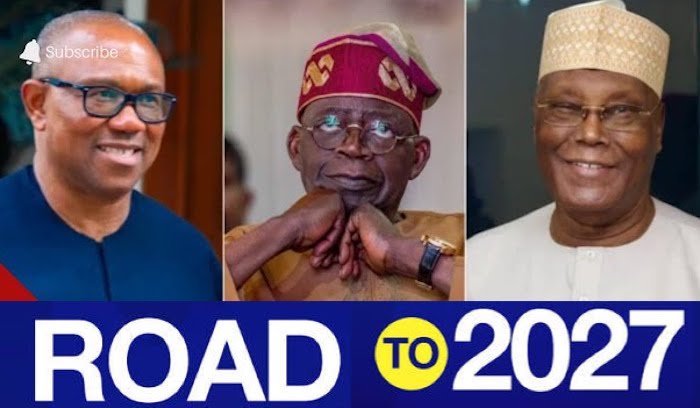
While numerous political parties have fielded candidates, political discussions across the country have largely centred on a handful of prominent contenders.
President Bola Ahmed Tinubu is seeking a second term under the platform of the All Progressives Congress (APC). The ruling party has formally submitted his candidacy and retained Vice President Kashim Shettima as his running mate. (Punch)
Former Vice President Atiku Abubakar has again emerged as a major opposition figure and is seeking to unseat the incumbent president. Peter Obi, who attracted significant support among young voters during the 2023 election, also remains a prominent contender. (AP News)
Other political parties have equally nominated candidates, although analysts generally expect the contest to revolve around the most visible national figures. (Punch)
The Election Is No Longer About Personalities Alone
In previous election cycles, political campaigns often revolved around personalities.
Today, many Nigerians appear more interested in practical questions.
Can food become more affordable?
Can insecurity be reduced?
Can jobs be created?
Can electricity improve?
Can businesses survive?
Can young people build meaningful futures within Nigeria?
These concerns are shaping public conversations far more than political slogans.
The reality is that Nigerians are living through a period of intense economic and social challenges.
The removal of fuel subsidy and foreign exchange reforms introduced by the Tinubu administration have generated significant debate.
Government officials argue that the reforms were necessary to stabilise the economy and lay the foundation for long-term growth.
Critics, however, point to rising living costs and declining purchasing power among many households. (Reuters)
As a result, economic performance is expected to become one of the defining issues of the 2027 campaign.
Security Remains a Defining Question
Beyond the economy, security continues to dominate national discussions.
From banditry and kidnapping to communal conflicts and criminal violence, insecurity remains a major concern across different parts of the country.
The Federal Government maintains that security operations have achieved successes and that efforts are ongoing to improve safety nationwide.
However, security challenges continue to influence public perception and may play a significant role in how voters assess candidates ahead of the election. (Reuters)
For many citizens, the question is straightforward:
Who can make Nigeria safer?
The Opposition’s Biggest Challenge
Perhaps one of the most important political developments ahead of 2027 is not who is contesting, but whether the opposition can unite.
Political history shows that incumbents often benefit when opposition forces remain fragmented.
Several political analysts have noted that divisions among opposition parties could significantly influence the outcome of the election. Recent reports indicate that previous coalition efforts among opposition figures struggled to remain intact, leaving major contenders to pursue separate campaigns. (AP News)
This reality has fuelled debate among voters who believe that political change often requires a united opposition front.
Beyond Campaign Promises
Election campaigns often produce ambitious promises.
Roads will be built.
Jobs will be created.
Poverty will be reduced.
Security will improve.
Yet many Nigerians have become increasingly interested in something else: track records.
Instead of asking what candidates intend to do, many voters are beginning to ask what they have already done.
The growing demand for accountability reflects a maturing democratic culture where citizens are paying closer attention to performance rather than rhetoric alone.
The Power Still Belongs to the Voter
Amid the rallies, speeches, social media campaigns and political advertisements, one fact remains unchanged.
The most powerful figure in any democracy is not the president.
It is the voter.
Political parties may campaign aggressively.
Candidates may dominate headlines.
Analysts may make predictions.
But ultimately, the direction of the country will be determined by millions of Nigerians who choose whether or not to participate in the electoral process.
As the countdown to 2027 continues, the challenge before voters is not merely to choose a candidate.
It is to carefully evaluate competing visions for Nigeria’s future.
The election may be months away, but the national conversation has already begun.
And for a country of more than 200 million people, the decisions made at the ballot box could shape the next chapter of Nigeria’s democratic journey.