


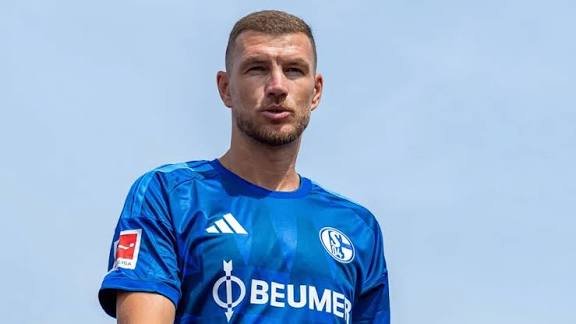
For nearly two decades, Edin Dzeko has been one of the defining figures in Bosnia and Herzegovina football. That era is now approaching its final chapter.
The 40-year-old striker has announced that he will retire from international football after Bosnia and Herzegovina’s Nations League meeting with Sweden on October 2 in Zenica.
Dzeko, who has captained his country since 2014, revealed his decision on Thursday, saying he believes the time has come to step away after giving everything to the national team.
“If I have made it to the age of 40 with the national team, it is because I truly gave everything I had,” he wrote on social media.
For Bosnian supporters, Dzeko’s departure represents the end of one of the most distinguished international careers in the country’s history. Affectionately known as “Dijamant” which is Bosnian for “diamond”, the Sarajevo-born striker has made 151 appearances for his country and scored 73 goals since making his debut against Turkey in June 2007.
Those figures make him both Bosnia and Herzegovina’s most-capped player and its all-time leading goalscorer.
His final appearance will take place in Zenica, and Dzeko has urged supporters to fill the stadium for what he expects to be an emotional farewell.
He said he wants to experience his final night wearing the national shirt “with all of you by my side”, describing the jersey as something he has loved since childhood and will continue to love for the rest of his life.
Dzeko’s international career has also coincided with some of the most significant moments in Bosnia and Herzegovina’s football history. He represented the country at the 2014 World Cup in Brazil, its first appearance at the tournament, and again led the side at the recent World Cup in North America.
Bosnia’s latest campaign ended with elimination by co-hosts the United States in the last-32.
At club level, Dzeko’s career has taken him across some of Europe’s biggest leagues. After beginning with Zeljeznicar in Sarajevo, he went on to play for Wolfsburg, Manchester City, Roma, Inter Milan and Fenerbahce before joining Fiorentina and later Schalke.
He moved to Schalke on a free transfer in January and signed a one-year extension in August after helping the club return to the Bundesliga.
Before his final international appearance arrives, Dzeko still has Nations League matches against Poland, Romania and Sweden ahead of him.
But when the whistle blows in Zenica on October 2, the significance will extend far beyond the result. It will mark the farewell of a player who has spent 18 years carrying the hopes of his country and, for an entire generation of Bosnian fans, becoming their “diamond.”