Nigeria’s rehabilitation sector is struggling with a widening manpower gap, with the country’s northern region reportedly left with fewer than five occupational therapists and occupational therapy assistants combined.
Nigeria continues to train occupational therapists, but many of those professionals do not remain in the country. According to Mrs Philomena Omoike, Acting Registrar of the Federal School of Occupational Therapy (FSOT), Lagos, about 80 per cent of the therapists trained by the institution over the years have either migrated or left for further studies.
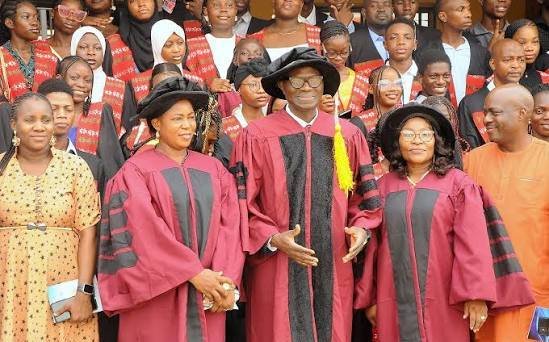
Omoike disclosed this at the school’s combined 20th and 21st convocation, where 93 graduates were presented. She said the shortage had become so serious that several major health institutions were unable to maintain adequate occupational therapy services.
FSOT, she explained, has produced roughly 900 occupational therapists in its 24 years of operation. However, only about 160 occupational therapists are currently registered with the Medical Rehabilitation Therapists Registration Board of Nigeria, and not all of them are practising within the country.
The consequences are particularly severe given the size of the population requiring rehabilitation services. Some institutions have only a handful of professionals available to serve large numbers of patients. Omoike cited one psychiatric hospital with four occupational therapists and five occupational therapy assistants, while stressing that many hospitals across the country have fewer than eight professionals in both categories.
She attributed the manpower crisis partly to inadequate remuneration and limited opportunities, urging greater government investment in training facilities and improved conditions of service to discourage professionals from leaving.
The expansion of university-level training may offer a partial solution, but it comes with another challenge, finding qualified lecturers. The Federal Government has approved occupational therapy programmes in 20 universities, yet Omoike warned that the country may struggle to provide enough experienced academics to staff them.
“It is going to be a real task for recruitment of lecturers in these upcoming schools because from our own end, I know that getting lecturers is a very huge task,” she said.
Dr Olugbenga Owoeye, Medical Director and Chief Executive Officer of the Federal Neuropsychiatric Hospital, Yaba, also called for more training institutions, particularly in underserved parts of the country.
“There is scarcity of occupational therapists. We need to do something about it,” he said.
Meanwhile, FSOT is expanding its own capacity. The institution has been upgraded to a monotechnic, while the National Board for Technical Education has approved its National Diploma in Occupational Therapy. The school has also been integrated into the JAMB admission system, with a Federal Ministry of Education waiver allowing former graduates to pursue university degrees through Direct Entry.
The Acting Provost, Mr Ayooluwa Oni, said the institution was also strengthening its curriculum through innovation and entrepreneurship, including the production of affordable rehabilitation equipment from locally available materials. He said the school’s five-year ambition was to become a degree-awarding institution and an advanced professional training centre.
At the convocation, occupational therapy advocate Mrs Kemi Peters urged graduates to combine professional expertise with leadership, innovation and advocacy. She also encouraged them to embrace artificial intelligence as a supporting technology rather than a replacement for human interaction.
Two graduates, Ms Busari Olanyika Shekinat and Ms Igho Rebecca Ebun, received automatic employment letters from the Federal Neuropsychiatric Hospital, Yaba.