For many Nigerian families, rice is more than just food.
It is the meal served at celebrations, shared around dinner tables, packed into lunch boxes and consumed in homes across income levels. From Lagos to Kano, Port Harcourt to Maiduguri, rice remains one of the country’s most widely consumed staples.
Yet behind every plate of rice lies a nutritional challenge many people do not see.
While millions of Nigerians may be eating enough calories, many are still not getting enough essential vitamins and minerals needed for healthy growth, learning and productivity. Health experts describe this as “hidden hunger”, a form of malnutrition caused by deficiencies in vital micronutrients such as iron, zinc and certain vitamins.
Now, stakeholders in Nigeria’s food and nutrition sector are turning to an everyday staple as part of the solution: fortified rice.
Nigeria’s Silent Nutrition Crisis
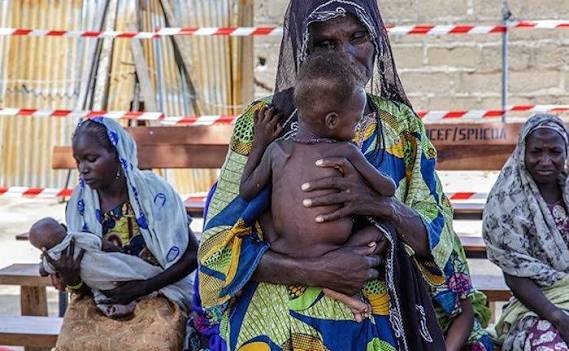
Malnutrition remains one of Nigeria’s most pressing public health concerns.
According to Mr. Robert Irimat, Food Safety and Quality Officer with the World Food Programme (WFP), the challenge extends beyond food availability.
“About 33 per cent of children under the age of five are stunted, and 49 per cent of women of childbearing age are suffering from anaemia,” he said.
The implications, he noted, go beyond individual health.

Children who experience stunting often face long-term developmental challenges that can affect educational outcomes, productivity and future economic contributions.
“It has both short-term and long-term impacts. Children who are stunted often grow up to be less productive because their brains are not fully developed. They cannot participate effectively or contribute fully to the economy,” Irimet explained.
For a country with one of the world’s youngest populations, nutrition experts say addressing these deficiencies is critical to future development.
What Exactly Is Fortified Rice?
Many Nigerians may hear the term “fortified rice” and imagine a completely different product.
In reality, experts say it looks almost identical to the rice already found in markets and homes.
Mrs. Nene Obiagwu, Head of the Food and Agriculture Group, Standards Development Department at the Standards Organisation of Nigeria (SON), explained that fortified rice is essentially ordinary milled rice enriched with additional vitamins and minerals.
“It is the milled rice Nigerians are already consuming, but fortified with vitamins and minerals,” she said.
The process involves producing Fortified Rice Kernels (FRK), which contain specific nutrients and blending them with regular rice.
According to Obiagwu, the kernels are mixed at a ratio of one part fortified rice kernel to one hundred parts regular rice.
The nutrients added include iron, folic acid, zinc and vitamin B12, all of which play important roles in human health.
Rice fortification also helps restore some nutrients that may be lost during the milling process.
Building Standards Before Implementation
Introducing fortified rice nationwide requires more than simply adding nutrients.
It also requires standards, monitoring and industry compliance.
To prepare the sector, SON worked with stakeholders across government, academia and industry to develop guidelines for production.
According to Obiagwu, the agency deliberately began with a Code of Practice before developing formal standards.

The code provides guidance on production, processing, packaging, storage, transportation and labelling, helping millers align with international best practices before moving into full implementation.
“We started with a Code of Practice to prepare the millers and get them ready based on international best practices so they can transition smoothly into the standard,” she explained.
The initiative involved collaboration with organisations including NAFDAC, researchers, rice millers and other government agencies.
Is Fortified Rice Safe?
One question frequently raised whenever food fortification is discussed concerns safety.
Industry stakeholders insist Nigerians have been consuming fortified foods safely for decades.
Seun Elera, Project Manager for Rice Fortification at TechnoServe, noted that food fortification is not new to the country.
“We have been fortifying food in Nigeria for more than three decades,” he said.
According to him, products such as iodised salt, wheat flour, maize flour, sugar and margarine have long undergone fortification processes.
“Fortified food is safe for consumption and is a cost-effective way of addressing micronutrient deficiency in Nigeria and elsewhere in the world,” Elera added.
Will Fortified Rice Be More Expensive?
At a time when many Nigerians are struggling with rising food prices, affordability remains a major concern.
Stakeholders involved in the programme acknowledge there may initially be a slight difference in retail prices.
However, Elera said studies conducted in Nigeria suggest the increase should remain limited.
“The retail price difference between fortified and unfortified rice is not expected to go beyond four per cent at the start,” he said.
He explained that as production expands and more millers adopt the technology, costs are expected to decline.
“By the time we achieve economies of scale, that price difference will go down drastically.”
He further noted that if rice fortification eventually becomes mandatory nationwide, price differences may disappear entirely.
How Far Has Nigeria Gone?
Although public awareness of rice fortification remains relatively low, work on the initiative has been ongoing for several years.
According to the World Food Programme, stakeholder engagement and industry preparation began around 2021.
Irimet disclosed that several rice mills already have fortification capacity.
“We currently have about seven mills that have the capacity to do fortification, and four more are coming on board,” he said.
The goal is to ensure that fortified rice becomes increasingly available in local markets across the country.
A Solution, But Not the Only Solution
Experts are careful not to present fortified rice as a cure-all for Nigeria’s nutrition challenges.
Rather, they describe it as one component of a broader strategy.
Government-supported nutrition programmes already include vitamin A fortification in vegetable oil, iodine supplementation and other public health interventions.
“Rice fortification is not a silver bullet,” Irimet stressed.
Instead, it works alongside other initiatives designed to improve nutritional outcomes across different segments of the population.
The Bigger Picture
The significance of rice fortification extends beyond nutrition statistics.
It reflects a growing recognition that addressing malnutrition requires innovative solutions that reach people through foods they already consume every day.
For millions of Nigerians, rice is already a regular part of the diet.
The hope among policymakers, health experts and industry stakeholders is that by enriching a familiar staple with essential nutrients, the country can gradually reduce micronutrient deficiencies without requiring major changes in eating habits.
Whether fortified rice becomes a transformative public health intervention will depend on consumer awareness, industry participation, affordability and sustained government support.
But for a nation seeking practical ways to tackle hidden hunger, the grain that already sits on millions of plates may soon play a bigger role in improving the nation’s health.
Deborah Adeyefa
Source: Interviews with Standards Organisation of Nigeria (SON), TechnoServe and the World Food Programme (WFP).